

alb3811824
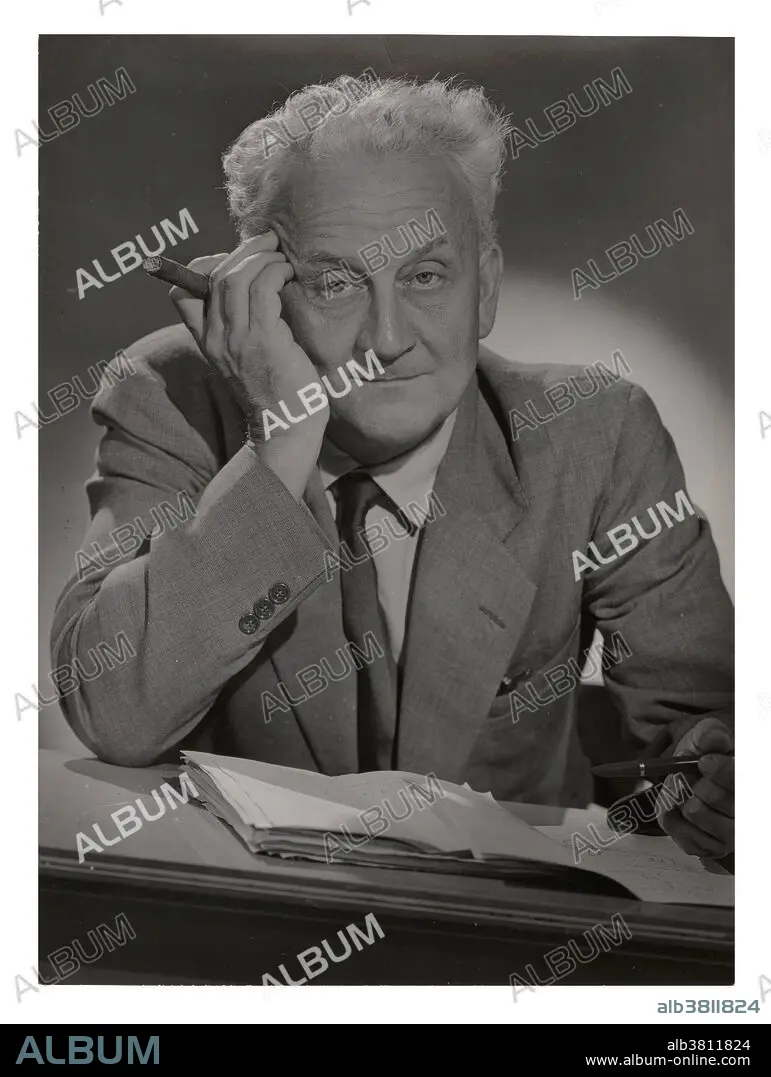
A. Szent-Gyorgyi, Hungarian-American Biochemist
| Teilen |
|---|
 Pinterest Pinterest |
 Twitter Twitter |
 Facebook Facebook |
 Link kopieren Link kopieren |
 Email Email |
|
Zu einem anderen Lightbox hinzufügen |
|
Zu einem anderen Lightbox hinzufügen |


Haben Sie bereits ein Konto? Anmelden
Sie haben kein Konto? Registrieren
Dieses Bild kaufen.
Nutzung auswählen:

Titel: A. Szent-Gyorgyi, Hungarian-American Biochemist
Untertitel: Siehe automatische Übersetzung
Albert Szent-Gyorgyi (1893-1986), a Hungarian-born biochemist, was the first to isolate vitamin C, and his research on biological oxidation provided the basis for Krebs' citric acid cycle. His discoveries about the biochemical nature of muscular contraction revolutionized the field of muscle research. His later career was devoted to research in "submolecular" biology, applying quantum physics to biological processes. He was especially interested in cancer, and was one of the first to explore the connections between free radicals and cancer. Szent-Gyorgyi won the 1937 Nobel Prize in Physiology or Medicine for his work in biological oxidation and vitamin C, and the Lasker Award in Basic Medical Research in 1954, for contributions to understanding cardiovascular disease through basic muscle research.
Albert Szent-Gyorgyi (1893-1986), a Hungarian-born biochemist, was the first to isolate vitamin C, and his research on biological oxidation provided the basis for Krebs' citric acid cycle. His discoveries about the biochemical nature of muscular contraction revolutionized the field of muscle research. His later career was devoted to research in "submolecular" biology, applying quantum physics to biological processes. He was especially interested in cancer, and was one of the first to explore the connections between free radicals and cancer. Szent-Gyorgyi won the 1937 Nobel Prize in Physiology or Medicine for his work in biological oxidation and vitamin C, and the Lasker Award in Basic Medical Research in 1954, for contributions to understanding cardiovascular disease through basic muscle research.
Bildnachweis: Album / Science Source / National Library of Medicine
Freigaben (Releases): ? Modellfreigabe: Nein - ? Eigentumsfreigabe: Nein
Rechtefragen?
Rechtefragen?
Bildgröße: 3065 × 4071 px | 35.7 MB
Druckgröße: 26.0 × 34.5 cm | 1206.7 × 1602.8 in (300 dpi)
Schlüsselwörter: BERÜHMT • BERÜHMTE PERSÖNLICHKEIT • BIOCHEMIE • BIOCHEMIKER • ENTDECKER • FORSCHER • FORSCHUNG • KREBS • MANN • NATURWISSENSCHAFTLER • NOBEL • NOBELPREIS • NOTABEL • PERSON • PERSöNLICHKEITEN • PERSÖNLICHKEITEN • PHYSIOLOGIE • PROMINENZ • SIEGER (KAMPF) • WISSENSCHAFT: ENTDECKER • WISSENSCHAFT: FORSCHER • WISSENSCHAFTLER • WISSENSCHAFTLICH
