

alb5409503
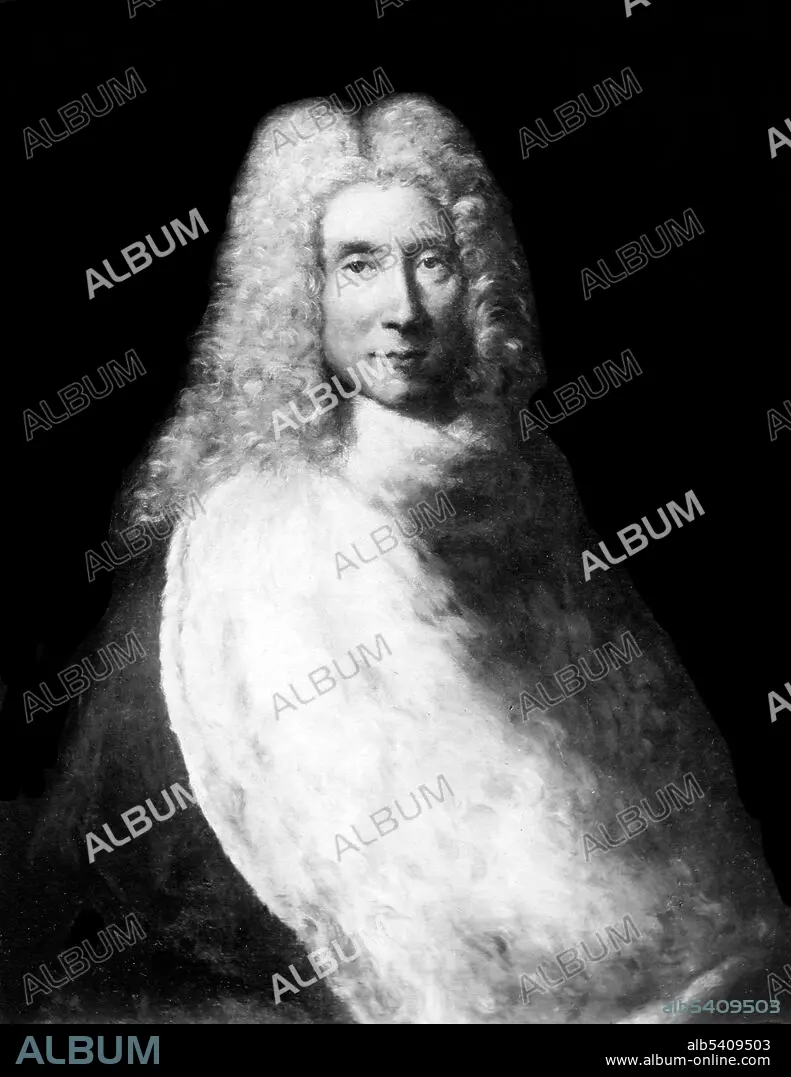
Nicolas Andry, French Physician and Author
| Teilen |
|---|
 Pinterest Pinterest |
 Twitter Twitter |
 Facebook Facebook |
 Link kopieren Link kopieren |
 Email Email |
|
Zu einem anderen Lightbox hinzufügen |
|
Zu einem anderen Lightbox hinzufügen |


Haben Sie bereits ein Konto? Anmelden
Sie haben kein Konto? Registrieren
Dieses Bild kaufen.
Nutzung auswählen:

Titel: Nicolas Andry, French Physician and Author
Untertitel: Siehe automatische Übersetzung
The subject of this portrait, by Jean Francois de Troy, was originally recorded as anonymous, but later said to be Andry; according to modern research, its subject cannot be reliably established, and there is no certain portrait of Andry. Nicolas Andry de Bois-Regard (1658 - May 13, 1742) was a French physician and writer. His first book, was published in 1700, and translated into English in 1701 as An Account of the Breeding of Worms in Human Bodies. One of Andry's principal purposes was to educate the public about the new science that was emerging from under the microscope. He wrote, "We must admit that there are animals a thousand times less than a grain of dust, which we can scarcely see. ...Our imagination loses itself in this thought, it is amazed at such a strange littleness; but to what purpose should it deny it? Reason convinces us of the existence of that which we cannot conceive." Andry published his introduction to orthopedics in 1741, it was translated into English in 1743 as Orthopedia. Though the book was read and cited extensively in the period, its main lasting influence in medicine has been its title, which became the name of the field devoted to skeletal and related injuries and ailments.
The subject of this portrait, by Jean Francois de Troy, was originally recorded as anonymous, but later said to be Andry; according to modern research, its subject cannot be reliably established, and there is no certain portrait of Andry. Nicolas Andry de Bois-Regard (1658 - May 13, 1742) was a French physician and writer. His first book, was published in 1700, and translated into English in 1701 as An Account of the Breeding of Worms in Human Bodies. One of Andry's principal purposes was to educate the public about the new science that was emerging from under the microscope. He wrote, "We must admit that there are animals a thousand times less than a grain of dust, which we can scarcely see. ...Our imagination loses itself in this thought, it is amazed at such a strange littleness; but to what purpose should it deny it? Reason convinces us of the existence of that which we cannot conceive." Andry published his introduction to orthopedics in 1741, it was translated into English in 1743 as Orthopedia. Though the book was read and cited extensively in the period, its main lasting influence in medicine has been its title, which became the name of the field devoted to skeletal and related injuries and ailments.
Bildnachweis: Album / Science Source
Freigaben (Releases): ? Modellfreigabe: Nein - ? Eigentumsfreigabe: Nein
Rechtefragen?
Rechtefragen?
Bildgröße: 3243 × 4200 px | 39.0 MB
Druckgröße: 27.5 × 35.6 cm | 1276.8 × 1653.5 in (300 dpi)
Schlüsselwörter: 18. JAHRHUNDERT • 18. JH. • BAUM • BERÜHMT • BERÜHMTE PERSÖNLICHKEIT • FRONTISPIZ • MANN • METAPHER • ORTHOPAEDIE • ORTHOPÄDIE • PROMINENZ • THERAPIE
