

alb3823222
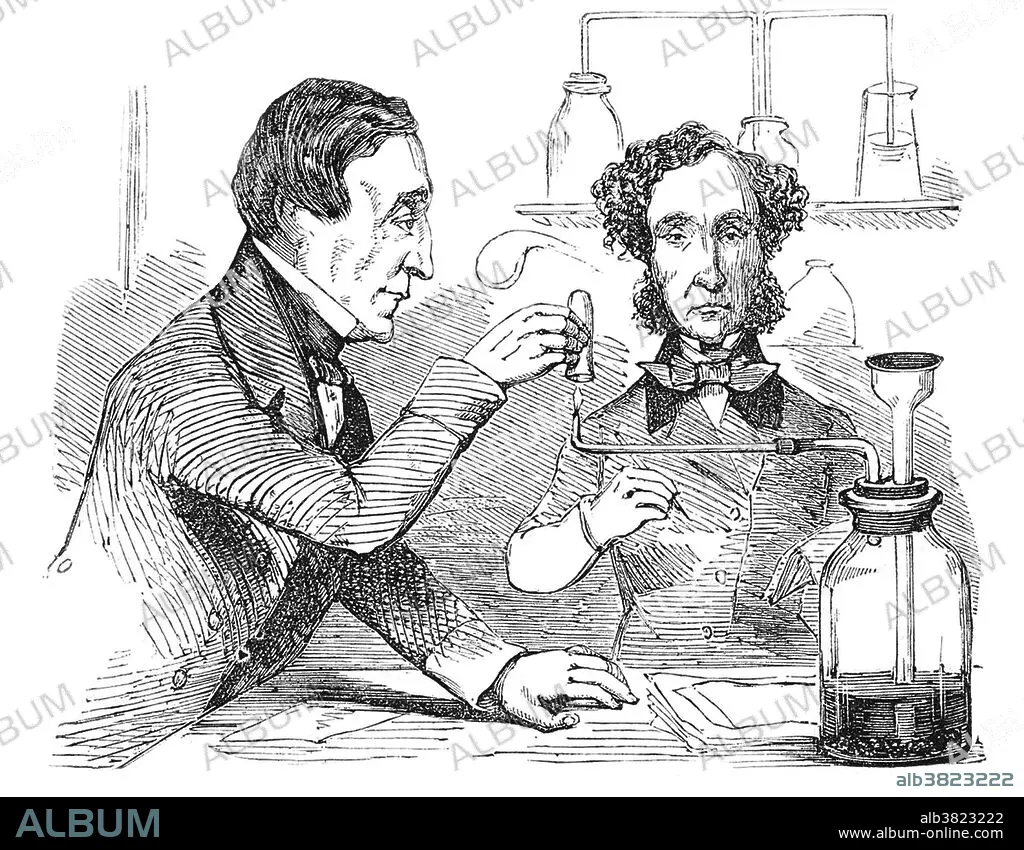
Performing the Marsh Test, 1856
| Teilen |
|---|
 Pinterest Pinterest |
 Twitter Twitter |
 Facebook Facebook |
 Link kopieren Link kopieren |
 Email Email |
|
Zu einem anderen Lightbox hinzufügen |
|
Zu einem anderen Lightbox hinzufügen |


Haben Sie bereits ein Konto? Anmelden
Sie haben kein Konto? Registrieren
Dieses Bild kaufen.
Nutzung auswählen:

Titel:
Performing the Marsh Test, 1856
Untertitel:
Siehe automatische Übersetzung
Performing the Marsh Test, 1856. Doctor Alfred Swaine Taylor (left) and a colleague, performing the Marsh test on samples taken from the body of John Parsons Cook. The two were looking for traces of arsenic and antimony. The Marsh test is a method for the detection of minute amounts of arsenic in foods (the residue of fruit spray) or in stomach contents. The sample is placed in a flask with arsenic-free zinc and sulfuric acid. Arsine gas (also hydrogen) forms and is led through a drying tube to a hard glass tube in which it is heated. The arsenic is deposited as a "mirror" just beyond the heated area and on any cold surface held in the burning gas emanating from the jet. Antimony gives a similar test, but the deposit is insoluble in sodium hypochlorite, whereas arsenic will dissolve. The test was named for its inventor, the English chemist James Marsh.
Bildnachweis:
Album / NLM/Science Source
Freigaben (Releases):
Bildgröße:
3600 x 2802 px | 28.9 MB
Druckgröße:
30.5 x 23.7 cm | 12.0 x 9.3 in (300 dpi)
Schlüsselwörter:
ANALYSE • ARSENIK • BERÜHMT • BERÜHMTE PERSÖNLICHKEIT • CHEMIKER • FORSCHUNG • ILLUSTRATION • ILLUSTRATIONS • MANN • PERSON • PERSöNLICHKEITEN • PERSÖNLICHKEITEN • PROMINENZ • PRUEFEN • PRÜFEN • VERGIFTEN • VERGIFTUNG • WASSERSTOFF
