

alb9016974
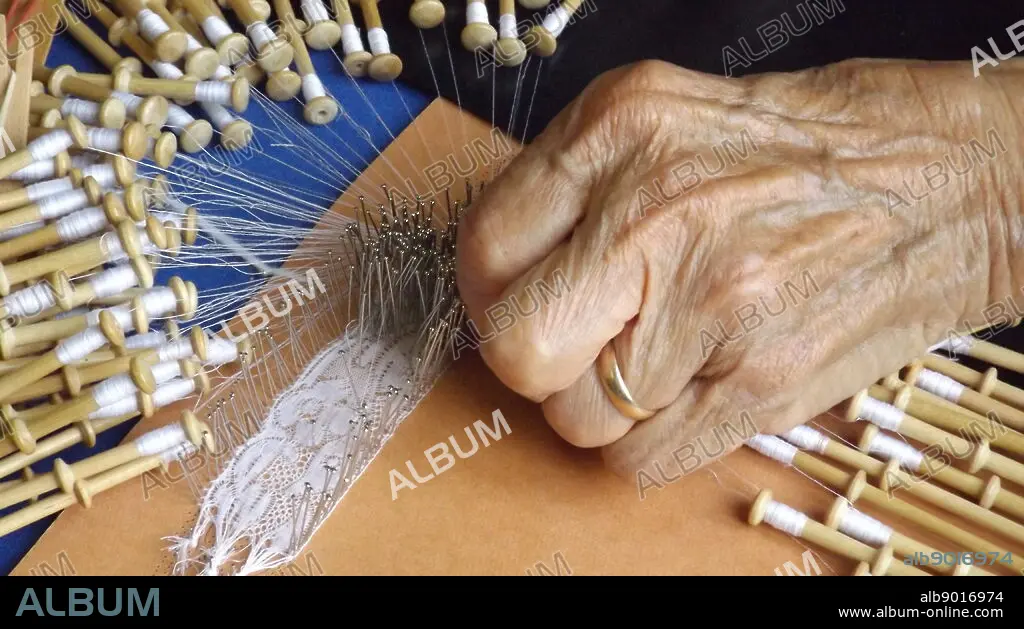
Lace making in Bruges, 2014.
| Teilen |
|---|
 Pinterest Pinterest |
 Twitter Twitter |
 Facebook Facebook |
 Link kopieren Link kopieren |
 Email Email |
|
Zu einem anderen Lightbox hinzufügen |
|
Zu einem anderen Lightbox hinzufügen |


Haben Sie bereits ein Konto? Anmelden
Sie haben kein Konto? Registrieren
Dieses Bild kaufen.
Nutzung auswählen:

Titel: Lace making in Bruges, 2014.
Untertitel: Siehe automatische Übersetzung
Lace making in Bruges, 2014. The intricate lace patterns in Belgium are unmatched in any other country. The lace trade rose during the early Renaissance. Emperor Charles V decreed that lace-making should be a compulsory skill for girls in convents and beguines throughout Flanders. Lace became fashionable on collars and cuffs for both sexes. Trade reached a peak in the 18th century. Lace makers are traditionally women. Hundreds of craftswomen still work in Bruges and Brussels, centres of bobbin lace, creating intricate work by hand, often using over 100 threads per bobbin.
Lace making in Bruges, 2014. The intricate lace patterns in Belgium are unmatched in any other country. The lace trade rose during the early Renaissance. Emperor Charles V decreed that lace-making should be a compulsory skill for girls in convents and beguines throughout Flanders. Lace became fashionable on collars and cuffs for both sexes. Trade reached a peak in the 18th century. Lace makers are traditionally women. Hundreds of craftswomen still work in Bruges and Brussels, centres of bobbin lace, creating intricate work by hand, often using over 100 threads per bobbin.
Bildnachweis: Album / World History Archive
Freigaben (Releases): ? Modellfreigabe: Nein - ? Eigentumsfreigabe: Nein
Rechtefragen?
Rechtefragen?
Bildgröße: 4608 × 2592 px | 34.2 MB
Druckgröße: 39.0 × 21.9 cm | 1814.2 × 1020.5 in (300 dpi)
Schlüsselwörter: BELGIEN
