

alb4354928
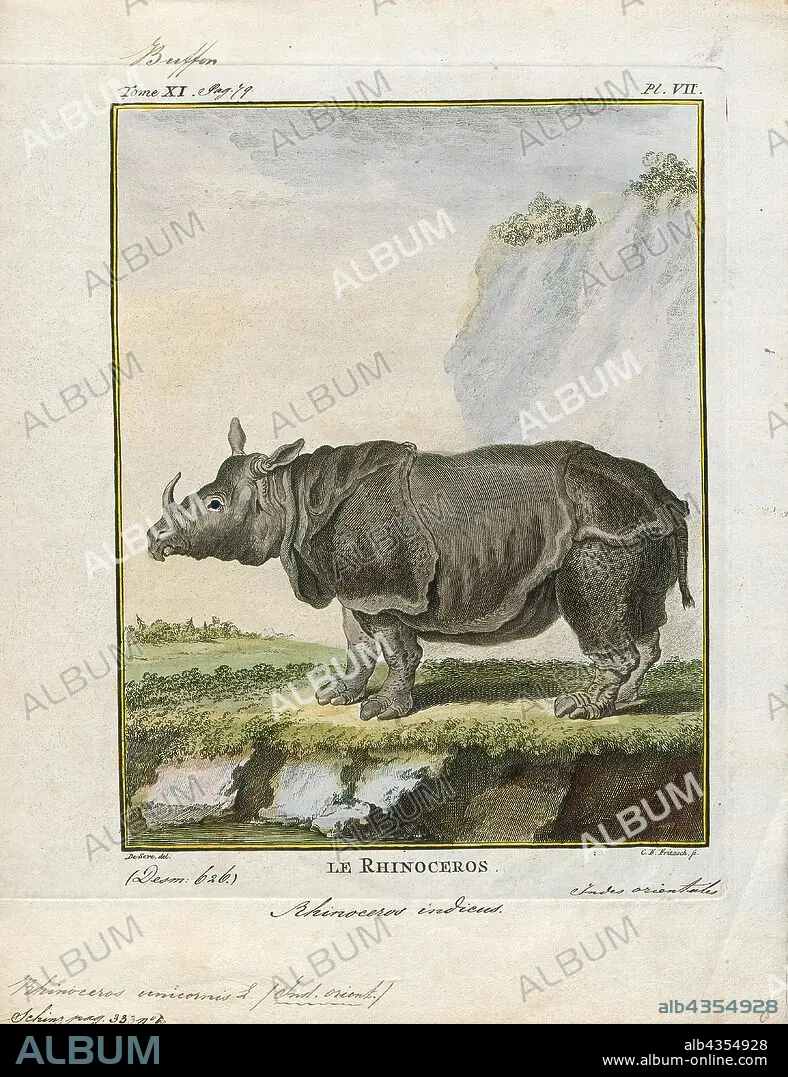
Rhinoceros unicornis, Print, The Indian rhinoceros (Rhinoceros unicornis), also called the greater one-horned rhinoceros and great Indian rhinoceros, is a rhinoceros native to the Indian subcontinent. It is listed as Vulnerable on the IUCN Red List, as populations are fragmented and restricted to less than 20, 000 sq km (7, 700 sq mi). Moreover, the extent and quality of the rhino's most important habitat, alluvial grassland and riverine forest, is considered to be in decline due to human and livestock encroachment. As of 2008, a total of 2, 575 mature individuals were estimated to live in the wild., 1700-1880.
| Teilen |
|---|
 Pinterest Pinterest |
 Twitter Twitter |
 Facebook Facebook |
 Link kopieren Link kopieren |
 Email Email |
|
Zu einem anderen Lightbox hinzufügen |
|
Zu einem anderen Lightbox hinzufügen |


Haben Sie bereits ein Konto? Anmelden
Sie haben kein Konto? Registrieren
Dieses Bild kaufen.
Nutzung auswählen:

Untertitel: Siehe automatische Übersetzung
Rhinoceros unicornis, Print, The Indian rhinoceros (Rhinoceros unicornis), also called the greater one-horned rhinoceros and great Indian rhinoceros, is a rhinoceros native to the Indian subcontinent. It is listed as Vulnerable on the IUCN Red List, as populations are fragmented and restricted to less than 20, 000 sq km (7, 700 sq mi). Moreover, the extent and quality of the rhino's most important habitat, alluvial grassland and riverine forest, is considered to be in decline due to human and livestock encroachment. As of 2008, a total of 2, 575 mature individuals were estimated to live in the wild., 1700-1880
Rhinoceros unicornis, Print, The Indian rhinoceros (Rhinoceros unicornis), also called the greater one-horned rhinoceros and great Indian rhinoceros, is a rhinoceros native to the Indian subcontinent. It is listed as Vulnerable on the IUCN Red List, as populations are fragmented and restricted to less than 20, 000 sq km (7, 700 sq mi). Moreover, the extent and quality of the rhino's most important habitat, alluvial grassland and riverine forest, is considered to be in decline due to human and livestock encroachment. As of 2008, a total of 2, 575 mature individuals were estimated to live in the wild., 1700-1880
Bildnachweis: Album / quintlox
Freigaben (Releases): ? Modellfreigabe: Nein - ? Eigentumsfreigabe: Nein
Rechtefragen?
Rechtefragen?
Bildgröße: 3518 × 4572 px | 46.0 MB
Druckgröße: 29.8 × 38.7 cm | 1385.0 × 1800.0 in (300 dpi)
Schlüsselwörter: ABDRUCK • MENSCH (MENSCHEN) • MENSCH • MENSCHLICH • QUALITÄT • WILD
