

alb5481866
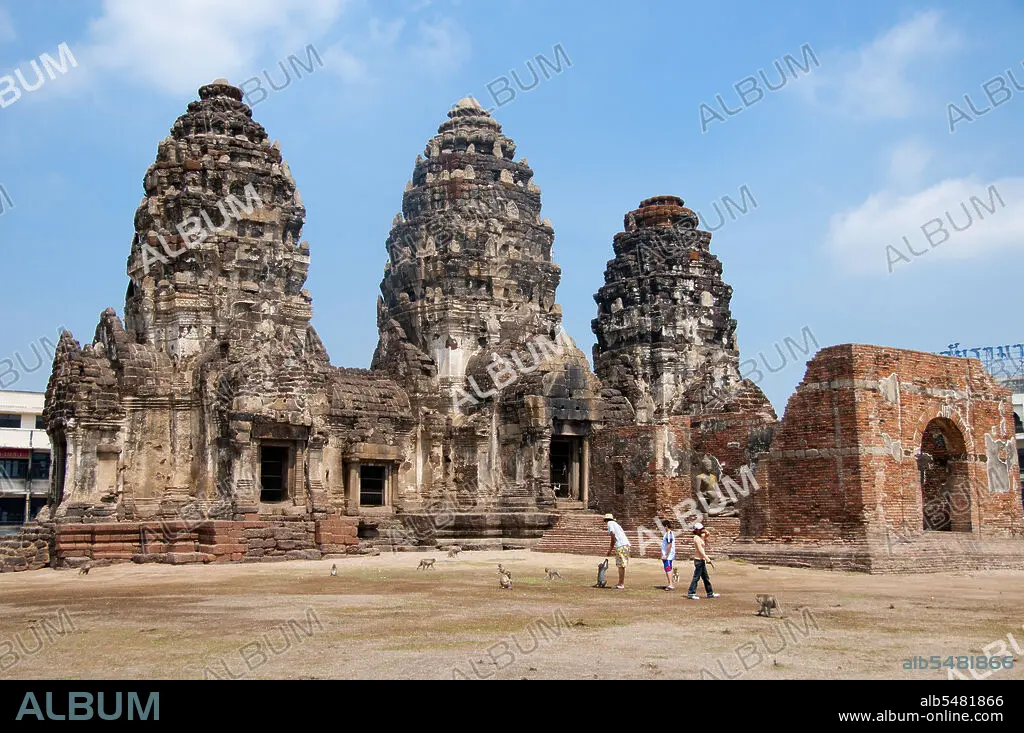
Thailand: Visitors at Prang Sam Yot (a Khmer temple), Lopburi
| Teilen |
|---|
 Pinterest Pinterest |
 Twitter Twitter |
 Facebook Facebook |
 Link kopieren Link kopieren |
 Email Email |
|
Zu einem anderen Lightbox hinzufügen |
|
Zu einem anderen Lightbox hinzufügen |


Haben Sie bereits ein Konto? Anmelden
Sie haben kein Konto? Registrieren
Dieses Bild kaufen.
Nutzung auswählen:

Titel: Thailand: Visitors at Prang Sam Yot (a Khmer temple), Lopburi
Untertitel: Siehe automatische Übersetzung
Prang Sam Yot, originally a Khmer Hindu shrine, has three prangs that used to represent Brahma, Vishnu, and Shiva (the Hindu trinity). It was later converted to a Buddhist shrine. The old town of Lopburi dates back to the Dvaravati era (6th - 13th century). It was originally known as Lavo or Lavapura. After the foundation of Ayutthaya Kingdom in the fifteenth century, Lopburi was a stronghold of Ayutthaya's rulers. It later became a new royal capital during the reign of King Narai the Great of the Ayutthaya kingdom in the middle of the 17th century, The king stayed here for about eight months a year. Today, Lopburi is renowned for its Crab-Eating Macaques that live amid the Khmer temple ruins of the city.
Prang Sam Yot, originally a Khmer Hindu shrine, has three prangs that used to represent Brahma, Vishnu, and Shiva (the Hindu trinity). It was later converted to a Buddhist shrine. The old town of Lopburi dates back to the Dvaravati era (6th - 13th century). It was originally known as Lavo or Lavapura. After the foundation of Ayutthaya Kingdom in the fifteenth century, Lopburi was a stronghold of Ayutthaya's rulers. It later became a new royal capital during the reign of King Narai the Great of the Ayutthaya kingdom in the middle of the 17th century, The king stayed here for about eight months a year. Today, Lopburi is renowned for its Crab-Eating Macaques that live amid the Khmer temple ruins of the city.
Bildnachweis: Album / Pictures From History/Universal Images Group
Freigaben (Releases): ? Modellfreigabe: Nein - ? Eigentumsfreigabe: Nein
Rechtefragen?
Rechtefragen?
Bildgröße: 5120 × 3401 px | 49.8 MB
Druckgröße: 43.3 × 28.8 cm | 2015.7 × 1339.0 in (300 dpi)
Schlüsselwörter: AFFE • ARCHITEKTUR • ASIEN • ASIEN, KONTINENT • BUDDHISMUS • BUDDHISTISCH • GESCHICHTE • HINDU • HINDUISMUS • KLOSTER • KONTINENT, ASIEN • RELIGION • TEMPEL • THAI • THAILAND • ZEITGESCHICHTE
