

alb5405864
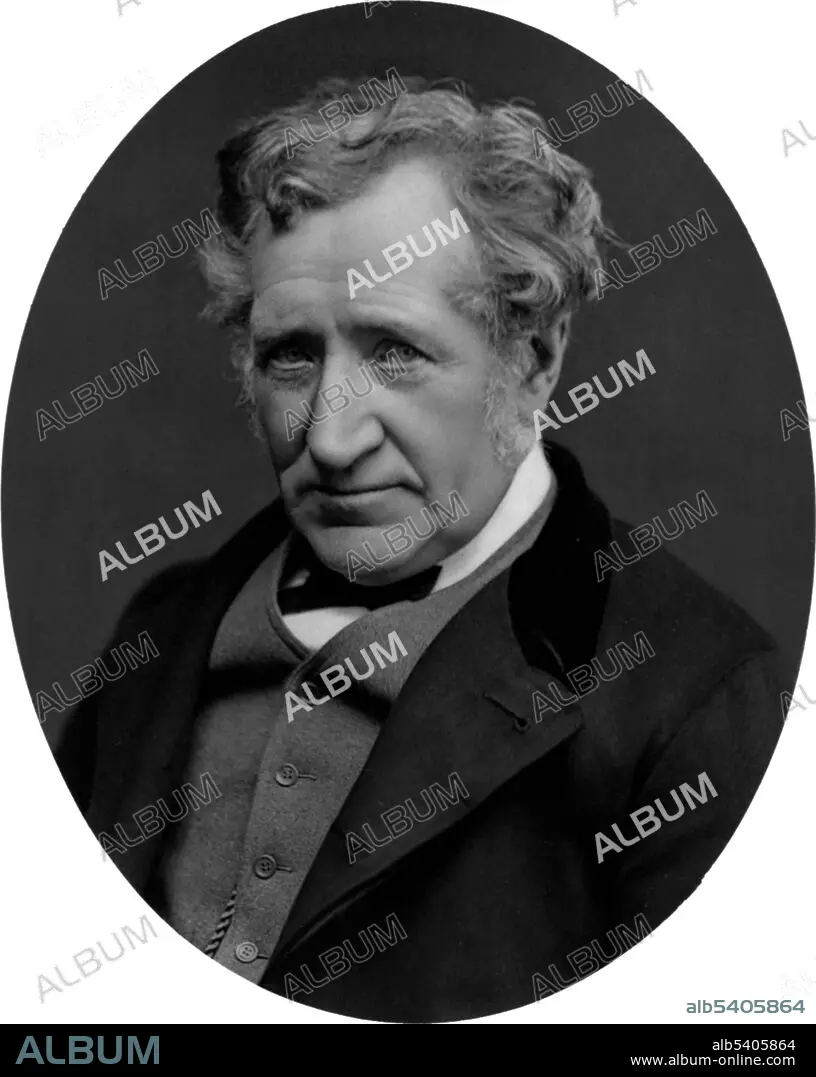
James Nasmyth, Scottish Engineer
| Teilen |
|---|
 Pinterest Pinterest |
 Twitter Twitter |
 Facebook Facebook |
 Link kopieren Link kopieren |
 Email Email |
|
Zu einem anderen Lightbox hinzufügen |
|
Zu einem anderen Lightbox hinzufügen |


Haben Sie bereits ein Konto? Anmelden
Sie haben kein Konto? Registrieren
Dieses Bild kaufen.
Nutzung auswählen:

Titel: James Nasmyth, Scottish Engineer
Untertitel: Siehe automatische Übersetzung
Editorial use only . James Hall Nasmyth (1808-1890) was a Scottish engineer. In 1836, he and his business partner Holbrook Gaskell opened the Bridgewater Foundry, where they produced a wide range of machine tools in large numbers. In 1842 Nasmyth patented this steam hammer. A key feature of his machine was that the operator controlled the force of each blow. He enjoyed demonstrating how it could first break an egg placed in a wine glass, without breaking the glass, which was followed by a full-force blow which shook the building. He applied the principle of his steam hammer to a pile-driving machine which he invented in 1843. Another innovation was a hydraulic press which used water pressure to force tight-fitting machine parts together. All of these machines became popular in manufacturing, and all are still in use in modified form. dated 1877.
Editorial use only . James Hall Nasmyth (1808-1890) was a Scottish engineer. In 1836, he and his business partner Holbrook Gaskell opened the Bridgewater Foundry, where they produced a wide range of machine tools in large numbers. In 1842 Nasmyth patented this steam hammer. A key feature of his machine was that the operator controlled the force of each blow. He enjoyed demonstrating how it could first break an egg placed in a wine glass, without breaking the glass, which was followed by a full-force blow which shook the building. He applied the principle of his steam hammer to a pile-driving machine which he invented in 1843. Another innovation was a hydraulic press which used water pressure to force tight-fitting machine parts together. All of these machines became popular in manufacturing, and all are still in use in modified form. dated 1877.
Bildnachweis: Album / Science Source
Freigaben (Releases): ? Modellfreigabe: Nein - ? Eigentumsfreigabe: Nein
Rechtefragen?
Rechtefragen?
Bildgröße: 3345 × 4200 px | 40.2 MB
Druckgröße: 28.3 × 35.6 cm | 1316.9 × 1653.5 in (300 dpi)
Schlüsselwörter: BERÜHMT • BERÜHMTE PERSÖNLICHKEIT • ERFINDER • HAMMER • INGENIEUR • KUTSCHER • MANN • NOTABEL • PERSöNLICHKEITEN • PERSÖNLICHKEITEN • PROMINENZ
