

alb9505316
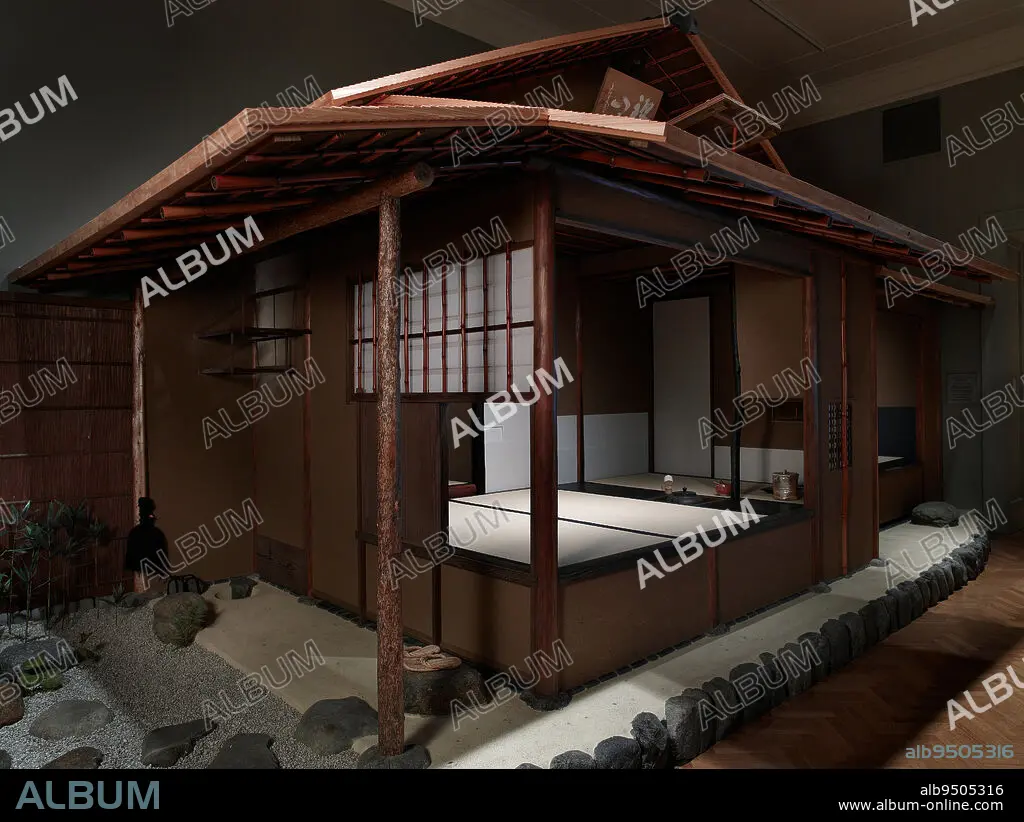
Replica of the Saan Teahouse at Daitokuji Gyokurin-in, Kyoto, 2001 (constructed), Yasuimoku Komuten Company Ltd., Japan, 21st century, Japan's ruling warrior elite first held lavish tea gatherings in their formal reception halls. As tea masters like Murata Shuk (1422-1502), Takeno J (1502-1555) and Sen Riky (1520-1591) began to advocate the practice of wabi (rustic) tea in the 16th century, separate, specially designed teahouses began to be built. Shuk introduced an architectural style called san, literally 'grass hut.' San teahouses were small and constructed from humble materials including roughly milled lumber, bamboo, thatch, and earthen walls. In its simplicity, soan teahouses were meant to suggest a monk's retreat in the wilderness. The low entranceway required all participants to humble themselves as they entered the tearoom from the garden. Although a built-in alcove for the display of art was adopted from more formal structures, its size was greatly reduced--sufficient only to display a small painting or simple floral arrangement.
| Teilen |
|---|
 Pinterest Pinterest |
 Twitter Twitter |
 Facebook Facebook |
 Link kopieren Link kopieren |
 Email Email |
|
Zu einem anderen Lightbox hinzufügen |
|
Zu einem anderen Lightbox hinzufügen |


Haben Sie bereits ein Konto? Anmelden
Sie haben kein Konto? Registrieren
Dieses Bild kaufen.
Nutzung auswählen:

Untertitel: Siehe automatische Übersetzung
Replica of the Saan Teahouse at Daitokuji Gyokurin-in, Kyoto, 2001 (constructed), Yasuimoku Komuten Company Ltd., Japan, 21st century, Japan's ruling warrior elite first held lavish tea gatherings in their formal reception halls. As tea masters like Murata Shuk (1422-1502), Takeno J (1502-1555) and Sen Riky (1520-1591) began to advocate the practice of wabi (rustic) tea in the 16th century, separate, specially designed teahouses began to be built. Shuk introduced an architectural style called san, literally 'grass hut.' San teahouses were small and constructed from humble materials including roughly milled lumber, bamboo, thatch, and earthen walls. In its simplicity, soan teahouses were meant to suggest a monk's retreat in the wilderness. The low entranceway required all participants to humble themselves as they entered the tearoom from the garden. Although a built-in alcove for the display of art was adopted from more formal structures, its size was greatly reduced--sufficient only to display a small painting or simple floral arrangement.
Replica of the Saan Teahouse at Daitokuji Gyokurin-in, Kyoto, 2001 (constructed), Yasuimoku Komuten Company Ltd., Japan, 21st century, Japan's ruling warrior elite first held lavish tea gatherings in their formal reception halls. As tea masters like Murata Shuk (1422-1502), Takeno J (1502-1555) and Sen Riky (1520-1591) began to advocate the practice of wabi (rustic) tea in the 16th century, separate, specially designed teahouses began to be built. Shuk introduced an architectural style called san, literally 'grass hut.' San teahouses were small and constructed from humble materials including roughly milled lumber, bamboo, thatch, and earthen walls. In its simplicity, soan teahouses were meant to suggest a monk's retreat in the wilderness. The low entranceway required all participants to humble themselves as they entered the tearoom from the garden. Although a built-in alcove for the display of art was adopted from more formal structures, its size was greatly reduced--sufficient only to display a small painting or simple floral arrangement.
Bildnachweis: Album / quintlox
Freigaben (Releases): ? Modellfreigabe: Nein - ? Eigentumsfreigabe: Nein
Rechtefragen?
Rechtefragen?
Bildgröße: 6507 × 4885 px | 90.9 MB
Druckgröße: 55.1 × 41.4 cm | 2561.8 × 1923.2 in (300 dpi)
Schlüsselwörter: 16. JAHRHUNDERT • 16. JH. • 21. JAHRHUNDERT • ANSPRUCHLOSIGKEIT • BAMBUS • EINFACHHEIT • GAERTEN • GARTEN • HAUSGARTEN • KUNST • LÄNDLICH • STROH • STROHHALM • TRINKHALM
