

alb3791523
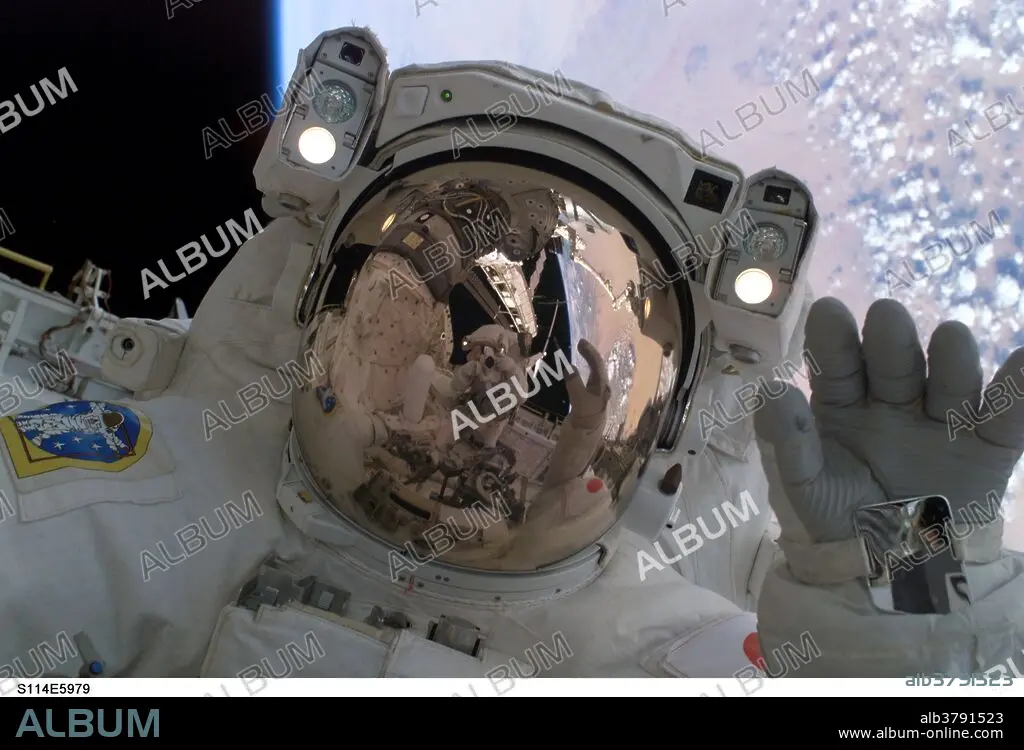
STS-114, JAXA Astronaut Noguchi Spacewalk, 2005
| Teilen |
|---|
 Pinterest Pinterest |
 Twitter Twitter |
 Facebook Facebook |
 Link kopieren Link kopieren |
 Email Email |
|
Zu einem anderen Lightbox hinzufügen |
|
Zu einem anderen Lightbox hinzufügen |


Haben Sie bereits ein Konto? Anmelden
Sie haben kein Konto? Registrieren
Dieses Bild kaufen.
Nutzung auswählen:

Titel: STS-114, JAXA Astronaut Noguchi Spacewalk, 2005
Untertitel: Siehe automatische Übersetzung
JAXA astronaut Soichi Noguchi. STS-114 was the first "Return to Flight" Space Shuttle mission following the Columbia disaster. Discovery launched on July 26, 2005, at 10:39 EDT. Discovery delivered supplies to the ISS, but the major focus of the mission was testing and evaluating new flight safety techniques, and inspection and repair techniques. The crewmembers used the new Orbiter Boom Sensor System - a set of instruments on a 50 foot extension attached to the Canadarm. The OBSS instrument package consists of visual imaging equipment and a Laser Dynamic Range Imager to detect problems with the shuttle's Thermal Protection System. The crew scanned the leading edges of the wings, the nose cap, and the crew compartment for damage. Analysis of the launch footage showed debris separating from the external tank during ascent; the issue that had set off the Columbia disaster. NASA decided to postpone future shuttle flights pending additional modifications to the flight hardware. Flights resumed a year later with STS-121.
JAXA astronaut Soichi Noguchi. STS-114 was the first "Return to Flight" Space Shuttle mission following the Columbia disaster. Discovery launched on July 26, 2005, at 10:39 EDT. Discovery delivered supplies to the ISS, but the major focus of the mission was testing and evaluating new flight safety techniques, and inspection and repair techniques. The crewmembers used the new Orbiter Boom Sensor System - a set of instruments on a 50 foot extension attached to the Canadarm. The OBSS instrument package consists of visual imaging equipment and a Laser Dynamic Range Imager to detect problems with the shuttle's Thermal Protection System. The crew scanned the leading edges of the wings, the nose cap, and the crew compartment for damage. Analysis of the launch footage showed debris separating from the external tank during ascent; the issue that had set off the Columbia disaster. NASA decided to postpone future shuttle flights pending additional modifications to the flight hardware. Flights resumed a year later with STS-121.
Bildnachweis: Album / NASA/Science Source
Freigaben (Releases): ? Modellfreigabe: Nein - ? Eigentumsfreigabe: Nein
Rechtefragen?
Rechtefragen?
Bildgröße: 3032 × 2064 px | 17.9 MB
Druckgröße: 25.7 × 17.5 cm | 1193.7 × 812.6 in (300 dpi)
Schlüsselwörter: 21. JAHRHUNDERT • AMERIKANER • BERÜHMT • BERÜHMTE PERSÖNLICHKEIT • ENTDECKUNG • EREIGNIS • NASA • NOTABEL • PROMINENZ • RAUMFAHRT • RAUMSCHIFF • SPACE SHUTTLE • TECHNOLOGIE
