

alb5469489
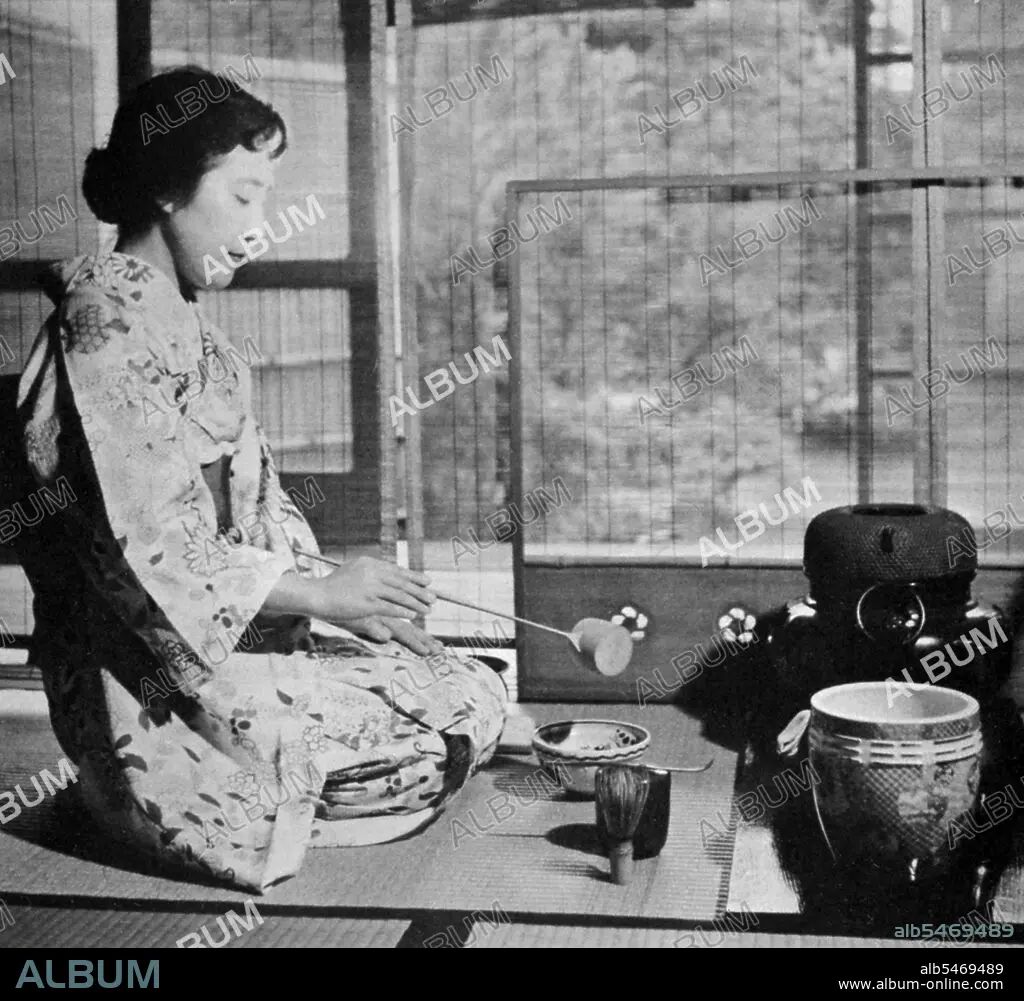
Post World War II, a kimono-clad geisha performing chanoyu.
| Teilen |
|---|
 Pinterest Pinterest |
 Twitter Twitter |
 Facebook Facebook |
 Link kopieren Link kopieren |
 Email Email |
|
Zu einem anderen Lightbox hinzufügen |
|
Zu einem anderen Lightbox hinzufügen |


Haben Sie bereits ein Konto? Anmelden
Sie haben kein Konto? Registrieren
Dieses Bild kaufen.
Nutzung auswählen:

Titel: Post World War II, a kimono-clad geisha performing chanoyu.
Untertitel: Siehe automatische Übersetzung
On 6 August and 9 August, 1945, the USA dropped two atomic bombs on Hiroshima and on Nagasaki respectively. More than 200,000 people died as a direct result of these two bombings, during which the Soviet Union entered the war against Japan. Japan surrendered on 15 August, 1945 and a formal Instrument of Surrender was signed on 2 September, 1945, on the battleship USS Missouri in Tokyo Bay. The surrender was accepted by Gen Douglas MacArthur as Supreme Allied Commander, with representatives of each Allied nation, from a Japanese delegation led by Mamoru Shigemitsu. A separate surrender ceremony between Japan and China was held in Nanking on 9 September, 1945. Following this period, MacArthur established bases in Japan to oversee the postwar development of the country. This period in Japanese history is known as the Occupation. US President Harry Truman officially proclaimed an end of hostilities on 31 December, 1946. After a period of US occupation (1945-1952), Japan regained its independence. Japan was thereafter forbidden to have a standing army or wage war by Article 9 of its Constitution.
On 6 August and 9 August, 1945, the USA dropped two atomic bombs on Hiroshima and on Nagasaki respectively. More than 200,000 people died as a direct result of these two bombings, during which the Soviet Union entered the war against Japan. Japan surrendered on 15 August, 1945 and a formal Instrument of Surrender was signed on 2 September, 1945, on the battleship USS Missouri in Tokyo Bay. The surrender was accepted by Gen Douglas MacArthur as Supreme Allied Commander, with representatives of each Allied nation, from a Japanese delegation led by Mamoru Shigemitsu. A separate surrender ceremony between Japan and China was held in Nanking on 9 September, 1945. Following this period, MacArthur established bases in Japan to oversee the postwar development of the country. This period in Japanese history is known as the Occupation. US President Harry Truman officially proclaimed an end of hostilities on 31 December, 1946. After a period of US occupation (1945-1952), Japan regained its independence. Japan was thereafter forbidden to have a standing army or wage war by Article 9 of its Constitution.
Bildnachweis: Album / Pictures From History/Universal Images Group
Freigaben (Releases): ? Modellfreigabe: Nein - ? Eigentumsfreigabe: Nein
Rechtefragen?
Rechtefragen?
Bildgröße: 4400 × 4072 px | 51.3 MB
Druckgröße: 37.3 × 34.5 cm | 1732.3 × 1603.1 in (300 dpi)
Schlüsselwörter: AMERIKA • AMERIKA, KONTINENT • AMERIKANISCH (US) • ASIEN • ASIEN, KONTINENT • GEISHA • GESCHICHTE • JAPAN • JAPANER • JAPANERIN • JAPANISCH • KIMONO • KIMONOS • KONTINENT, ASIEN • KONTINENT: AMERIKA • ORMNAMENT: JAPANISCH • TEEZEREMONIE • US-AMERIKANISCH • USA • USA-VEREINIGE STAATEN • ZEITGESCHICHTE
