

alb8349325
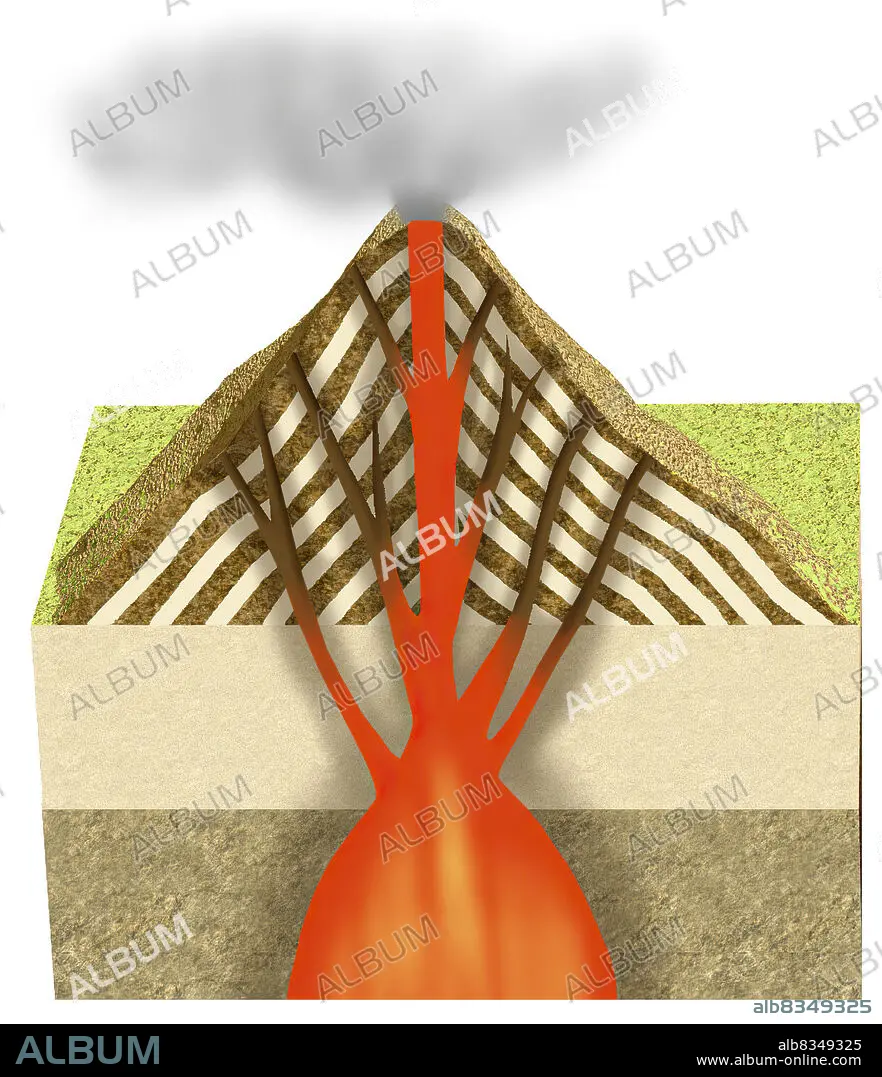
Craters more than 1 km in diameter are called calderas. Formed when the top of a volcanic cone collapses, they may be up to 60 km in diameter. During an eruption, magma is ejected from the magma chamber via the central vent and secondary vents. The vents are gradually emptied. The central part of the volcano can no longer support the weight of the volcanic cone and the top collapses. The cones material covers the bottom of the caldera, which has very steep sides. Some calderas fill with water and form lakes.
| Share |
|---|
 Pinterest Pinterest |
 Twitter Twitter |
 Facebook Facebook |
 Copy link Copy link |
 Email Email |
|
Add to another lightbox |
|
Add to another lightbox |


Buy this image.
Select the use:

Caption: Craters more than 1 km in diameter are called calderas. Formed when the top of a volcanic cone collapses, they may be up to 60 km in diameter. During an eruption, magma is ejected from the magma chamber via the central vent and secondary vents. The vents are gradually emptied. The central part of the volcano can no longer support the weight of the volcanic cone and the top collapses. The cones material covers the bottom of the caldera, which has very steep sides. Some calderas fill with water and form lakes.
Credit: Album / Universal Images Group
Releases: ? Model Release: No - ? Property Release: No
Rights questions?
Rights questions?
Image size: 2514 × 2919 px | 21.0 MB
Print size: 21.3 × 24.7 cm | 989.8 × 1149.2 in (300 dpi)
Keywords: 51273 • COLOR • COLOUR • EARTH • FLUSH • FORMATION OF A CALDERA • GEOLOGIA • GEOLOGY • ILLUSTRATION • ILLUSTRATIONS • ILUSTRATION • TECTONIC AND VOLCANISM • VOLCANIC ERUPTION
