

alb3465577
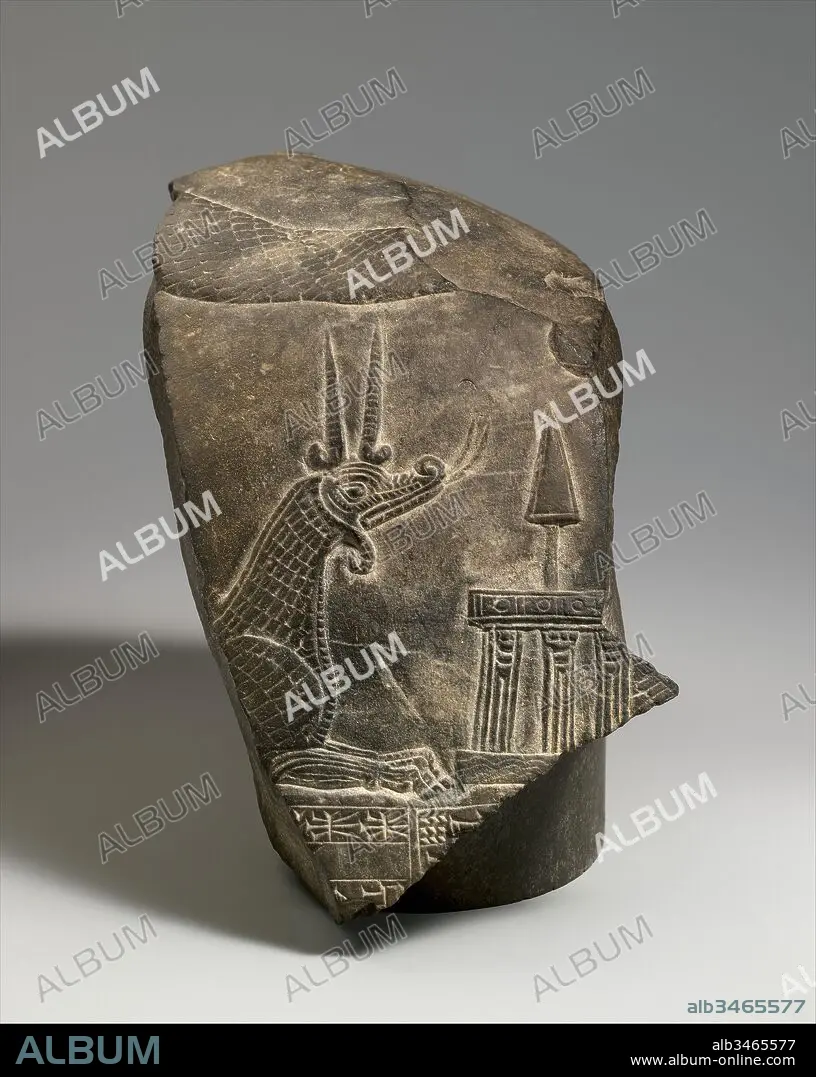
Top fragment of a kudurru with a mushhushshu dragon and divine symbols, Second Dynasty of Isin, ca. 1156–1025 B.C., Mesopotamia, Limestone, H. 6 1/2 x W. 4 x D. 7 1/4 in. (16.5 x 10 x 18.4 cm), Stone-Sculpture-Inscribed, Known as kudurrus or narus, a distinctive group of Babylonian stone monuments were once thought to be boundary markers placed in fields. In fact they are more likely to have been placed in temples, where their contents were preserved and sanctified.
| Share |
|---|
 Pinterest Pinterest |
 Twitter Twitter |
 Facebook Facebook |
 Copy link Copy link |
 Email Email |
|
Add to another lightbox |
|
Add to another lightbox |


Buy this image.
Select the use:

Caption: Top fragment of a kudurru with a mushhushshu dragon and divine symbols, Second Dynasty of Isin, ca. 1156–1025 B.C., Mesopotamia, Limestone, H. 6 1/2 x W. 4 x D. 7 1/4 in. (16.5 x 10 x 18.4 cm), Stone-Sculpture-Inscribed, Known as kudurrus or narus, a distinctive group of Babylonian stone monuments were once thought to be boundary markers placed in fields. In fact they are more likely to have been placed in temples, where their contents were preserved and sanctified
Credit: Album / quintlox
Releases: ? Model Release: No - ? Property Release: No
Rights questions?
Rights questions?
Image size: 3995 × 5014 px | 57.3 MB
Print size: 33.8 × 42.5 cm | 1572.8 × 1974.0 in (300 dpi)
Keywords: 1156–1025 B. C • 16.5 10 18.4 CM • 4 D • 6 1/2 X W • 7 1/4 • ANT. OR.: MESOPOTAMIA • ANTIQUITIES ORIENTAL: MESOPOTAMIA • BABYLONIAN STONE MONUMENTS • BOUNDARY MARKERS • CONTENTS • DISTINCTIVE GROUP • DIVINE SYMBOLS • FACT • FIELDS • H • H. • ISIN • KUDURRU • KUDURRUS • LIMESTONE • MESOPOTAMIA • MESOPOTAMIAN • MUSHHUSHSHU DRAGON • NARUS • PLACED • PRESERVED • SANCTIFIED • SECOND DYNASTY • STONE-SCULPTURE-INSCRIBED • TEMPLES • THOUGHT • TOP FRAGMENT • ÇA
