

alb9202641
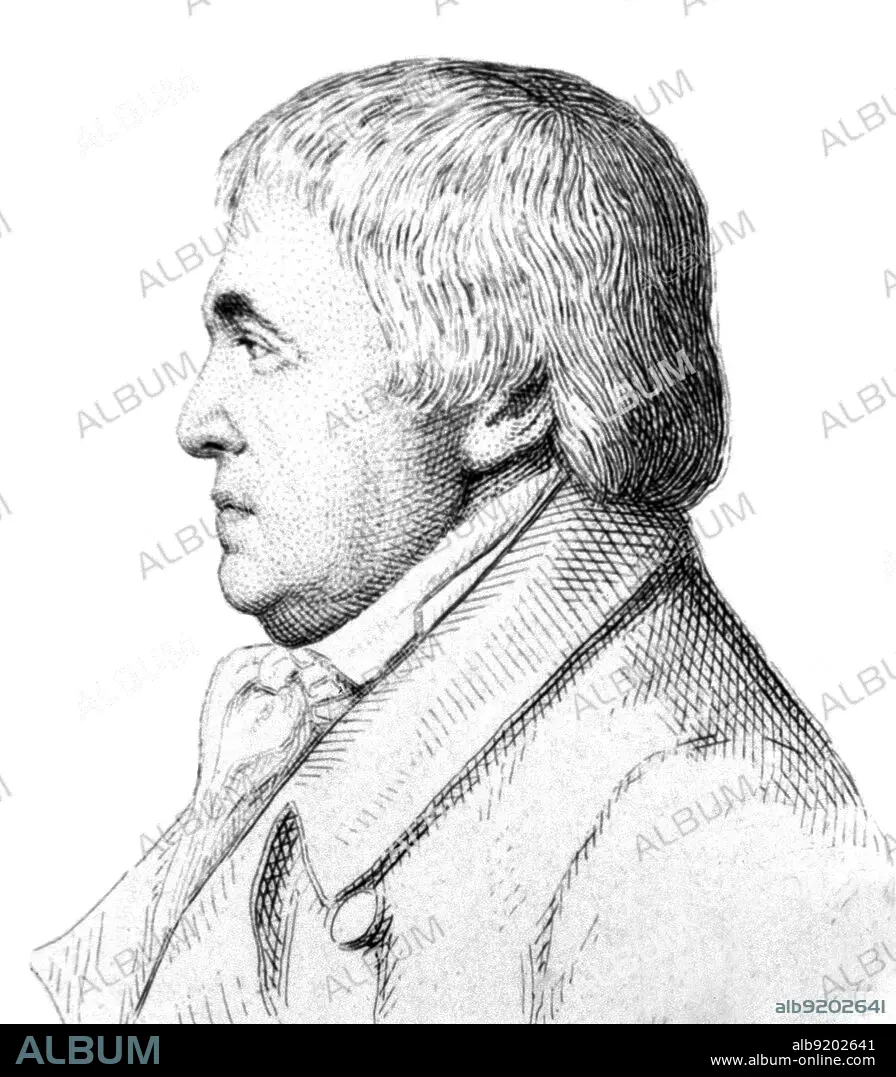
Franz Mesmer, German Physician
| Share |
|---|
 Pinterest Pinterest |
 Twitter Twitter |
 Facebook Facebook |
 Copy link Copy link |
 Email Email |
|
Add to another lightbox |
|
Add to another lightbox |


Buy this image.
Select the use:

Title: Franz Mesmer, German Physician
Caption: Franz Anton Mesmer (1734-1815) was a German physician with an interest in astronomy, who theorized that there was a natural energetic transference that occurred between all animated and inanimate objects that he called magnétisme animal (animal magnetism) and other spiritual forces often grouped together as mesmerism. Mesmerism is considered to be a form of vitalism and shares features with other vitalist theories that also emphasize the movement of life energy through distinct channels in the body. There those who thought he was a charlatan and those who thought he had made a great discovery. Mesmer treated patients both individually and in groups. He would often conclude his treatments by playing some music on a glass armonica. Mesmer tried and failed to get either the Royal Academy of Sciences or the Royal Society of Medicine to provide official approval for his doctrines. In 1779, Mesmer wrote an 88-page book entitled: Mémoire sur la découverte du magnétisme animal, to which he appended his famous 27 Propositions that outlined his theory. In 1784 King Louis XVI appointed commissioners to investigate animal magnetism. The commission concluded that there was no evidence for such a fluid. Whatever benefit the treatment produced was attributed to imagination. Mesmer lived to be 80 years old.
Credit: Album / NLM / Science Source
Releases: ? Model Release: No - ? Property Release: No
Rights questions?
Rights questions?
Image size: 3000 × 3430 px | 29.4 MB
Print size: 25.4 × 29.0 cm | 1181.1 × 1350.4 in (300 dpi)
Keywords: 1734 • 1779 • 1784 • 1815 • 18TH CENTURY • 18TH CENTURY, THE • 18TH CENTURY. • 18TH • 19 CENTURY • 19TH CENTURY • 19TH CENTURY. • 19TH • 19TH-CENTURY • A • ANIMAL • ANIMATED • ANTON • ART • BW • CELEBRITIES • CELEBRITY • CENTURY • CHARLATAN • DOCTOR • DU • ENERGETIC • ENERGIA • ENERGY • ENGRAVING • EUROPE • F • F. A • F. A. • FAMOUS PEOPLE • FAMOUS • FIGURE • FORCE • FORCES • FRANZ • GERMAN • GERMANS • HISTORIC • HISTORICAL • HISTORY • HYPNOSIS • HYPNOTIZING • ILLUSTRATION • ILLUSTRATIONS • ILUSTRATION • INANIMATE • LA • LIFE • MAGNETIC • MAGNETISM • MALE • MAN • MEDICAL • MEDICO • MEN • MESMER • MESMERISM • NATURAL • NINETEENTH CENTURY • OBJECTS • OBJETS • PERSON • PERSONALITY • PHYSICIAN • PORTAIT • PORTRAIT • POTRAIT • QUACKERY • SCIENCE • SPIRITUAL • SUR • THEORIST • TRANSFERENCE • TREATMENT • VITALISM • XIX CENTURY • XVIII CENTURY
