

alb5474311
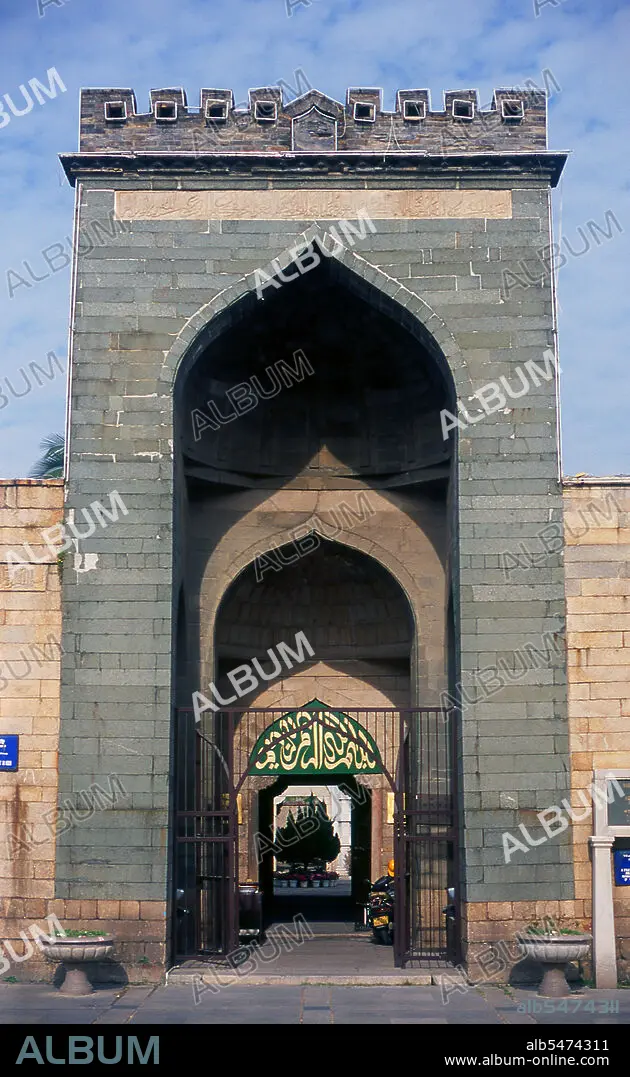
The entrance to the Qingjing Mosque, Quanzhou, Fujian Province.
| Share |
|---|
 Pinterest Pinterest |
 Twitter Twitter |
 Facebook Facebook |
 Copy link Copy link |
 Email Email |
|
Add to another lightbox |
|
Add to another lightbox |


Buy this image.
Select the use:

Title: The entrance to the Qingjing Mosque, Quanzhou, Fujian Province.
Caption: The Qingjing Mosque, also known as the Ashab Mosque, was initially built in 1009 during the Song Dynasty (960-1279). It was based on a mosque in Damascus, Syria and is the oldest Arab-style mosque in China. The mosque, built and repaired by Arab Muslims, reflects the longstanding cultural exchange between China and the Arabic countries. A thousand years ago Quanzhou was arguably the worlds most significant port, with a lucrative position at the centre of the maritime silk trade. It prospered enormously during the Song and Yuan dynasties, when it was visited by Marco Polo (the port was known as Zaytoun then) and played host to thousands of Arab merchants, many of whom made fortunes introducing Chinese inventions such as gunpowder and printing to the West. The port fell into irreversible decline following the restrictions on maritime trade imposed by the Ming emperors in the 15th century.
Credit: Album / Pictures From History/Universal Images Group
Releases: ? Model Release: No - ? Property Release: No
Rights questions?
Rights questions?
Image size: 3234 × 5255 px | 48.6 MB
Print size: 27.4 × 44.5 cm | 1273.2 × 2068.9 in (300 dpi)
