

alb4857791
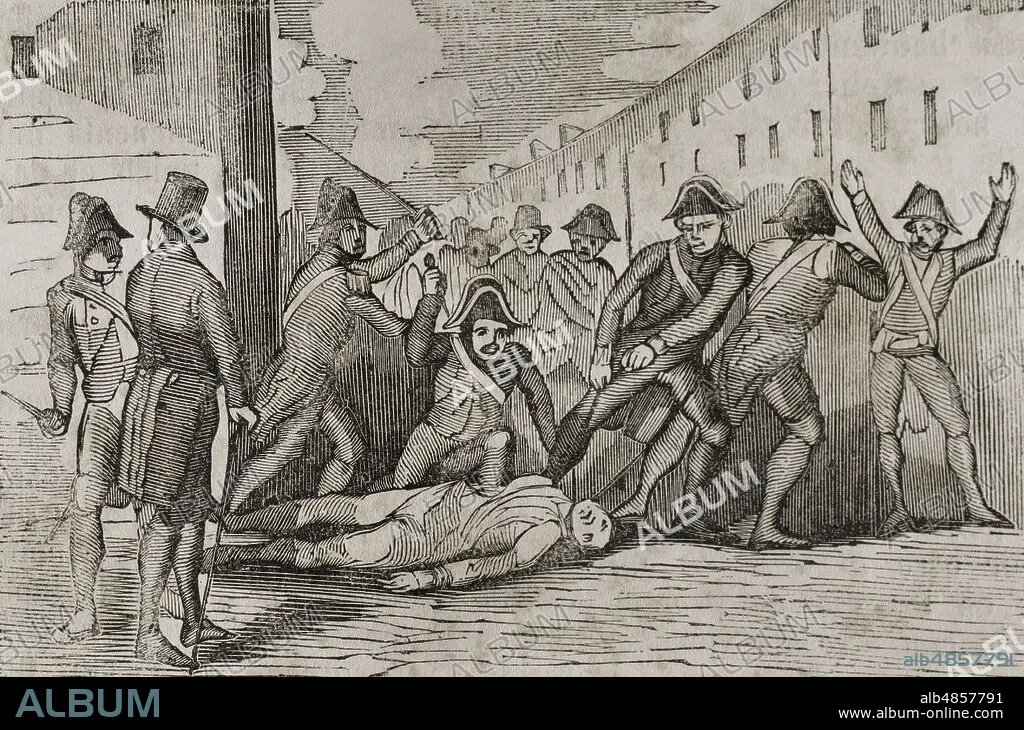
Guerra de la Independencia Española (1808-1814). El 24 de junio de 1808 fué asesinado en Villafranca del Bierzo, Antonio Filangieri Montalto, capitán general de Galicia, el cual era considerado afrancesado por su amistad con Murat. Su misión fué asentarse en la Capitanía de La Coruña para apaciguar la rebelión ciudadana. La Junta de Galicia, ante la imposibiliad de contener el alzamiento contra los franceses el 30 de mayo de 1808, formó un ejército con el objetivo de luchar contra las tropas napoleónicas, al frente del que se puso Filangieri rumbo a León. Estableció el cuartel general en Villafranca del Bierzo mientras realizaban operaciones en el Puerto del Manzanal. Un sargento al mando de un piquete de soldados, todos ellos del Regimiento Navarra, se dirigió a la habitación en la que residía Filangieri para asesinarle. Filangieri huyó, cayendo al suelo, siendo capturado por sus atacantes quienes lo mataron. Su cuerpo fué arrastrado por las calles de la población y abandonado hasta el día siguiente. Asesinato de Filangieri. Grabado. Historia del Levantamiento, Guerra y Revolución de España, por el Conde de Toreno, Madrid 1852.
| Share |
|---|
 Pinterest Pinterest |
 Twitter Twitter |
 Facebook Facebook |
 Copy link Copy link |
 Email Email |
|
Add to another lightbox |
|
Add to another lightbox |


Buy this image.
Select the use:

Caption:
Automatic translation: Spanish War of Independence (1808-1814). On June 24, 1808, Antonio Filangieri Montalto, captain general of Galicia, was assassinated in Villafranca del Bierzo, who was considered Frenchified because of his friendship with Murat. His mission was to settle in the Captaincy of La Coruña to appease the citizen rebellion. The Junta de Galicia, faced with the impossibility of containing the uprising against the French on May 30, 1808, formed an army with the aim of fighting against the Napoleonic troops, led by Filangieri towards León. He established the headquarters in Villafranca del Bierzo while they carried out operations in Puerto del Manzanal. A sergeant in command of a picket of soldiers, all of them from the Navarra Regiment, went to the room where Filangieri lived to assassinate him. Filangieri fled, falling to the ground, being captured by his attackers who killed him. His body was dragged through the streets of the town and abandoned until the next day. Filangieri murder. Recorded. History of the Uprising, War and Revolution of Spain, by the Count of Toreno, Madrid 1852
Guerra de la Independencia Española (1808-1814). El 24 de junio de 1808 fué asesinado en Villafranca del Bierzo, Antonio Filangieri Montalto, capitán general de Galicia, el cual era considerado afrancesado por su amistad con Murat. Su misión fué asentarse en la Capitanía de La Coruña para apaciguar la rebelión ciudadana. La Junta de Galicia, ante la imposibiliad de contener el alzamiento contra los franceses el 30 de mayo de 1808, formó un ejército con el objetivo de luchar contra las tropas napoleónicas, al frente del que se puso Filangieri rumbo a León. Estableció el cuartel general en Villafranca del Bierzo mientras realizaban operaciones en el Puerto del Manzanal. Un sargento al mando de un piquete de soldados, todos ellos del Regimiento Navarra, se dirigió a la habitación en la que residía Filangieri para asesinarle. Filangieri huyó, cayendo al suelo, siendo capturado por sus atacantes quienes lo mataron. Su cuerpo fué arrastrado por las calles de la población y abandonado hasta el día siguiente. Asesinato de Filangieri. Grabado. Historia del Levantamiento, Guerra y Revolución de España, por el Conde de Toreno, Madrid 1852.
Credit:
Album / Prisma
Releases:
Image size:
4252 x 2811 px | 34.2 MB
Print size:
36.0 x 23.8 cm | 14.2 x 9.4 in (300 dpi)
Keywords:
1808 • 19 CENTURY • 19TH CENTURY • 19TH CENTURY. • 19TH • 19TH-CENTURY • ACCUSED (FEMALE) • ACCUSED (MALE) • ACCUSED DEFENDANT • ARMY: SOLDIER • ASSASSINATION • BETRAYAL • BODY • CADAVER • CASTILE • CASTILLA Y LEON • CASTILLA-LEON • CONTEMPORARY AGE • CONTEMPORARY PERIOD • CORPS • CORPSE • CROWD • CROWDED • DEAD BODY • DEATH • DEFENDANT (FEMALE) • DEFENDANT (MALE) • ENGRAVED • ENGRAVING (ARTWORK) • ENGRAVING • ENGRAVING. • ENGRAVINGS • ETCHING • EUROPA • EUROPE • EUROPEA • EUROPEAN • EUROPEANS • FRENCH INVASION • FRENCH WAR • FRENCHMAN • HISTORIA UNIVERSAL • HISTORIA • HISTORY • HISTORY. • HOMICIDE • KILL • KILLING • KILLS • MULTITUDE • MURDER • MURDERING • NAPOLEONIC INVASION • NINETEENTH CENTURY • PEOPLE'S ARMY SOLDIER • PRINT • RUSH (CROWD) • SOLDIER SOLDIERS • SOLDIER • SOLDIERS • SOLIDER • SPAIN • SPANISH WAR OF INDEPENDENCE • SPANISH • THRONG • TRAITOR • TREASON • TROOPS • WAR OF INDEPENDENCE • WARRIOR • WARRIORS • XIX CENTURY
