

alb3473333
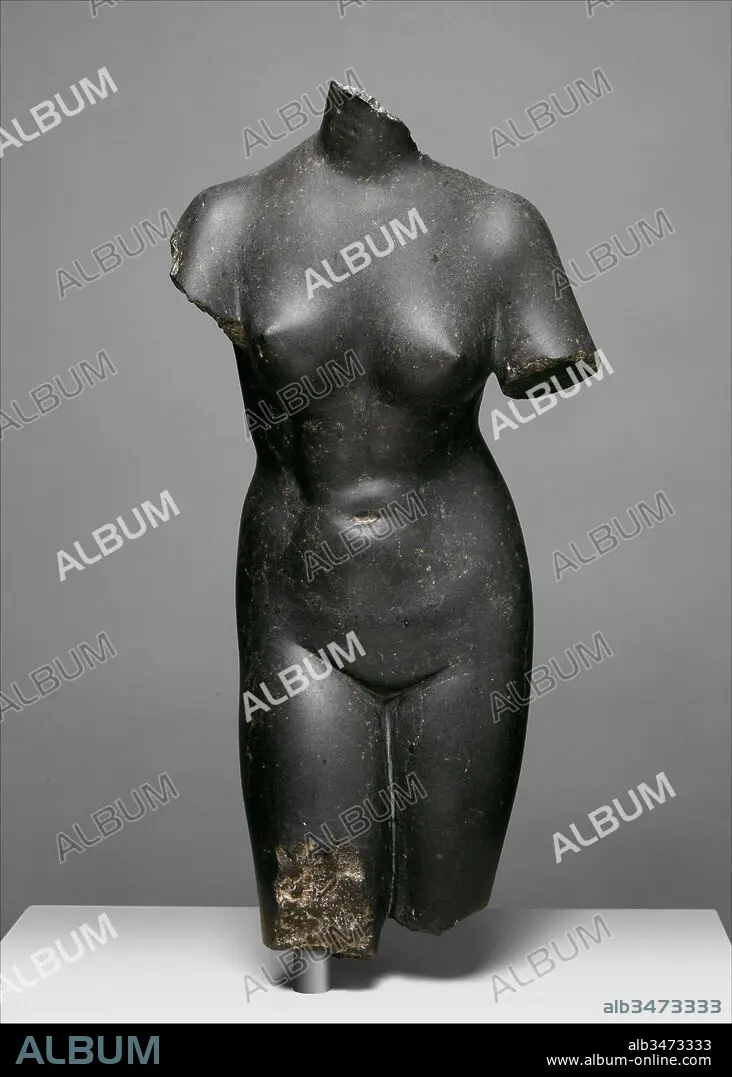
Basalt statue of Aphrodite, Imperial, late 1st–early 2nd century A.D., Roman, Basalt, 16 5/8in. (42.2cm), Stone Sculpture, Adaptation of a Greek statue of the 3rd century B.C. known as the Medici Aphrodite. The Romans used colored stones for floors, wall revetment, and sculpture. This basalt version of a popular statue type for Aphrodite may have been intended to evoke the darkness of bronze.
| Share |
|---|
 Pinterest Pinterest |
 Twitter Twitter |
 Facebook Facebook |
 Copy link Copy link |
 Email Email |
|
Add to another lightbox |
|
Add to another lightbox |


Buy this image.
Select the use:

Caption: Basalt statue of Aphrodite, Imperial, late 1st–early 2nd century A.D., Roman, Basalt, 16 5/8in. (42.2cm), Stone Sculpture, Adaptation of a Greek statue of the 3rd century B.C. known as the Medici Aphrodite. The Romans used colored stones for floors, wall revetment, and sculpture. This basalt version of a popular statue type for Aphrodite may have been intended to evoke the darkness of bronze
Credit: Album / quintlox
Releases: ? Model Release: No - ? Property Release: No
Rights questions?
Rights questions?
Image size: 2641 × 3694 px | 27.9 MB
Print size: 22.4 × 31.3 cm | 1039.8 × 1454.3 in (300 dpi)
Keywords: 16 5/8IN • 3RD B. C • 42.2CM • ADAPTATION • APHRODITE • ARTFORM: BRONZEWORK • BASALT STATUE • BASALT VERSION • BASALT • BRONCE • BRONZE BRASS • BRONZE • BRONZES • COLORED STONES • DARKNESS • EVOKE • FLOORS • GRECO • GREEK • GREEKS • HELENICO • HELENISTICO • HELLENIC • HELLENISTIC • IMPERIAL • INTENDED • LATE 1ST–EARLY 2ND CENTURY. D • MEDICI APHRODITE • POPULAR • ROMAN • ROMANO • ROMANS • SCULPTED • SCULPTING • SCULPTURE • SCULPTURE. • SCULPTURES • SCULTURE • SCUPTURE • STONE SCULPTURE • TYPE • WALL REVETMENT
