

alb9493874
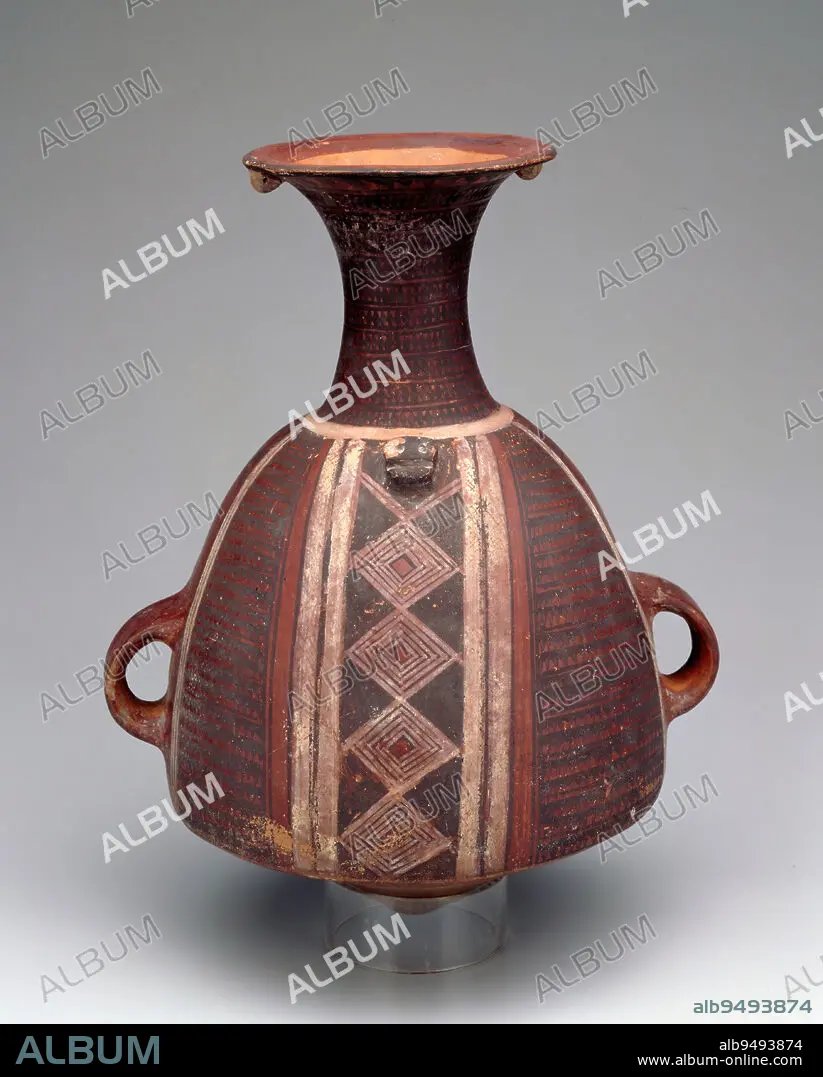
Vessel, 15th century, 13 1/2 in. (34.3 cm), Clay, pigments, Peru, 15th century, Urpu, a distinctively Inka vessel shape, is characterized by a pointed base, bulbous body, low handles, long, slender neck, and flaring rim. The pointed bottom helped balance the vessel in a depression in the earth. Rope was threaded through the handles and around the lug, then strapped onto porters' backs for transport. Rather than adopting the word urpu from the local Quechua language, early archaeologists called this type of vessel aryballos, a name borrowed from an ancient Greek vase form illustrated here in a line drawing. Urpu were produced in and around the Inka capital of Qosqo (Cuzco) for use in making, storing, and transporting food and beverages, in particular chicha or fermented maize beer.
| Share |
|---|
 Pinterest Pinterest |
 Twitter Twitter |
 Facebook Facebook |
 Copy link Copy link |
 Email Email |
|
Add to another lightbox |
|
Add to another lightbox |


Buy this image.
Select the use:

Caption: Vessel, 15th century, 13 1/2 in. (34.3 cm), Clay, pigments, Peru, 15th century, Urpu, a distinctively Inka vessel shape, is characterized by a pointed base, bulbous body, low handles, long, slender neck, and flaring rim. The pointed bottom helped balance the vessel in a depression in the earth. Rope was threaded through the handles and around the lug, then strapped onto porters' backs for transport. Rather than adopting the word urpu from the local Quechua language, early archaeologists called this type of vessel aryballos, a name borrowed from an ancient Greek vase form illustrated here in a line drawing. Urpu were produced in and around the Inka capital of Qosqo (Cuzco) for use in making, storing, and transporting food and beverages, in particular chicha or fermented maize beer.
Credit: Album / quintlox
Releases: ? Model Release: No - ? Property Release: No
Rights questions?
Rights questions?
Image size: 3780 × 4705 px | 50.9 MB
Print size: 32.0 × 39.8 cm | 1488.2 × 1852.4 in (300 dpi)
Keywords: 13 1/2 • 15 15TH XV XVTH FIFTEENTH CENTURY • 15TH CENTURY • 15TH CENTURY; • 15TH • 34.3 CM • ADOPTING • ANCIENT GREEK VASE FORM ILLUSTRATED • BEVERAGE • BEVERAGES • BULBOUS BODY • CARGO • CHARACTERIZED • CLAY • CUZCO • DEPRESSION • DISTINCTIVELY INKA VESSEL SHAPE • DRINK • DRINKING • EARLY ARCHAEOLOGISTS • EARTH • FERMENTED MAIZE BEER • FIFTEENTH CENTURY • FLARING RIM • HANDLES • INKA CAPITAL • LINE DRAWING • LOCAL QUECHUA LANGUAGE • LONG • LOW HANDLES • LUG • NAME BORROWED • PARTICULAR CHICHA • PERU • PIGMENTS • POINTED BASE • POINTED BOTTOM HELPED BALANCE • PORTERS' BACKS • PRODUCED • QOSQO • ROPE • SIGLO XV • SLENDER NECK • STORING • STRAPPED • THREADED • TRANSPORT • TRANSPORT. • TRANSPORTATION • TRANSPORTING FOOD • TRANSPORTS • TYPE • URPU • VESSEL ARYBALLOS • VESSEL • WORD URPU • XV CENTURY
