

alb9469808
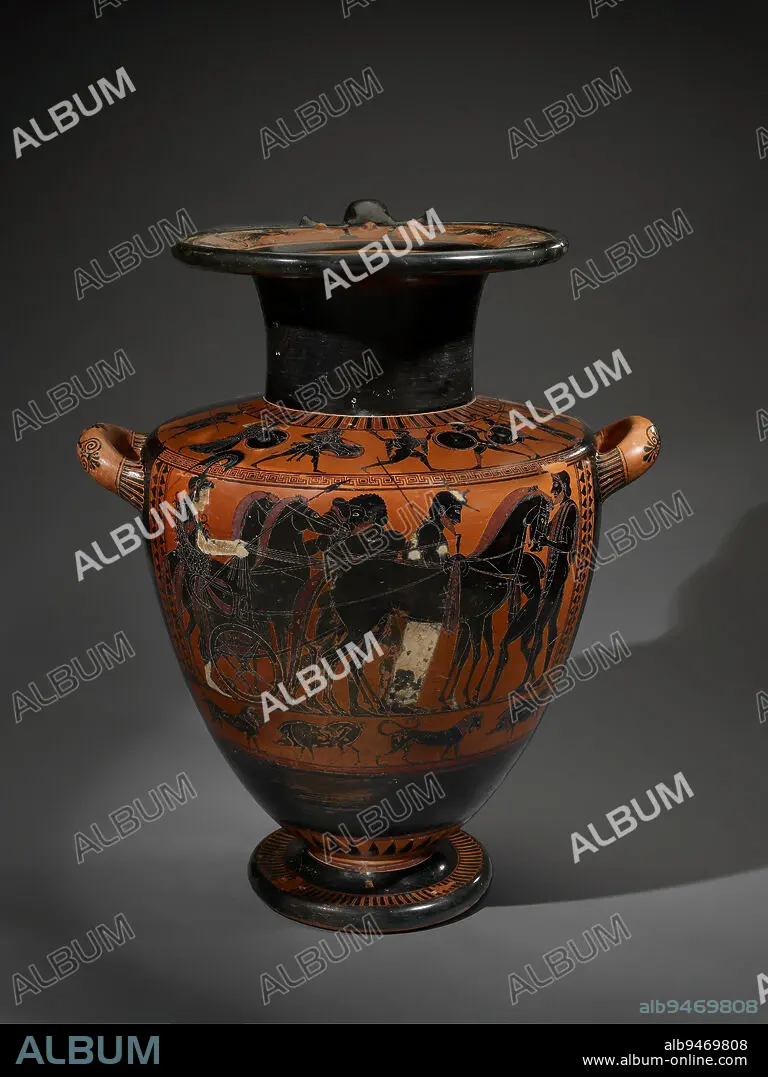
Black-figured Hydria, c. 530 BCE, Attributed to the Antimenes Painter, Greek, (Attica), 20 3/4 x 17 x 15 in. (52.71 x 43.18 x 38.1 cm), Slip-glazed earthenware, Greece, 6th5th century BCE, The Antimenes Painter decorated many hydriae--three-handled water jars--of the sort seen here. In the main scene the goddess Athena, painted white to indicate her gender, helps harness her four-horse chariot, assisted by several grooms and the bearded charioteer. This harnessing technique accurately reflects sixth-century b.c. practices. The appearance of Athena dressed for war may refer to her legendary invention of the war chariot or perhaps to an episode from the Iliad.The scene on the shoulder of the vase depicts Zeus, the central figure, intervening in the fight between Heracles (on Zeus' right) and Cycnus (on his left). This divine battle occurred because Cycnus stole the sacrificial animals of the god Apollo.
| Share |
|---|
 Pinterest Pinterest |
 Twitter Twitter |
 Facebook Facebook |
 Copy link Copy link |
 Email Email |
|
Add to another lightbox |
|
Add to another lightbox |


Buy this image.
Select the use:

Caption: Black-figured Hydria, c. 530 BCE, Attributed to the Antimenes Painter, Greek, (Attica), 20 3/4 x 17 x 15 in. (52.71 x 43.18 x 38.1 cm), Slip-glazed earthenware, Greece, 6th5th century BCE, The Antimenes Painter decorated many hydriae--three-handled water jars--of the sort seen here. In the main scene the goddess Athena, painted white to indicate her gender, helps harness her four-horse chariot, assisted by several grooms and the bearded charioteer. This harnessing technique accurately reflects sixth-century b.c. practices. The appearance of Athena dressed for war may refer to her legendary invention of the war chariot or perhaps to an episode from the Iliad.The scene on the shoulder of the vase depicts Zeus, the central figure, intervening in the fight between Heracles (on Zeus' right) and Cycnus (on his left). This divine battle occurred because Cycnus stole the sacrificial animals of the god Apollo.
Credit: Album / quintlox
Releases: ? Model Release: No - ? Property Release: No
Rights questions?
Rights questions?
Image size: 4879 × 6506 px | 90.8 MB
Print size: 41.3 × 55.1 cm | 1920.9 × 2561.4 in (300 dpi)
Keywords: 530 BCE • 6TH5TH CENTURY BCE • ANTIMENES PAINTER DECORATED • ANTIMENES PAINTER • APPEARANCE • ASSISTED • ATHENA DRESSED • ATTICA • ATTRIBUTED • BEARDED CHARIOTEER • BLACK-FIGURED HYDRIA • CENTRAL FIGURE • CYCNUS STOLE • CYCNUS • DIVINE BATTLE OCCURRED • EPISODE • FIGHT • FOUR-HORSE CHARIOT • GENDER • GOD APOLLO • GODDESS ATHENA • GRECO • GREECE • GREEK • GREEKS • GUERRA • HARNESSING TECHNIQUE ACCURATELY REFLECTS SIXTH-CENTURY B. C • HELENICO • HELENISTICO • HELLENIC • HELLENISTIC • HELPS HARNESS • HERACLES • HUNDRED YEARS WAR • HYDRIAE • ILIAD • INDICATE • INTERVENING • LEFT • LEGENDARY INVENTION • MAIN SCENE • PAINTED WHITE • PERHAPS • PRACTICES • REFER • SACRIFICIAL ANIMALS • SCENE • SEVERAL GROOMS • SHOULDER • SLIP-GLAZED EARTHENWARE • SORT • THREE-HANDLED WATER JARS • VASE DEPICTS ZEUS • WAR CHARIOT • WAR • WARFARE • WARS • ZEUS' RIGHT
