

alb5539557
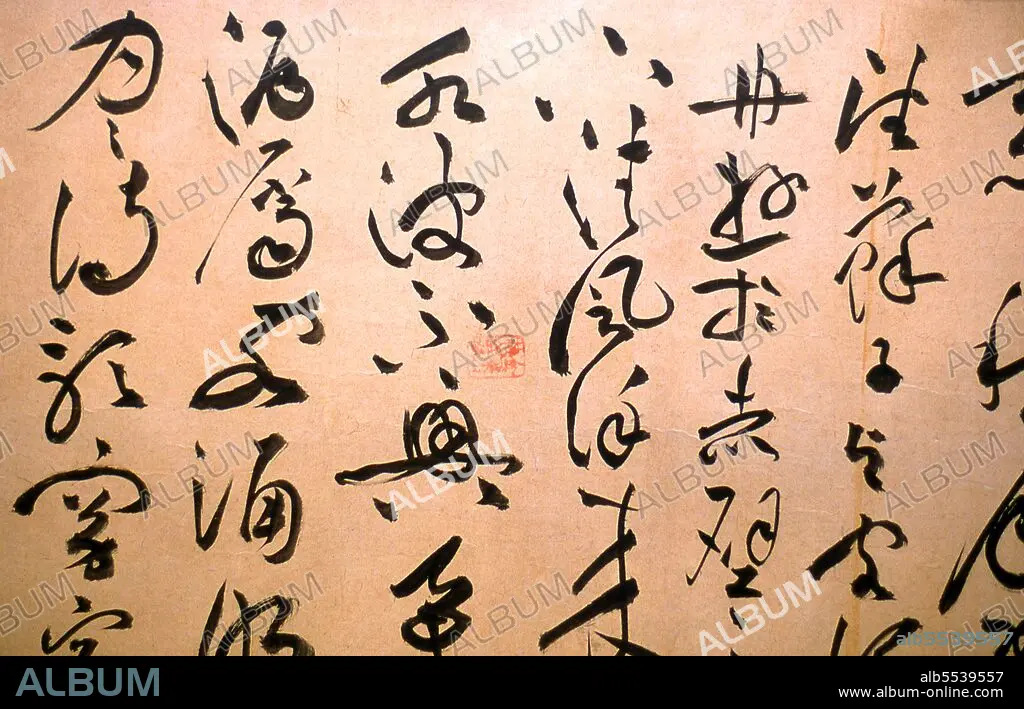
China: Caoshu (grass script, first developed during the Han Dynasty 206 BCE-220 CE), Ming Dynasty, Shanghai Museum, Shanghai.
| Compartir |
|---|
 Pinterest Pinterest |
 Twitter Twitter |
 Facebook Facebook |
 Copiar enlace Copiar enlace |
 Email Email |
|
Añadir a otro lightbox |
|
Añadir a otro lightbox |


¿Ya tienes cuenta? Iniciar sesión
¿No tienes cuenta? Regístrate
Compra esta imagen.
Selecciona el uso:

Título: China: Caoshu (grass script, first developed during the Han Dynasty 206 BCE-220 CE), Ming Dynasty, Shanghai Museum, Shanghai.
Descripción: Ver traducción automática
Cursive script (simplified Chinese: ??; traditional Chinese: ??; pinyin: caoshu) is a style of Chinese calligraphy. Cursive script is faster to write than other styles, but difficult to read for those unfamiliar with it. It functions primarily as a kind of shorthand script or calligraphic style. Cursive script originated in China during the Han dynasty (206 BCE - 220 CE) through the Jin Dynasty period (266 - 420 CE), in two phases. First, an early form of cursive developed as a cursory way to write the popular and not yet mature clerical script. Faster ways to write characters developed through four mechanisms: omitting part of a graph, merging strokes together, replacing portions with abbreviated forms (such as one stroke to replace four dots), or modifying stroke styles.
Cursive script (simplified Chinese: ??; traditional Chinese: ??; pinyin: caoshu) is a style of Chinese calligraphy. Cursive script is faster to write than other styles, but difficult to read for those unfamiliar with it. It functions primarily as a kind of shorthand script or calligraphic style. Cursive script originated in China during the Han dynasty (206 BCE - 220 CE) through the Jin Dynasty period (266 - 420 CE), in two phases. First, an early form of cursive developed as a cursory way to write the popular and not yet mature clerical script. Faster ways to write characters developed through four mechanisms: omitting part of a graph, merging strokes together, replacing portions with abbreviated forms (such as one stroke to replace four dots), or modifying stroke styles.
Crédito: Album / David Henley/Pictures from History/Universal Images Group
Autorizaciones: ? Cesión de modelo: No - ? Cesión de propiedad: No
¿Preguntas relacionadas con los derechos?
¿Preguntas relacionadas con los derechos?
Tamaño imagen: 5100 × 3266 px | 47.7 MB
Tamaño impresión: 43.2 × 27.7 cm | 2007.9 × 1285.8 in (300 dpi)
