

alb10668306
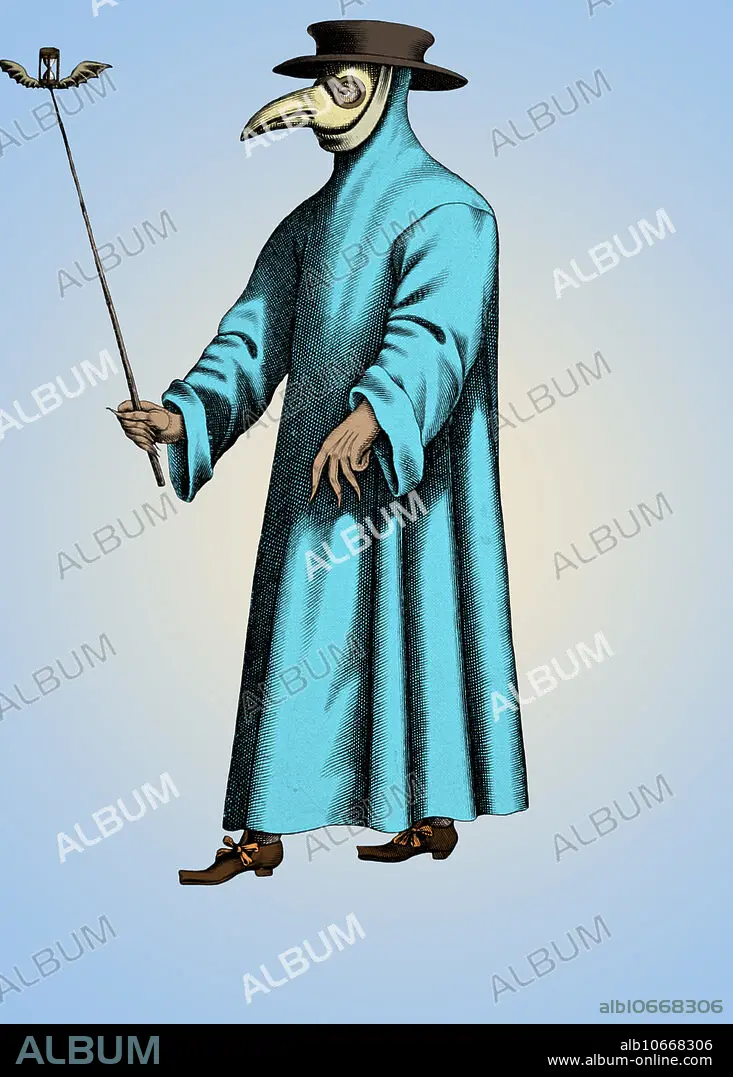
Plague Doctor, 17th Century
| Compartir |
|---|
 Pinterest Pinterest |
 Twitter Twitter |
 Facebook Facebook |
 Copiar enlace Copiar enlace |
 Email Email |
|
Añadir a otro lightbox |
|
Añadir a otro lightbox |


¿Ya tienes cuenta? Iniciar sesión
¿No tienes cuenta? Regístrate
Compra esta imagen.
Selecciona el uso:

Título: Plague Doctor, 17th Century
Descripción:
Traducción automática: El traje de médico con pico que llevaban los médicos de la peste tenía una capucha de cuero de ala ancha para indicar su profesión. Usaban bastones de madera para señalar áreas que necesitaban atención, examinar a los pacientes sin tocarlos, mantener alejadas a las personas y quitarles la ropa a las víctimas de la peste sin tener que tocarlas. La máscara tenía aberturas de cristal para los ojos y un pico curvo con forma de pájaro. La máscara tenía dos pequeños agujeros en la nariz y era un tipo de respirador que contenía elementos aromáticos; flores secas, hierbas, especias, alcanfor o una esponja de vinagre. Los médicos creían que las hierbas contrarrestarían los olores de la plaga y evitarían que se infectaran.
The beak doctor costume worn by plague doctors had a wide brimmed leather hood to indicate their profession. They used wooden canes to point out areas needing attention, to examine patients without touching them, to keep people away, and to remove clothing from plague victims without having to touch them. The mask had glass openings for the eyes and a curved beak shaped like that of a bird. The mask had two small nose holes and was a type of respirator which contained aromatic items; dried flowers, herbs, spices, camphor or a vinegar sponge. Doctors believed the herbs would counter the smells of the plague and prevent them from becoming infected.
Crédito: Album / Science Source
Autorizaciones: ? Cesión de modelo: No - ? Cesión de propiedad: No
¿Preguntas relacionadas con los derechos?
¿Preguntas relacionadas con los derechos?
Tamaño imagen: 3600 × 5031 px | 51.8 MB
Tamaño impresión: 30.5 × 42.6 cm | 1417.3 × 1980.7 in (300 dpi)
Palabras clave: ABRIGAR • BUBÓNICA • CANA • CANAVERAL • CAÑA (PLANTA) • CAÑA • CAÑAVERAL • COLOREADA • COLOREADO • CUERO • CURIOSO • DE MADERA • DOCTOR • EN COLOR • ENFERMEDAD • EUROPA • EXTRAÑO • FALLECIMIENTO • GRABADO • HISTORIA • HISTORICO • ILUSTRACION • ILUSTRACIONES • INFECCIOSAS • INUSUAL • JUNCO • JUNCOS • MASCARA • MAYOR • MEDICINA • MEDICO • NADIE • NEGRO • OBRA DE ARTE • PECULIAR • PESTE, LA • PICO • ROM • ROMA • ROPA • SIGLO XVII • SIGLO • TEXTO
