

alb3465577
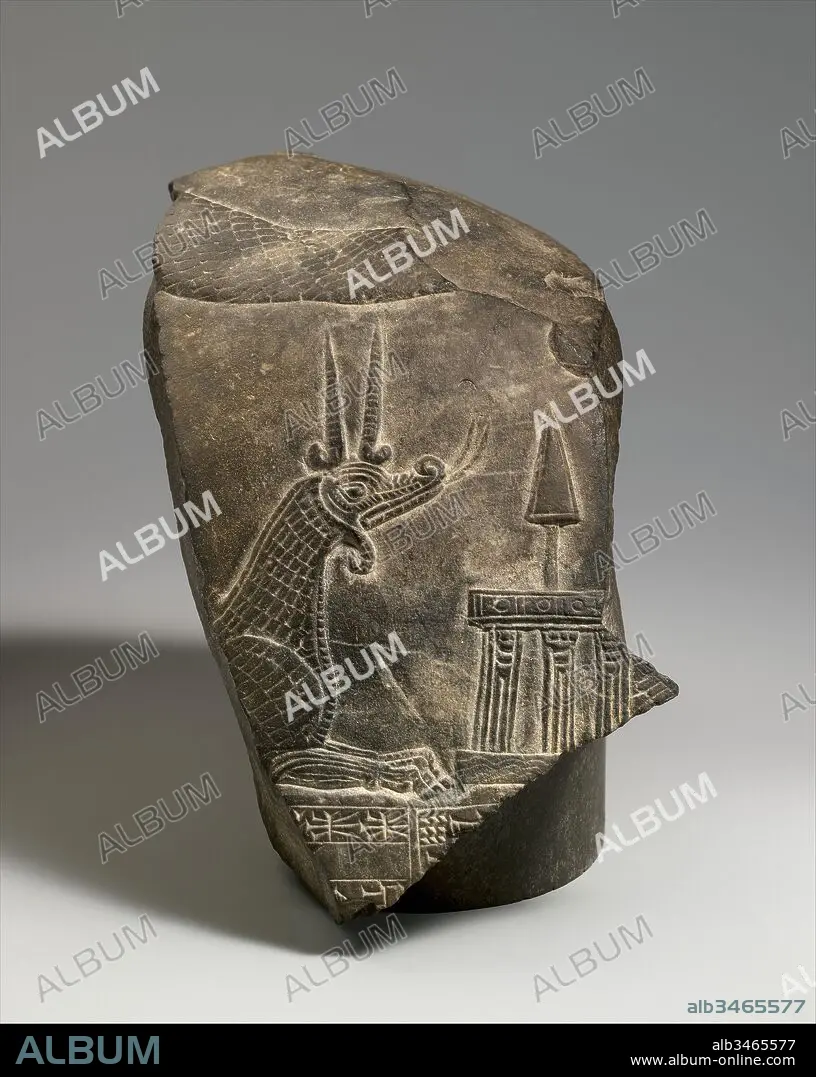
Top fragment of a kudurru with a mushhushshu dragon and divine symbols, Second Dynasty of Isin, ca. 1156–1025 B.C., Mesopotamia, Limestone, H. 6 1/2 x W. 4 x D. 7 1/4 in. (16.5 x 10 x 18.4 cm), Stone-Sculpture-Inscribed, Known as kudurrus or narus, a distinctive group of Babylonian stone monuments were once thought to be boundary markers placed in fields. In fact they are more likely to have been placed in temples, where their contents were preserved and sanctified.
| Compartir |
|---|
 Pinterest Pinterest |
 Twitter Twitter |
 Facebook Facebook |
 Copiar enlace Copiar enlace |
 Email Email |
|
Añadir a otro lightbox |
|
Añadir a otro lightbox |


¿Ya tienes cuenta? Iniciar sesión
¿No tienes cuenta? Regístrate
Compra esta imagen.
Selecciona el uso:

Descripción: Ver traducción automática
Top fragment of a kudurru with a mushhushshu dragon and divine symbols, Second Dynasty of Isin, ca. 1156–1025 B.C., Mesopotamia, Limestone, H. 6 1/2 x W. 4 x D. 7 1/4 in. (16.5 x 10 x 18.4 cm), Stone-Sculpture-Inscribed, Known as kudurrus or narus, a distinctive group of Babylonian stone monuments were once thought to be boundary markers placed in fields. In fact they are more likely to have been placed in temples, where their contents were preserved and sanctified
Top fragment of a kudurru with a mushhushshu dragon and divine symbols, Second Dynasty of Isin, ca. 1156–1025 B.C., Mesopotamia, Limestone, H. 6 1/2 x W. 4 x D. 7 1/4 in. (16.5 x 10 x 18.4 cm), Stone-Sculpture-Inscribed, Known as kudurrus or narus, a distinctive group of Babylonian stone monuments were once thought to be boundary markers placed in fields. In fact they are more likely to have been placed in temples, where their contents were preserved and sanctified
Crédito: Album / quintlox
Autorizaciones: ? Cesión de modelo: No - ? Cesión de propiedad: No
¿Preguntas relacionadas con los derechos?
¿Preguntas relacionadas con los derechos?
Tamaño imagen: 3995 × 5014 px | 57.3 MB
Tamaño impresión: 33.8 × 42.5 cm | 1572.8 × 1974.0 in (300 dpi)
Palabras clave: CALIZA NEGRA • CONSERVA • CONTENIDOS • KUDURRU • MESOPOTAMIA • PUESTO • TEMPLOS
