

alb4876922
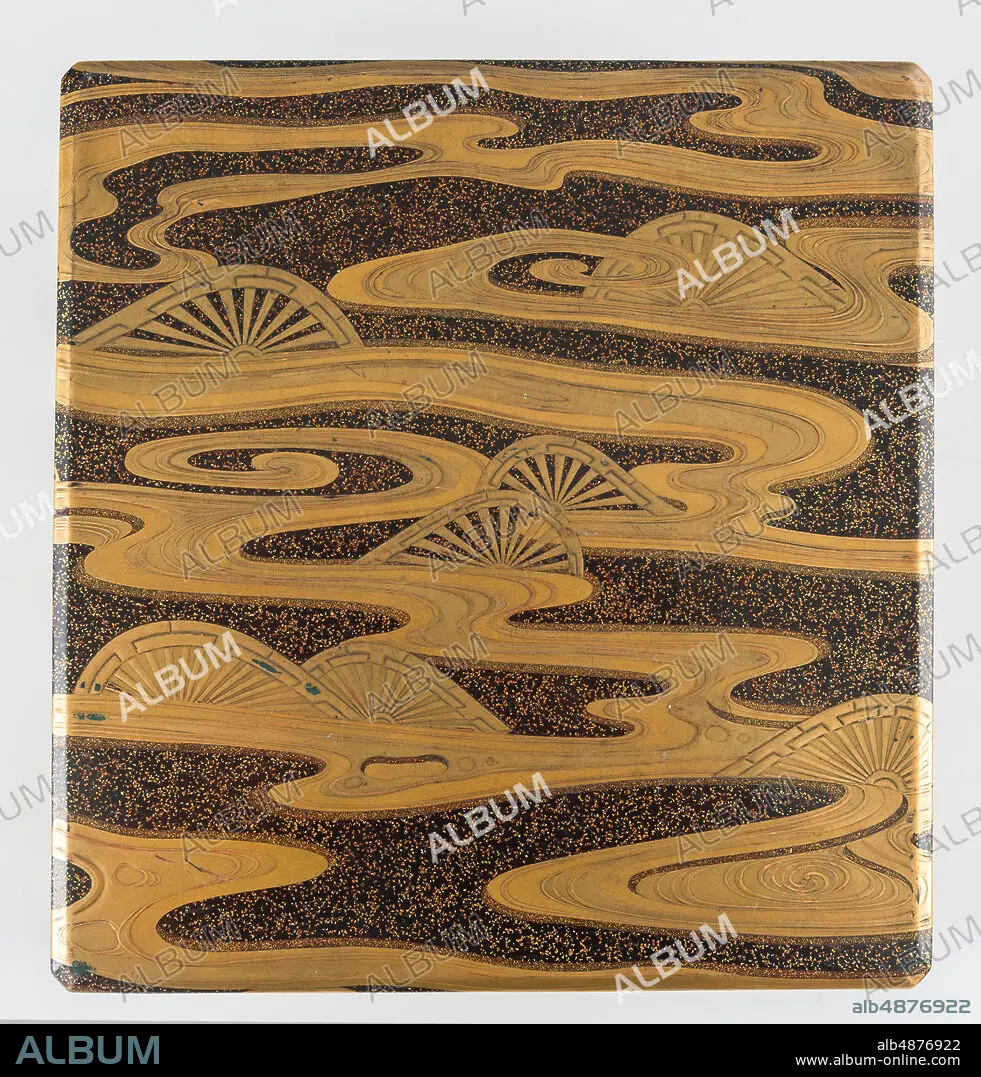
Ogata Korin, Suzuri-bako (writing case), 1615-1868, wood, gold & silver maki-e and inlay on lacquer ground, This Japanese writing case comprises a brush compartment, a stone for grinding and mixing ink, and a small pot for water. During the Edo Period (16031867), most literate persons in Japan owned a writing case, though the quality of the craftsmanship would vary according to the socioeconomic standing of the owner. Ogata Korin, one of the most prominent artists of his day, designed the box. The fabrication would have been left to lacquer craftsmen who were highly skilled in the time-consuming application of numerous coats of thinly applied tree sap. The 'sprinkled design,' or maki-e, seen in between the folds of the stream, is made by embedding flakes of gold and silver leaf into a still-wet layer of lacquer.
| Compartir |
|---|
 Pinterest Pinterest |
 Twitter Twitter |
 Facebook Facebook |
 Copiar enlace Copiar enlace |
 Email Email |
|
Añadir a otro lightbox |
|
Añadir a otro lightbox |


¿Ya tienes cuenta? Iniciar sesión
¿No tienes cuenta? Regístrate
Compra esta imagen.
Selecciona el uso:

Descripción: Ver traducción automática
Ogata Korin, Suzuri-bako (writing case), 1615-1868, wood, gold & silver maki-e and inlay on lacquer ground, This Japanese writing case comprises a brush compartment, a stone for grinding and mixing ink, and a small pot for water. During the Edo Period (16031867), most literate persons in Japan owned a writing case, though the quality of the craftsmanship would vary according to the socioeconomic standing of the owner. Ogata Korin, one of the most prominent artists of his day, designed the box. The fabrication would have been left to lacquer craftsmen who were highly skilled in the time-consuming application of numerous coats of thinly applied tree sap. The 'sprinkled design,' or maki-e, seen in between the folds of the stream, is made by embedding flakes of gold and silver leaf into a still-wet layer of lacquer.
Ogata Korin, Suzuri-bako (writing case), 1615-1868, wood, gold & silver maki-e and inlay on lacquer ground, This Japanese writing case comprises a brush compartment, a stone for grinding and mixing ink, and a small pot for water. During the Edo Period (16031867), most literate persons in Japan owned a writing case, though the quality of the craftsmanship would vary according to the socioeconomic standing of the owner. Ogata Korin, one of the most prominent artists of his day, designed the box. The fabrication would have been left to lacquer craftsmen who were highly skilled in the time-consuming application of numerous coats of thinly applied tree sap. The 'sprinkled design,' or maki-e, seen in between the folds of the stream, is made by embedding flakes of gold and silver leaf into a still-wet layer of lacquer.
Crédito: Album / quintlox
Autorizaciones: ? Cesión de modelo: No - ? Cesión de propiedad: No
¿Preguntas relacionadas con los derechos?
¿Preguntas relacionadas con los derechos?
Tamaño imagen: 5748 × 6000 px | 98.7 MB
Tamaño impresión: 48.7 × 50.8 cm | 2263.0 × 2362.2 in (300 dpi)
