

alb4875824
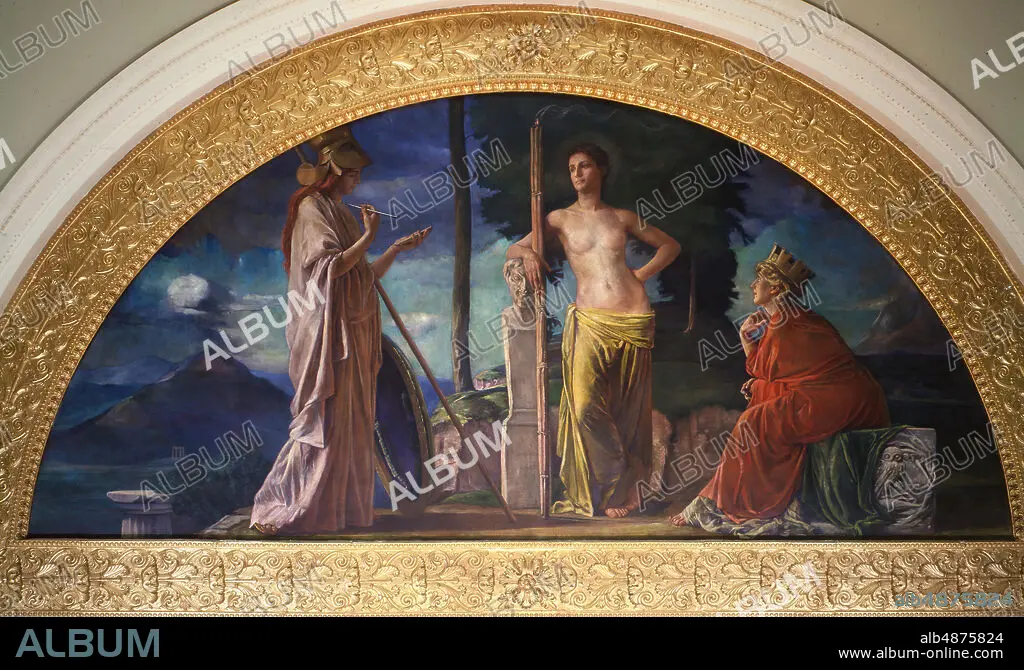
John La Farge, Athens, 1898, oil on canvas, 108 in. x 240 in. (274.32 cm x 609.6 cm), The Museum's central rotunda is a magisterial space decorated below the dome by four large semicircular murals by the four leading painters of the American Renaissance: Elihu Vedder, Kenyon Cox, Abbott Thayer and John LaFarge. They were commissioned by McKim who believed in the unity of the arts and constituted an extremely important ensemble of architectural decoration. The original mural scheme called for each artist to paint an allegorical representation of one of the four cities perceived at the time as most central to the development of western art. John LaFarge depicts Athens through the medium of ancient Greek mythology, with a few Roman allusions thrown in. As the crowned personification of the city looks on, Minerva, goddess of wisdom, sketches a semi-nude female figure who is at once a classical nymph and, leaning on a head of Pan, a more general symbol of Nature. More richly colored than the other murals, LaFarge's painting bespeaks his work with the brilliant hues of stained glass.
| Compartir |
|---|
 Pinterest Pinterest |
 Twitter Twitter |
 Facebook Facebook |
 Copiar enlace Copiar enlace |
 Email Email |
|
Añadir a otro lightbox |
|
Añadir a otro lightbox |


¿Ya tienes cuenta? Iniciar sesión
¿No tienes cuenta? Regístrate
Compra esta imagen.
Selecciona el uso:

Descripción: Ver traducción automática
John La Farge, Athens, 1898, oil on canvas, 108 in. x 240 in. (274.32 cm x 609.6 cm), The Museum's central rotunda is a magisterial space decorated below the dome by four large semicircular murals by the four leading painters of the American Renaissance: Elihu Vedder, Kenyon Cox, Abbott Thayer and John LaFarge. They were commissioned by McKim who believed in the unity of the arts and constituted an extremely important ensemble of architectural decoration. The original mural scheme called for each artist to paint an allegorical representation of one of the four cities perceived at the time as most central to the development of western art. John LaFarge depicts Athens through the medium of ancient Greek mythology, with a few Roman allusions thrown in. As the crowned personification of the city looks on, Minerva, goddess of wisdom, sketches a semi-nude female figure who is at once a classical nymph and, leaning on a head of Pan, a more general symbol of Nature. More richly colored than the other murals, LaFarge's painting bespeaks his work with the brilliant hues of stained glass.
John La Farge, Athens, 1898, oil on canvas, 108 in. x 240 in. (274.32 cm x 609.6 cm), The Museum's central rotunda is a magisterial space decorated below the dome by four large semicircular murals by the four leading painters of the American Renaissance: Elihu Vedder, Kenyon Cox, Abbott Thayer and John LaFarge. They were commissioned by McKim who believed in the unity of the arts and constituted an extremely important ensemble of architectural decoration. The original mural scheme called for each artist to paint an allegorical representation of one of the four cities perceived at the time as most central to the development of western art. John LaFarge depicts Athens through the medium of ancient Greek mythology, with a few Roman allusions thrown in. As the crowned personification of the city looks on, Minerva, goddess of wisdom, sketches a semi-nude female figure who is at once a classical nymph and, leaning on a head of Pan, a more general symbol of Nature. More richly colored than the other murals, LaFarge's painting bespeaks his work with the brilliant hues of stained glass.
Personas: MINERVA • ELIHU VEDDER (26/2/36-8430) • KENYON COX
Crédito: Album / quintlox
Autorizaciones: ? Cesión de modelo: No - ? Cesión de propiedad: No
¿Preguntas relacionadas con los derechos?
¿Preguntas relacionadas con los derechos?
Tamaño imagen: 7500 × 4518 px | 96.9 MB
Tamaño impresión: 63.5 × 38.3 cm | 2952.8 × 1778.7 in (300 dpi)
