

alb5533930
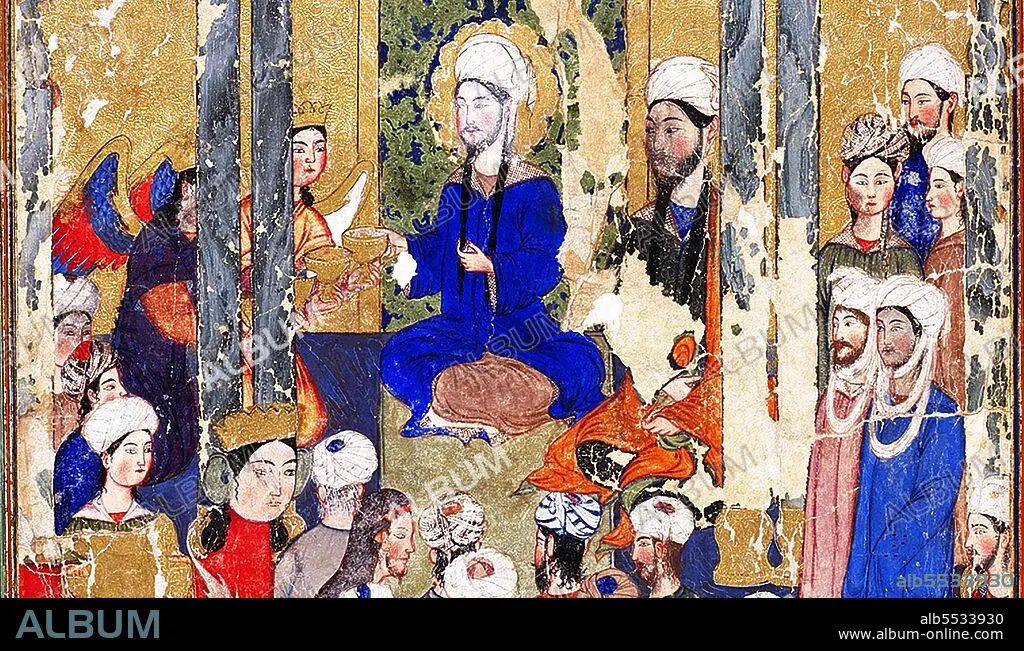
Turkey / Iran: The Prophet Muhammad sits with the Abrahamic prophets in Jerusalem, surrounded by angels (detail). From a Mirajnama (Book of Ascension) held in Istanbul's Topkapi Palace, Tabriz, c. 1320
| Compartir |
|---|
 Pinterest Pinterest |
 Twitter Twitter |
 Facebook Facebook |
 Copiar enlace Copiar enlace |
 Email Email |
|
Añadir a otro lightbox |
|
Añadir a otro lightbox |


¿Ya tienes cuenta? Iniciar sesión
¿No tienes cuenta? Regístrate
Compra esta imagen.
Selecciona el uso:

Título: Turkey / Iran: The Prophet Muhammad sits with the Abrahamic prophets in Jerusalem, surrounded by angels (detail). From a Mirajnama (Book of Ascension) held in Istanbul's Topkapi Palace, Tabriz, c. 1320
Descripción: Ver traducción automática
The Miraj forms part of the Night Journey that the prophet of Islam, Muhammad took during a single night around the year 621 CE. In the journey, Muhammad travels on the steed Buraq to 'the farthest mosque' where he leads other prophets in prayer. He then ascends to heaven where he speaks to God, who gives Muhammad instructions to take back to the faithful regarding the details of prayer. Representations of the Prophet Muhammad are controversial, and generally forbidden in Sunni Islam (especially Hanafiyya, Wahabi, Salafiyya). Shia Islam and some other branches of Sunni Islam (Hanbali, Maliki, Shafi'i) are generally more tolerant of such representational images, but even so the Prophet's features are generally veiled or concealed by flames as a mark of deep respect.
The Miraj forms part of the Night Journey that the prophet of Islam, Muhammad took during a single night around the year 621 CE. In the journey, Muhammad travels on the steed Buraq to 'the farthest mosque' where he leads other prophets in prayer. He then ascends to heaven where he speaks to God, who gives Muhammad instructions to take back to the faithful regarding the details of prayer. Representations of the Prophet Muhammad are controversial, and generally forbidden in Sunni Islam (especially Hanafiyya, Wahabi, Salafiyya). Shia Islam and some other branches of Sunni Islam (Hanbali, Maliki, Shafi'i) are generally more tolerant of such representational images, but even so the Prophet's features are generally veiled or concealed by flames as a mark of deep respect.
Crédito: Album / Pictures From History/Universal Images Group
Autorizaciones: ? Cesión de modelo: No - ? Cesión de propiedad: No
¿Preguntas relacionadas con los derechos?
¿Preguntas relacionadas con los derechos?
Tamaño imagen: 5100 × 2978 px | 43.5 MB
Tamaño impresión: 43.2 × 25.2 cm | 2007.9 × 1172.4 in (300 dpi)
