

alb5414049
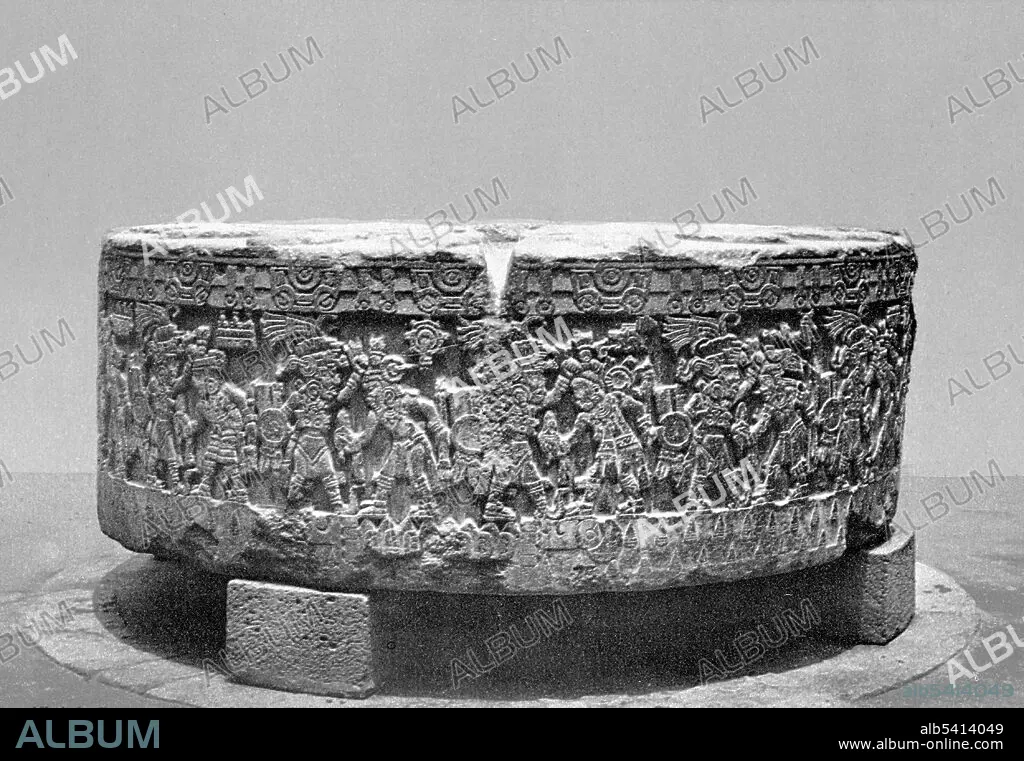
Stone of Tizoc, Aztec Sacrificial Stone
| Compartir |
|---|
 Pinterest Pinterest |
 Twitter Twitter |
 Facebook Facebook |
 Copiar enlace Copiar enlace |
 Email Email |
|
Añadir a otro lightbox |
|
Añadir a otro lightbox |


¿Ya tienes cuenta? Iniciar sesión
¿No tienes cuenta? Regístrate
Compra esta imagen.
Selecciona el uso:

Título: Stone of Tizoc, Aztec Sacrificial Stone
Descripción: Ver traducción automática
The Stone of Tizoc is a large, round, carved Aztec stone made of basalt. It is thought to have been a Cuauhxicalli, in which the hearts of victims of sacrifice were placed. The importance of the Stone of Tizoc is that it was used during the human sacrifices, which Tizoc the emperor wanted glorified through his name. In addition, the emperor of the Aztecs would tend to conceive his children on this rock, soaking in the blood of his enemies. The Aztec sacrifice was held at the top of temples on specially chosen mountains such as Tenochtitlan, Texcoco, and Tlacopan in which priests had the victims tied to a large, flat stone and then proceeded to cut their hearts out, lifting it up to the sun as an offering. The bodies were either thrown down the temple stairs or the heads were impaled on a rack, also known as a tzompantli. Photographed by William Henry Jackson for Detroit Publishing Company, circa 1884-1900.
The Stone of Tizoc is a large, round, carved Aztec stone made of basalt. It is thought to have been a Cuauhxicalli, in which the hearts of victims of sacrifice were placed. The importance of the Stone of Tizoc is that it was used during the human sacrifices, which Tizoc the emperor wanted glorified through his name. In addition, the emperor of the Aztecs would tend to conceive his children on this rock, soaking in the blood of his enemies. The Aztec sacrifice was held at the top of temples on specially chosen mountains such as Tenochtitlan, Texcoco, and Tlacopan in which priests had the victims tied to a large, flat stone and then proceeded to cut their hearts out, lifting it up to the sun as an offering. The bodies were either thrown down the temple stairs or the heads were impaled on a rack, also known as a tzompantli. Photographed by William Henry Jackson for Detroit Publishing Company, circa 1884-1900.
Personas: AZTEC
Crédito: Album / LOC/Science Source
Autorizaciones: ? Cesión de modelo: No - ? Cesión de propiedad: No
¿Preguntas relacionadas con los derechos?
¿Preguntas relacionadas con los derechos?
Tamaño imagen: 4500 × 3113 px | 40.1 MB
Tamaño impresión: 38.1 × 26.4 cm | 1771.7 × 1225.6 in (300 dpi)
Palabras clave: 1800S • 1900 • AZTEC • AÑOS 1890 • BLANCO Y NEGRO • CIVILIZACION • DÉCADA DE 1880 • DESCUBRIMIENTO • EDAD • EMPERADOR • EXPLORACION • FAMOSA • FAMOSO • FAMOSOS • FOTO • FOTOGRAFIA • GENTE • GOBERNANTE • HISTORIA • HISTORICO • HUMANO • HUMANOS • IMPORTANTE • INDIOS • MESOAMERICA • MONARCA • MONARQUIA • NAHUATL • PERSONA • PIEDRA • PIEDRAS • REY • ROCA • ROCAS • S. XIX • SIGLO XIX • SIGLO • SOBERANO • TIZOC
