

alb9016974
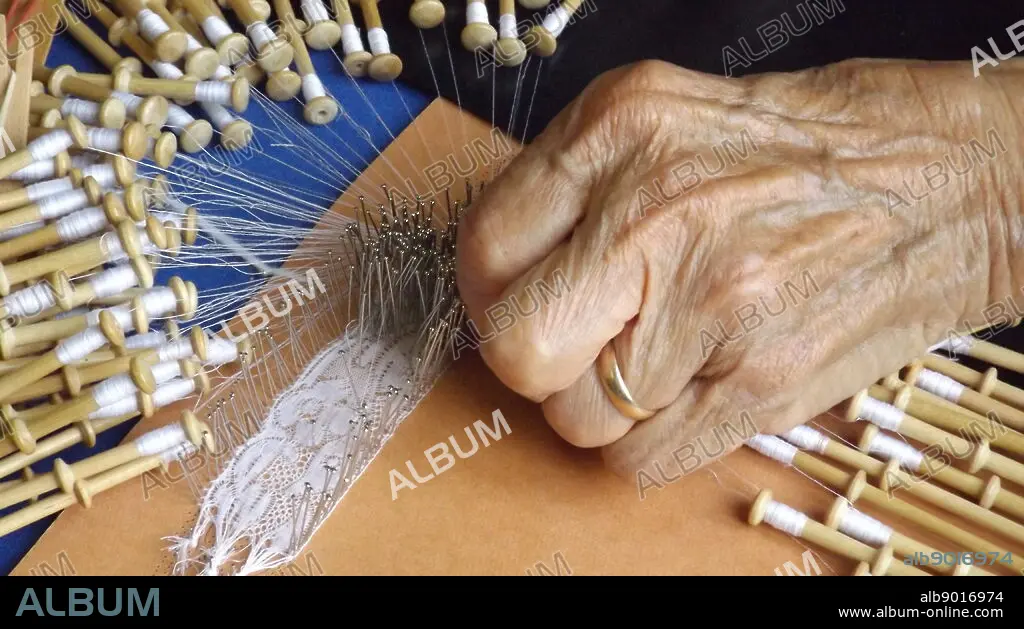
Lace making in Bruges, 2014.
| Compartir |
|---|
 Pinterest Pinterest |
 Twitter Twitter |
 Facebook Facebook |
 Copiar enlace Copiar enlace |
 Email Email |
|
Añadir a otro lightbox |
|
Añadir a otro lightbox |


¿Ya tienes cuenta? Iniciar sesión
¿No tienes cuenta? Regístrate
Compra esta imagen.
Selecciona el uso:

Título: Lace making in Bruges, 2014.
Descripción: Ver traducción automática
Lace making in Bruges, 2014. The intricate lace patterns in Belgium are unmatched in any other country. The lace trade rose during the early Renaissance. Emperor Charles V decreed that lace-making should be a compulsory skill for girls in convents and beguines throughout Flanders. Lace became fashionable on collars and cuffs for both sexes. Trade reached a peak in the 18th century. Lace makers are traditionally women. Hundreds of craftswomen still work in Bruges and Brussels, centres of bobbin lace, creating intricate work by hand, often using over 100 threads per bobbin.
Lace making in Bruges, 2014. The intricate lace patterns in Belgium are unmatched in any other country. The lace trade rose during the early Renaissance. Emperor Charles V decreed that lace-making should be a compulsory skill for girls in convents and beguines throughout Flanders. Lace became fashionable on collars and cuffs for both sexes. Trade reached a peak in the 18th century. Lace makers are traditionally women. Hundreds of craftswomen still work in Bruges and Brussels, centres of bobbin lace, creating intricate work by hand, often using over 100 threads per bobbin.
Crédito: Album / World History Archive
Autorizaciones: ? Cesión de modelo: No - ? Cesión de propiedad: No
¿Preguntas relacionadas con los derechos?
¿Preguntas relacionadas con los derechos?
Tamaño imagen: 4608 × 2592 px | 34.2 MB
Tamaño impresión: 39.0 × 21.9 cm | 1814.2 × 1020.5 in (300 dpi)
