

alb5530372
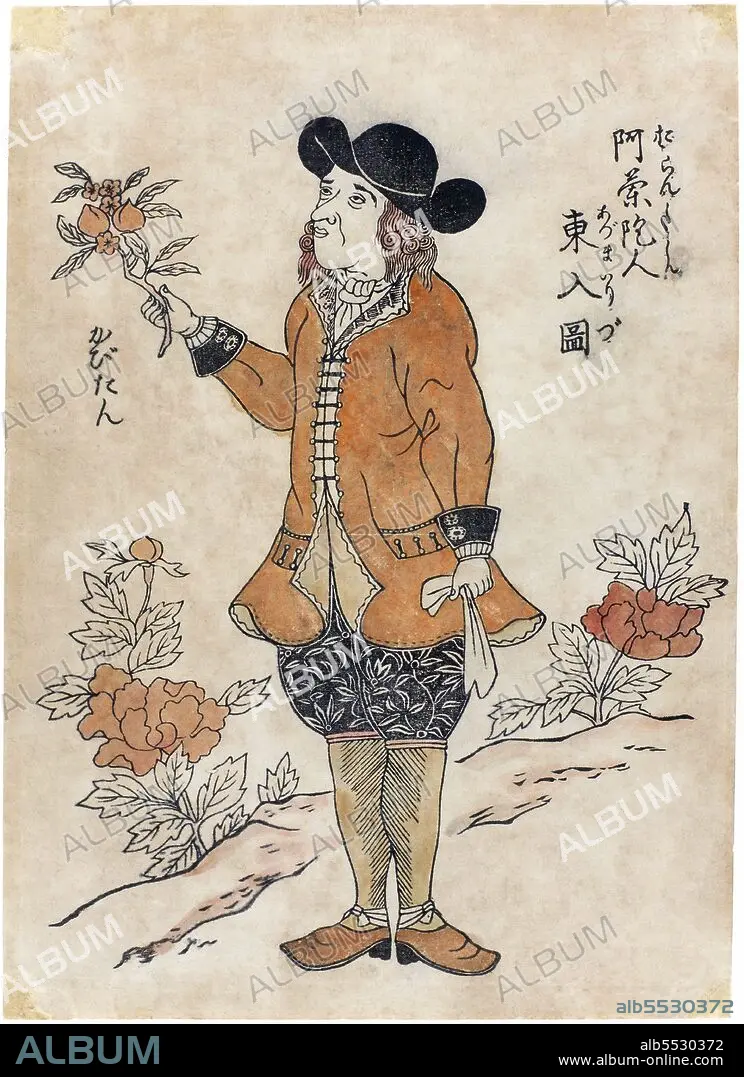
Japan: A Dutch captain in Nagasaki, c. 1700, artist unknown
| Compartir |
|---|
 Pinterest Pinterest |
 Twitter Twitter |
 Facebook Facebook |
 Copiar enlace Copiar enlace |
 Email Email |
|
Añadir a otro lightbox |
|
Añadir a otro lightbox |


¿Ya tienes cuenta? Iniciar sesión
¿No tienes cuenta? Regístrate
Compra esta imagen.
Selecciona el uso:

Título: Japan: A Dutch captain in Nagasaki, c. 1700, artist unknown
Descripción: Ver traducción automática
The Dutch trader or merchant depicted in this scene would most probably have been working with the Dutch East India Company (VOC), which had established a monopoly on trade with Japan provided the Europeans maintained their barracks and trading post off the mainland in Dejima. Dejima, or Deshima (literally ‘Exit Island’), is a small artificial island built in the bay of Nagasaki in 1634 during the Edo period. Dejima was built to constrain foreign traders as part of ‘sakoku’, a self-imposed isolationist policy. Originally built to house Portuguese traders, it changed to a Chinese and Dutch trading post from 1641 until 1853 during which time the Dutch mostly bartered for Japanese gold, silver and copper with East Indies’ spices, Indian cloth and Chinese silk and porcelain. Dejima Dutch Trading Post has since been designated a Japanese national historic site.
The Dutch trader or merchant depicted in this scene would most probably have been working with the Dutch East India Company (VOC), which had established a monopoly on trade with Japan provided the Europeans maintained their barracks and trading post off the mainland in Dejima. Dejima, or Deshima (literally ‘Exit Island’), is a small artificial island built in the bay of Nagasaki in 1634 during the Edo period. Dejima was built to constrain foreign traders as part of ‘sakoku’, a self-imposed isolationist policy. Originally built to house Portuguese traders, it changed to a Chinese and Dutch trading post from 1641 until 1853 during which time the Dutch mostly bartered for Japanese gold, silver and copper with East Indies’ spices, Indian cloth and Chinese silk and porcelain. Dejima Dutch Trading Post has since been designated a Japanese national historic site.
Crédito: Album / Pictures From History/Universal Images Group
Autorizaciones: ? Cesión de modelo: No - ? Cesión de propiedad: No
¿Preguntas relacionadas con los derechos?
¿Preguntas relacionadas con los derechos?
Tamaño imagen: 3600 × 4955 px | 51.0 MB
Tamaño impresión: 30.5 × 42.0 cm | 1417.3 × 1950.8 in (300 dpi)
