

alb3823455
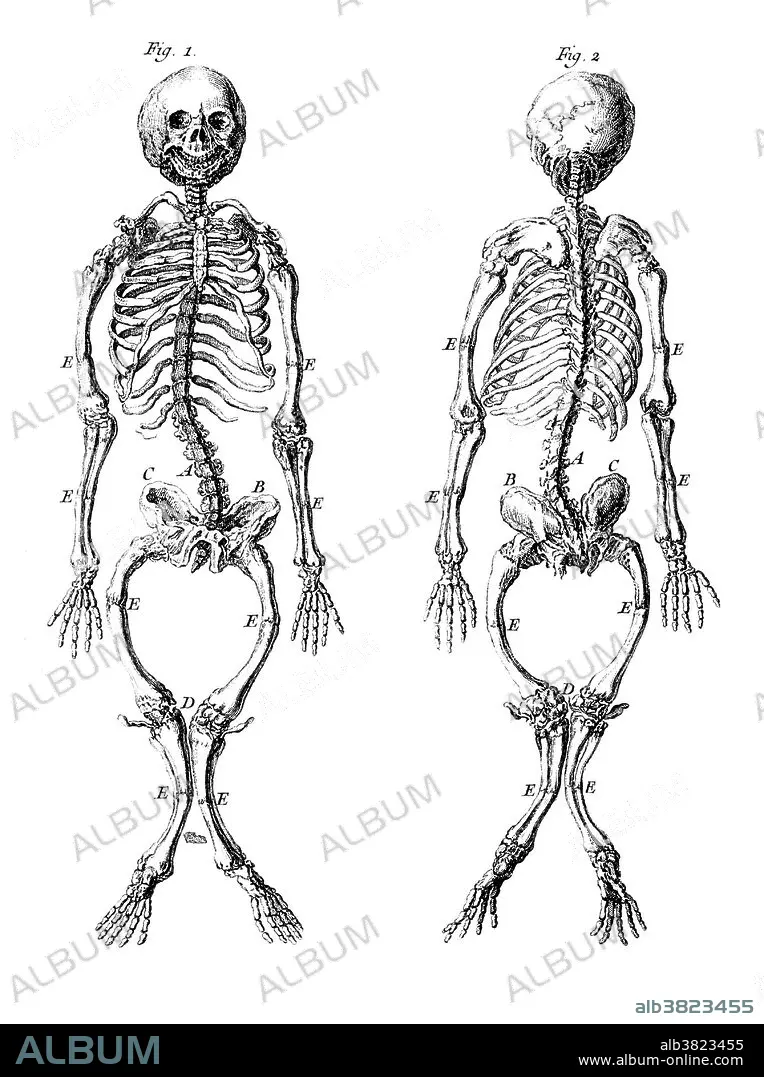
Rickets Skeleton, 1749
| Compartir |
|---|
 Pinterest Pinterest |
 Twitter Twitter |
 Facebook Facebook |
 Copiar enlace Copiar enlace |
 Email Email |
|
Añadir a otro lightbox |
|
Añadir a otro lightbox |


¿Ya tienes cuenta? Iniciar sesión
¿No tienes cuenta? Regístrate
Compra esta imagen.
Selecciona el uso:

Título: Rickets Skeleton, 1749
Descripción: Ver traducción automática
A rachitic skeleton, measuring two feet two inches in length, seen from the front and the back. Rickets is among the most frequent childhood diseases in many developing countries. The predominant cause is a vitamin D deficiency, but lack of adequate calcium in the diet may also lead to rickets. A sufficient amount of ultraviolet B light in sunlight each day and adequate supplies of calcium and phosphorus in the diet can prevent rickets. Darker-skinned people need to be exposed longer to the ultraviolet rays. The replacement of vitamin D has been proven to correct rickets using these methods of ultraviolet light therapy and medicine. Engraving, 1749.
A rachitic skeleton, measuring two feet two inches in length, seen from the front and the back. Rickets is among the most frequent childhood diseases in many developing countries. The predominant cause is a vitamin D deficiency, but lack of adequate calcium in the diet may also lead to rickets. A sufficient amount of ultraviolet B light in sunlight each day and adequate supplies of calcium and phosphorus in the diet can prevent rickets. Darker-skinned people need to be exposed longer to the ultraviolet rays. The replacement of vitamin D has been proven to correct rickets using these methods of ultraviolet light therapy and medicine. Engraving, 1749.
Crédito: Album / Science Source / Wellcome Images
Autorizaciones: ? Cesión de modelo: No - ? Cesión de propiedad: No
¿Preguntas relacionadas con los derechos?
¿Preguntas relacionadas con los derechos?
Tamaño imagen: 3245 × 4350 px | 40.4 MB
Tamaño impresión: 27.5 × 36.8 cm | 1277.6 × 1712.6 in (300 dpi)
Palabras clave: ANORMAL • ARCO COJO • ARTE • BLANCO Y NEGRO • CIENCIA • DESORDEN • DIBUJO • ENFERMEDAD DE LOS HUESOS • ENFERMEDAD INFANTIL • ENFERMEDAD • ESQUELETICO • ESQUELETO • GRABADO • HISTORIA • HISTORICO • HUESOS HUMANOS • ILUSTRACION • ILUSTRACIONES • INSALUBRE • MALFORMADO • MEDICINA • MEDICINAL • OBRA DE ARTE • PATOLOGIA • PEDIATRIA • RAQUITIS • S. XVIII • SIGLO XVIII
