

alb3805831
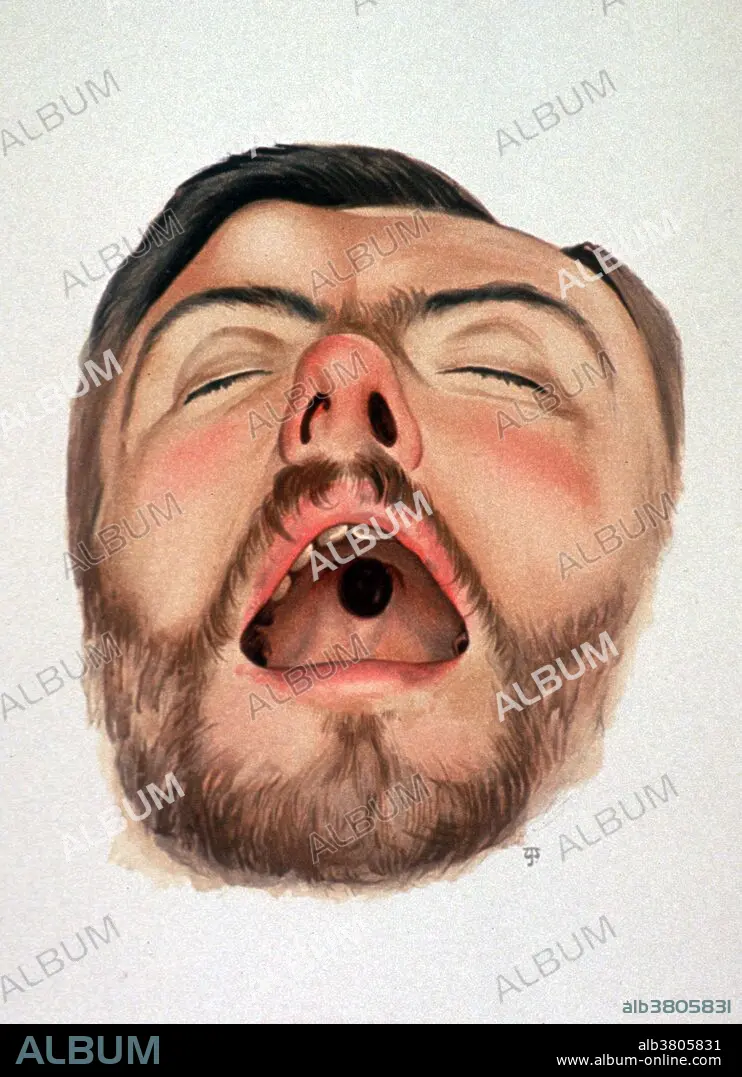
Tertiary, Gummatous Syphilis, 1893
| Compartir |
|---|
 Pinterest Pinterest |
 Twitter Twitter |
 Facebook Facebook |
 Copiar enlace Copiar enlace |
 Email Email |
|
Añadir a otro lightbox |
|
Añadir a otro lightbox |


¿Ya tienes cuenta? Iniciar sesión
¿No tienes cuenta? Regístrate
Compra esta imagen.
Selecciona el uso:

Título: Tertiary, Gummatous Syphilis, 1893
Descripción: Ver traducción automática
Syphilis is a sexually transmitted infection caused by the bacterium Treponema pallidum subspecies pallidum. The signs and symptoms of syphilis vary depending in which of the four stages it presents (primary, secondary, latent, and tertiary). Tertiary syphilis may occur approximately 3 to 15 years after the initial infection, and may be divided into three different forms: gummatous syphilis, late neurosyphilis, and cardiovascular syphilis. Gummatous syphilis or late benign syphilis usually occurs 1 to 46 years after the initial infection, with an average of 15 years. This stage is characterized by the formation of chronic gummas, which are soft, tumor-like balls of inflammation which may vary considerably in size. They typically affect the skin, bone, and liver, but can occur anywhere. Chromolithograph appeared in "Bramwell, Byrom Atlas of Clinical Medicine", 1893.
Syphilis is a sexually transmitted infection caused by the bacterium Treponema pallidum subspecies pallidum. The signs and symptoms of syphilis vary depending in which of the four stages it presents (primary, secondary, latent, and tertiary). Tertiary syphilis may occur approximately 3 to 15 years after the initial infection, and may be divided into three different forms: gummatous syphilis, late neurosyphilis, and cardiovascular syphilis. Gummatous syphilis or late benign syphilis usually occurs 1 to 46 years after the initial infection, with an average of 15 years. This stage is characterized by the formation of chronic gummas, which are soft, tumor-like balls of inflammation which may vary considerably in size. They typically affect the skin, bone, and liver, but can occur anywhere. Chromolithograph appeared in "Bramwell, Byrom Atlas of Clinical Medicine", 1893.
Crédito: Album / NLM/Science Source
Autorizaciones: ? Cesión de modelo: No - ? Cesión de propiedad: No
¿Preguntas relacionadas con los derechos?
¿Preguntas relacionadas con los derechos?
Tamaño imagen: 3153 × 4350 px | 39.2 MB
Tamaño impresión: 26.7 × 36.8 cm | 1241.3 × 1712.6 in (300 dpi)
Palabras clave: 1893 • ANORMAL • ARTE • AÑOS 1890 • CIENCIA • CROMOLITOGRAFIA • DESORDEN • DIBUJO • ENFERMEDAD DE TRANSMISIÓN SEXUAL • ENFERMEDAD • HISTORIA • HISTORICO • HOMBRE • HOMBRES • ILUSTRACION • ILUSTRACIONES • INFECCION • INFECTADOS • LITOGRAFIA • MASCULINO • MEDICINA • MEDICINAL • OBRA DE ARTE • PATOLOGIA • RETRATO DE HOMBRE • SÍFILIS • SIGLO XIX • STD
