

alb8352675
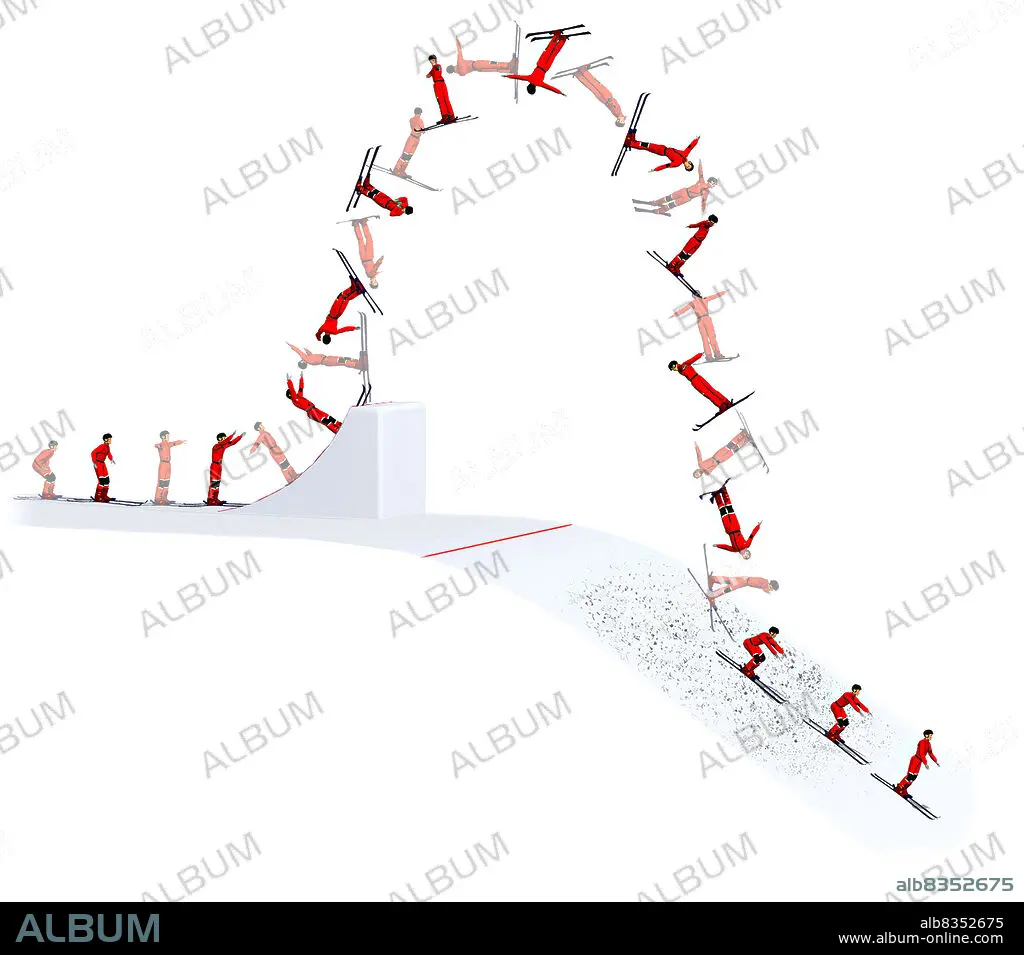
The knees are bent slightly to adjust to the change of angle between the takeoff slope and the kicker. The body is kept straight and perpendicular to the kicker. At the takeoff point, the skier raises his arms and leans back to initiate the somersault. Twists are started and stopped by moving the arms. The skier always keeps an eye on the ground while adjusting his rotation (stretching it out or shortening it) to ensure a proper landing. Strong stomach, hip, and thigh muscles help the skier hold his position. The skier lands with his arms stretched forward and his skis facing downhill, shoulder width apart and parallel, and absorbs the shock of the landing with his legs. The knees are spread to avoid facial injuries during difficult landings.
| Compartir |
|---|
 Pinterest Pinterest |
 Twitter Twitter |
 Facebook Facebook |
 Copiar enlace Copiar enlace |
 Email Email |
|
Añadir a otro lightbox |
|
Añadir a otro lightbox |


¿Ya tienes cuenta? Iniciar sesión
¿No tienes cuenta? Regístrate
Compra esta imagen.
Selecciona el uso:

Descripción:
Ver traducción automática
The knees are bent slightly to adjust to the change of angle between the takeoff slope and the kicker. The body is kept straight and perpendicular to the kicker. At the takeoff point, the skier raises his arms and leans back to initiate the somersault. Twists are started and stopped by moving the arms. The skier always keeps an eye on the ground while adjusting his rotation (stretching it out or shortening it) to ensure a proper landing. Strong stomach, hip, and thigh muscles help the skier hold his position. The skier lands with his arms stretched forward and his skis facing downhill, shoulder width apart and parallel, and absorbs the shock of the landing with his legs. The knees are spread to avoid facial injuries during difficult landings.
Crédito:
Album / Universal Images Group
Autorizaciones:
Tamaño imagen:
2880 x 2538 px | 20.9 MB
Tamaño impresión:
24.4 x 21.5 cm | 9.6 x 8.5 in (300 dpi)
Palabras clave:
