

alb4609844
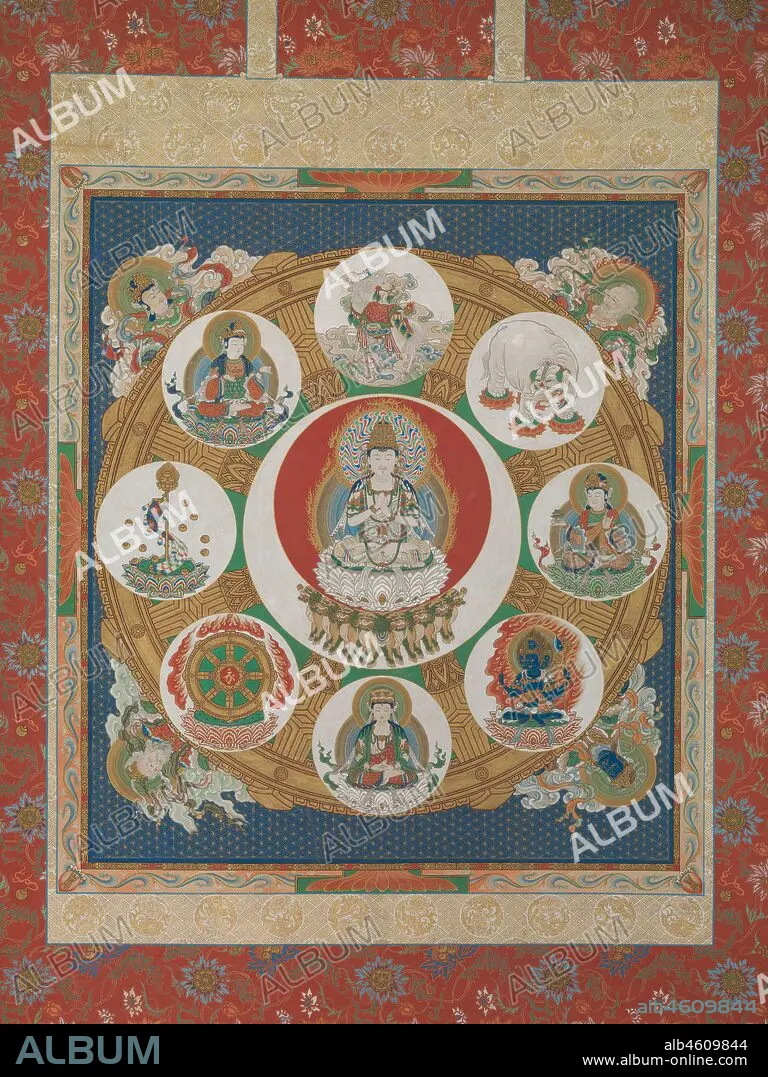
Mandala of the One-Syllable Golden Wheel, 18th century. Creator: Unknown.
| Compartir |
|---|
 Pinterest Pinterest |
 Twitter Twitter |
 Facebook Facebook |
 Copiar enlace Copiar enlace |
 Email Email |
|
Añadir a otro lightbox |
|
Añadir a otro lightbox |


¿Ya tienes cuenta? Iniciar sesión
¿No tienes cuenta? Regístrate
Compra esta imagen.
Selecciona el uso:

Título:
Mandala of the One-Syllable Golden Wheel, 18th century. Creator: Unknown.
Descripción:
Ver traducción automática
Mandala of the One-Syllable Golden Wheel, 18th century. The Mandala of the One-Syllable Golden Wheel (Japanese: Ichiji Kinrin Mandara) envisions the power of a single Sanskrit syllable, the utterance of which calls forth a personification of the cranial protuberance of the Buddha. It is used in rituals for the prevention of disaster, for the expansion of wealth, and for success in love, as well as for assuring safe delivery of children, career success, and propitious weather. The figural representation of the sound sits at the center of the mandala on a lotus pedestal borne by eight lions. It resembles the Buddha Dainichi (Sanskrit: Vairochana) and holds its hands in a sacred gesture known as the wisdom-fist mudra, which symbolizes the non-duality of perfect wisdom and the deluded nature of unenlightened beings. The surrounding figures and forms represent the seven emblems of sovereignty of supreme rulers and the deity Butsugen Butsumo, literally Buddha-eye, Buddha-mother, who crushes ignorance and perceives the essence of all things.
Crédito:
Album / Heritage Art/Heritage Images
Autorizaciones:
Tamaño imagen:
3001 x 4000 px | 34.3 MB
Tamaño impresión:
25.4 x 33.9 cm | 10.0 x 13.3 in (300 dpi)
Palabras clave:
ALEGRIA • ANIMAL • ARTE • ARTES • BUDA • BUDISMO • BUDISTA • BUDISTAS • COLOR • COLORIDO • CONCEPTO • EPOCA EDO • FELICIDAD • FLOR • FLORAL • FLORES • FLOWERS • JAPON • JAPONES • LEON • MANDALA • MUSEO • NATURALEZA • PAÍS • PERGAMINO COLGANTE • PERIODO EDO • PLANTA • PLANTAE • PLANTAS • PLANTS • PREVENCION • RELIGION • RELIGIOSO • RITUAL • RUEDA • S. XVIII • SIGLO XVIII • SIGLO • TINTA CHINA • TINTA
