

alb4374120
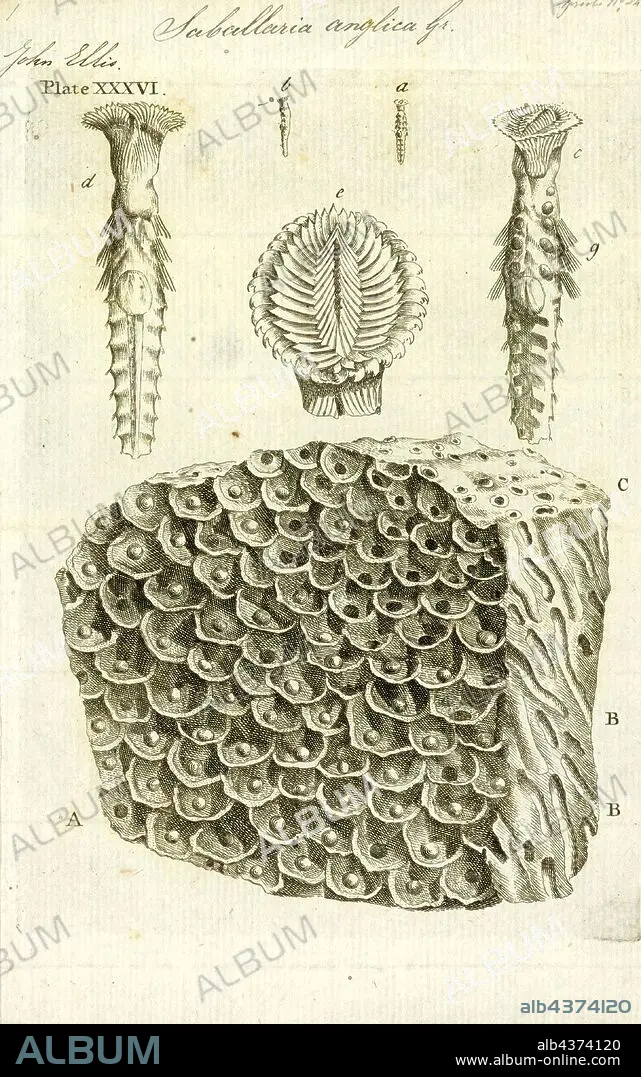
Sabellaria anglica, Print, Sabellaria is a genus of marine polychaete worms in the family Sabellariidae. The type species is Sabellaria alveolata (Linnaeus, 1767). These worms are sedentary and build tubes in which to live from sand and shell fragments. Some species are called honeycomb worms and when they occur in great numbers they can form reefs on rocks and other hard substrates. They are filter feeders, extending a plume-like fan of radioles from the end of the tube in order to catch plankton and detritus floating past. They have a distinctive operculum which is used to block the opening of the tube when the radioles are retracted.
| Compartir |
|---|
 Pinterest Pinterest |
 Twitter Twitter |
 Facebook Facebook |
 Copiar enlace Copiar enlace |
 Email Email |
|
Añadir a otro lightbox |
|
Añadir a otro lightbox |


¿Ya tienes cuenta? Iniciar sesión
¿No tienes cuenta? Regístrate
Compra esta imagen.
Selecciona el uso:

Descripción: Ver traducción automática
Sabellaria anglica, Print, Sabellaria is a genus of marine polychaete worms in the family Sabellariidae. The type species is Sabellaria alveolata (Linnaeus, 1767). These worms are sedentary and build tubes in which to live from sand and shell fragments. Some species are called honeycomb worms and when they occur in great numbers they can form reefs on rocks and other hard substrates. They are filter feeders, extending a plume-like fan of radioles from the end of the tube in order to catch plankton and detritus floating past. They have a distinctive operculum which is used to block the opening of the tube when the radioles are retracted.
Sabellaria anglica, Print, Sabellaria is a genus of marine polychaete worms in the family Sabellariidae. The type species is Sabellaria alveolata (Linnaeus, 1767). These worms are sedentary and build tubes in which to live from sand and shell fragments. Some species are called honeycomb worms and when they occur in great numbers they can form reefs on rocks and other hard substrates. They are filter feeders, extending a plume-like fan of radioles from the end of the tube in order to catch plankton and detritus floating past. They have a distinctive operculum which is used to block the opening of the tube when the radioles are retracted.
Crédito: Album / quintlox
Autorizaciones: ? Cesión de modelo: No - ? Cesión de propiedad: No
¿Preguntas relacionadas con los derechos?
¿Preguntas relacionadas con los derechos?
Tamaño imagen: 2902 × 4636 px | 38.5 MB
Tamaño impresión: 24.6 × 39.3 cm | 1142.5 × 1825.2 in (300 dpi)
