

alb5464479
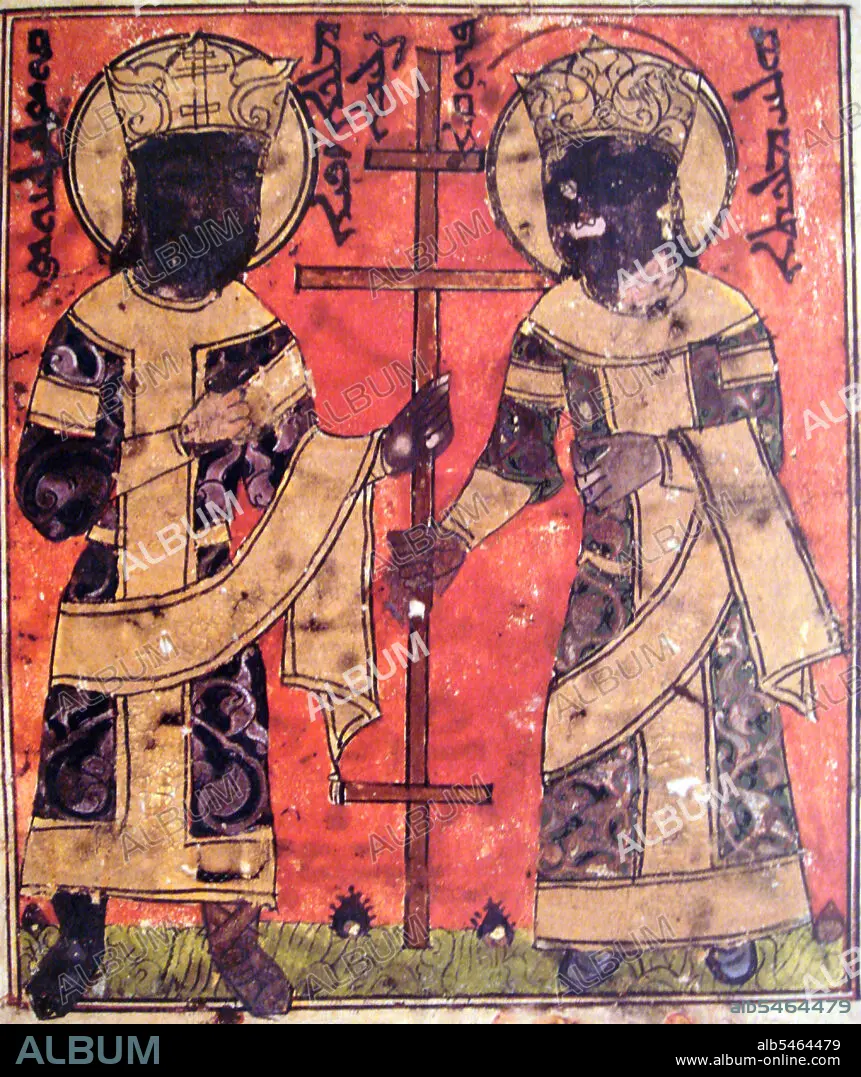
Iran / Mongolia: Hulagu Khan with his Nestorian Christian wife Dokuz Khatun, from a 13th century Syriac Bible
| Compartir |
|---|
 Pinterest Pinterest |
 Twitter Twitter |
 Facebook Facebook |
 Copiar enlace Copiar enlace |
 Email Email |
|
Añadir a otro lightbox |
|
Añadir a otro lightbox |


¿Ya tienes cuenta? Iniciar sesión
¿No tienes cuenta? Regístrate
Compra esta imagen.
Selecciona el uso:

Título: Iran / Mongolia: Hulagu Khan with his Nestorian Christian wife Dokuz Khatun, from a 13th century Syriac Bible
Descripción: Ver traducción automática
Hulagu Khan, also known as Hülegü, Hulegu or Halaku (c. 1217 – 8 February 1265), was a Mongol ruler who conquered much of Southwest Asia. Son of Tolui and the Kerait princess Sorghaghtani Beki, he was a grandson of Genghis Khan, and the brother of Arik Boke, Möngke Khan and Kublai Khan. Hulagu's army greatly expanded the southwestern portion of the Mongol Empire, founding the Ilkhanate of Persia, a precursor to the eventual Safavid dynasty, and then the modern state of Iran. Doquz Khatun (also spelled Dokuz Khatun) was a Turkic Kerait princess of the 13th century, who was married to the Mongol ruler Hulagu. Their son Abaqa succeeded Hulagu upon his death. She was known to accompany Hulagu on campaigns. At the Sack of Baghdad in 1258, the Mongols massacred tens of thousands of inhabitants, but by the order of Doquz, the Christians were spared. Doquz Khatun was a Nestorian Christian, and is often mentioned as a great benefactor of the Christian faith. When Mongol envoys were sent to Europe, they also tried to use Doquz's Christianity to advantage, by claiming that Mongol princesses such as Doquz and Sorghaghtani Beki were daughters of the legendary Prester John. She died in 1265, the same year as her husband.
Hulagu Khan, also known as Hülegü, Hulegu or Halaku (c. 1217 – 8 February 1265), was a Mongol ruler who conquered much of Southwest Asia. Son of Tolui and the Kerait princess Sorghaghtani Beki, he was a grandson of Genghis Khan, and the brother of Arik Boke, Möngke Khan and Kublai Khan. Hulagu's army greatly expanded the southwestern portion of the Mongol Empire, founding the Ilkhanate of Persia, a precursor to the eventual Safavid dynasty, and then the modern state of Iran. Doquz Khatun (also spelled Dokuz Khatun) was a Turkic Kerait princess of the 13th century, who was married to the Mongol ruler Hulagu. Their son Abaqa succeeded Hulagu upon his death. She was known to accompany Hulagu on campaigns. At the Sack of Baghdad in 1258, the Mongols massacred tens of thousands of inhabitants, but by the order of Doquz, the Christians were spared. Doquz Khatun was a Nestorian Christian, and is often mentioned as a great benefactor of the Christian faith. When Mongol envoys were sent to Europe, they also tried to use Doquz's Christianity to advantage, by claiming that Mongol princesses such as Doquz and Sorghaghtani Beki were daughters of the legendary Prester John. She died in 1265, the same year as her husband.
Crédito: Album / Pictures From History/Universal Images Group
Autorizaciones: ? Cesión de modelo: No - ? Cesión de propiedad: No
¿Preguntas relacionadas con los derechos?
¿Preguntas relacionadas con los derechos?
Tamaño imagen: 3800 × 4518 px | 49.1 MB
Tamaño impresión: 32.2 × 38.3 cm | 1496.1 × 1778.7 in (300 dpi)
