

alb5410468
Darius the Great, Behistun Inscription
| Compartir |
|---|
 Pinterest Pinterest |
 Twitter Twitter |
 Facebook Facebook |
 Copiar enlace Copiar enlace |
 Email Email |
|
Añadir a otro lightbox |
|
Añadir a otro lightbox |


¿Ya tienes cuenta? Iniciar sesión
¿No tienes cuenta? Regístrate
Compra esta imagen.
Selecciona el uso:

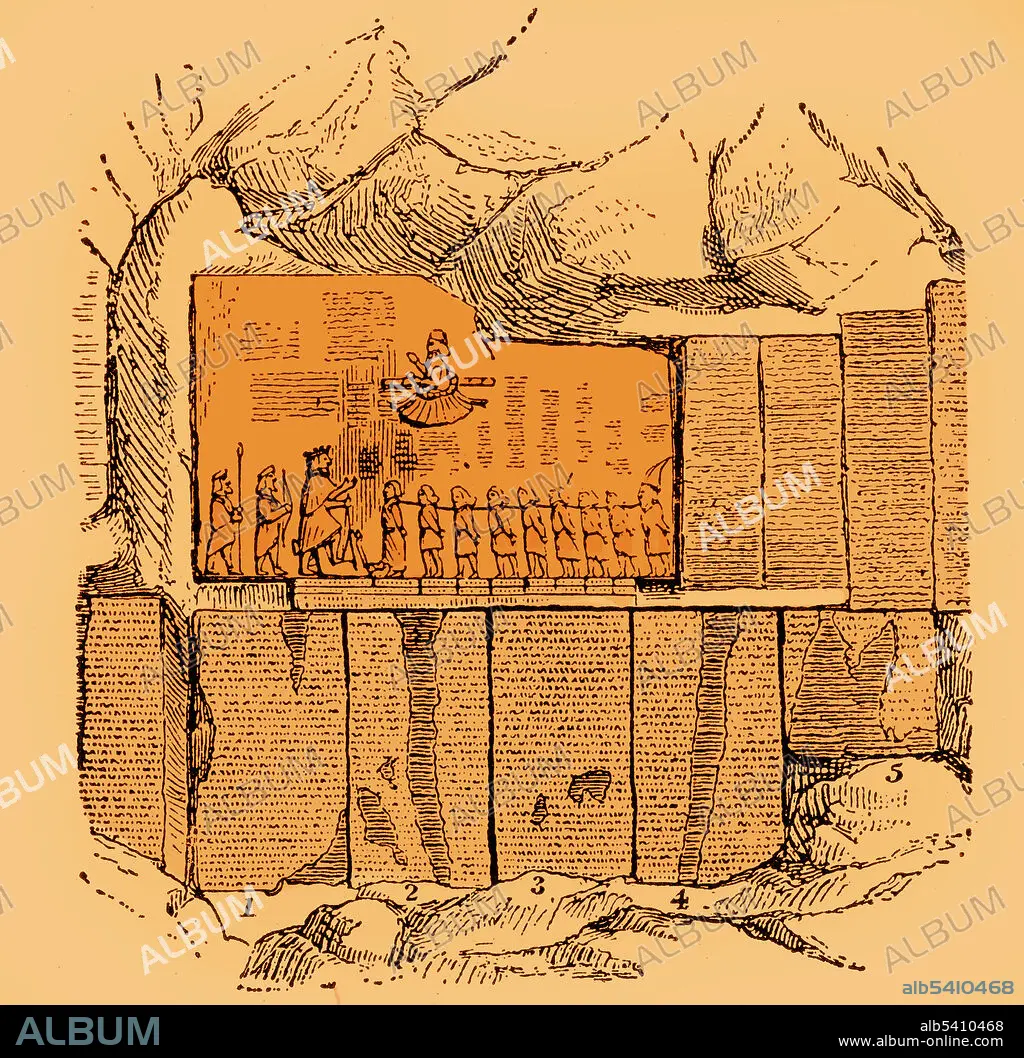
Título: Darius the Great, Behistun Inscription
Descripción: Ver traducción automática
The Behistun Inscription is a multilingual inscription and large rock relief on a cliff at Mount Behistun in the Kermanshah Province of Iran, near the city of Kermanshah in western Iran. Authored by Darius the Great sometime between 522 BC and 486 BC, the inscription begins with a brief autobiography of Darius, including his ancestry and lineage. Later in the inscription, Darius provides a lengthy sequence of events following the deaths of Cyrus the Great and Cambyses II in which he fought nineteen battles in a period of one year to put down multiple rebellions throughout the Persian Empire. Darius the Great proclaimed himself victorious in all battles during the period of upheaval. The inscription includes three versions of the same text, written in three different cuneiform script languages: Old Persian, Elamite, and Babylonian. The inscription is to cuneiform what the Rosetta Stone is to Egyptian hieroglyphs.
The Behistun Inscription is a multilingual inscription and large rock relief on a cliff at Mount Behistun in the Kermanshah Province of Iran, near the city of Kermanshah in western Iran. Authored by Darius the Great sometime between 522 BC and 486 BC, the inscription begins with a brief autobiography of Darius, including his ancestry and lineage. Later in the inscription, Darius provides a lengthy sequence of events following the deaths of Cyrus the Great and Cambyses II in which he fought nineteen battles in a period of one year to put down multiple rebellions throughout the Persian Empire. Darius the Great proclaimed himself victorious in all battles during the period of upheaval. The inscription includes three versions of the same text, written in three different cuneiform script languages: Old Persian, Elamite, and Babylonian. The inscription is to cuneiform what the Rosetta Stone is to Egyptian hieroglyphs.
Personas: ASIRIA • MESOPOTAMIAN • ÉLAMITE
Crédito: Album / Science Source
Autorizaciones: ? Cesión de modelo: No - ? Cesión de propiedad: No
¿Preguntas relacionadas con los derechos?
¿Preguntas relacionadas con los derechos?
Tamaño imagen: 3738 × 3668 px | 39.2 MB
Tamaño impresión: 31.6 × 31.1 cm | 1471.7 × 1444.1 in (300 dpi)
Palabras clave: 500 • AISLAR • ANTIGUO • ARTE • ASIRIA • CIVILIZACION • COLOREADA • COLOREADO • COMUNICACION • CUNA • ÉLAMITE • ESCRITURA • ESCULTURA • EXTINGUIDO • FAMOSA • FAMOSO • FAMOSOS • FONOGRAMA • HISTORIA • HISTORICO • IDIOMAS • ILUSTRACION • ILUSTRACIONES • IMPORTANTE • INSCRIPCION • IRANIO • LENGUA • MAYOR • MEDIA • MEJORA • MESOPOTAMIAN • MIDDLE • MITOLOGIA: PERSA • MULTILINGUE • OBRA DE ARTE • ORIENTE • PERSA • PERSAS • PERSIA • RELIEVE • SISTEMA • SÍTIO • TALLA
