

alb3799858
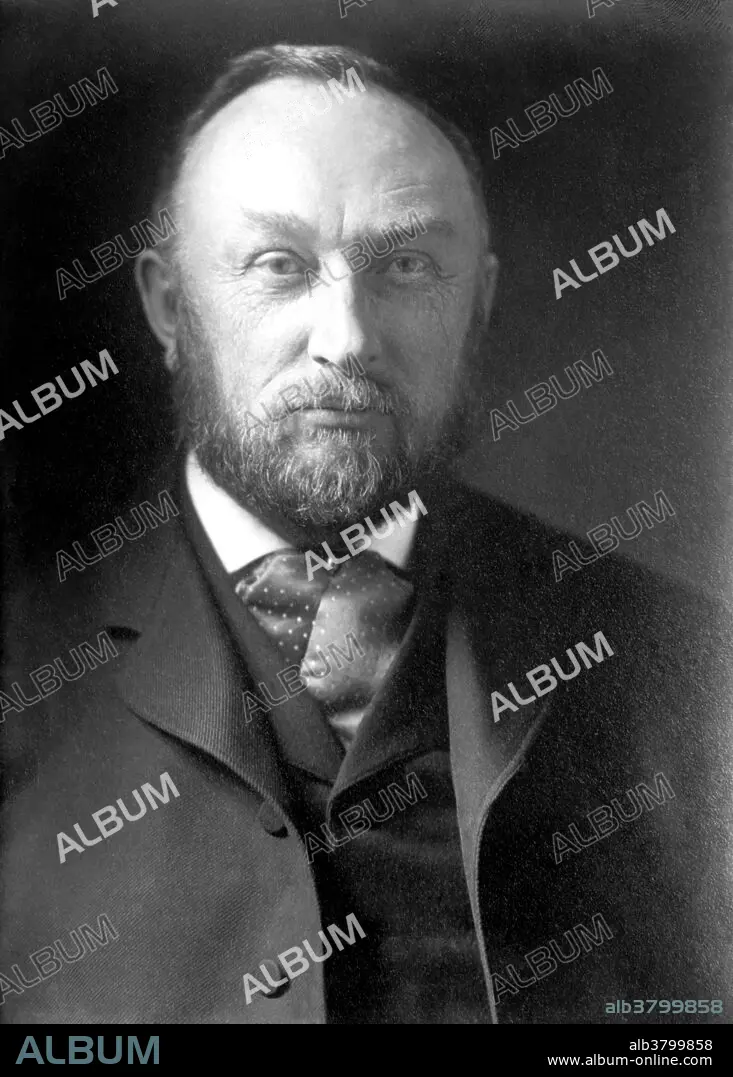
Edward Pickering, American Astronomer
| Compartir |
|---|
 Pinterest Pinterest |
 Twitter Twitter |
 Facebook Facebook |
 Copiar enlace Copiar enlace |
 Email Email |
|
Añadir a otro lightbox |
|
Añadir a otro lightbox |


¿Ya tienes cuenta? Iniciar sesión
¿No tienes cuenta? Regístrate
Compra esta imagen.
Selecciona el uso:

Título: Edward Pickering, American Astronomer
Descripción: Ver traducción automática
Edward Charles Pickering (July 19, 1846 - February 3, 1919) was an American astronomer and physicist. He taught physics at the Massachusetts Institute of Technology. With Carl Vogel, he discovered the first spectroscopic binary stars. A binary star is a star system consisting of two stars orbiting around their common center of mass. He served as director of Harvard College Observatory from 1877 to his death in 1919, where he made great leaps forward in the gathering of stellar spectra through the use of photography. In 1882, he developed a method to photograph the spectra of multiple stars simultaneously by putting a large prism in front of the photographic plate. He helped design a stellar classification system based on an alphabetic system for spectral classes that was first known as the Harvard Stellar Classification and became the basis for the Henry Draper Catalog. At Harvard, he recruited many women to work for him, including Annie Jump Cannon, Henrietta Swan Leavitt, and Antonia Maury. These women, who came to be known as Pickering's Harem by the scientific community, made several important discoveries. He died in 1919 at the age of 72. His brother William Pickering was also an astronomer.
Edward Charles Pickering (July 19, 1846 - February 3, 1919) was an American astronomer and physicist. He taught physics at the Massachusetts Institute of Technology. With Carl Vogel, he discovered the first spectroscopic binary stars. A binary star is a star system consisting of two stars orbiting around their common center of mass. He served as director of Harvard College Observatory from 1877 to his death in 1919, where he made great leaps forward in the gathering of stellar spectra through the use of photography. In 1882, he developed a method to photograph the spectra of multiple stars simultaneously by putting a large prism in front of the photographic plate. He helped design a stellar classification system based on an alphabetic system for spectral classes that was first known as the Harvard Stellar Classification and became the basis for the Henry Draper Catalog. At Harvard, he recruited many women to work for him, including Annie Jump Cannon, Henrietta Swan Leavitt, and Antonia Maury. These women, who came to be known as Pickering's Harem by the scientific community, made several important discoveries. He died in 1919 at the age of 72. His brother William Pickering was also an astronomer.
Crédito: Album / LOC/Science Source
Autorizaciones: ? Cesión de modelo: No - ? Cesión de propiedad: No
¿Preguntas relacionadas con los derechos?
¿Preguntas relacionadas con los derechos?
Tamaño imagen: 3714 × 5191 px | 55.2 MB
Tamaño impresión: 31.4 × 44.0 cm | 1462.2 × 2043.7 in (300 dpi)
Palabras clave: AMERICANO • ASTRONOMIA • ASTRONOMO • BLANCO Y NEGRO • CIENCIA • ESTADOS UNIDOS DE AMERICA • ESTADOS UNIDOS • FAMOSA • FAMOSO • FAMOSOS • FIGURA • FÍSICA (CIENCIA) • FÍSICO (CIENTIFICO) • FOTO • FOTOGRAFIA • GENTE • HISTORIA • HISTORICO • HOMBRE • HOMBRES • IMPORTANTE • MASCULINO • PERSONA • PERSONALIDAD • PERSONALIDADES • PORTRAIT • RETRATO DE HOMBRE • RETRATO • S. XX • SIGLO XIX • SIGLO XX
