

alb9623169
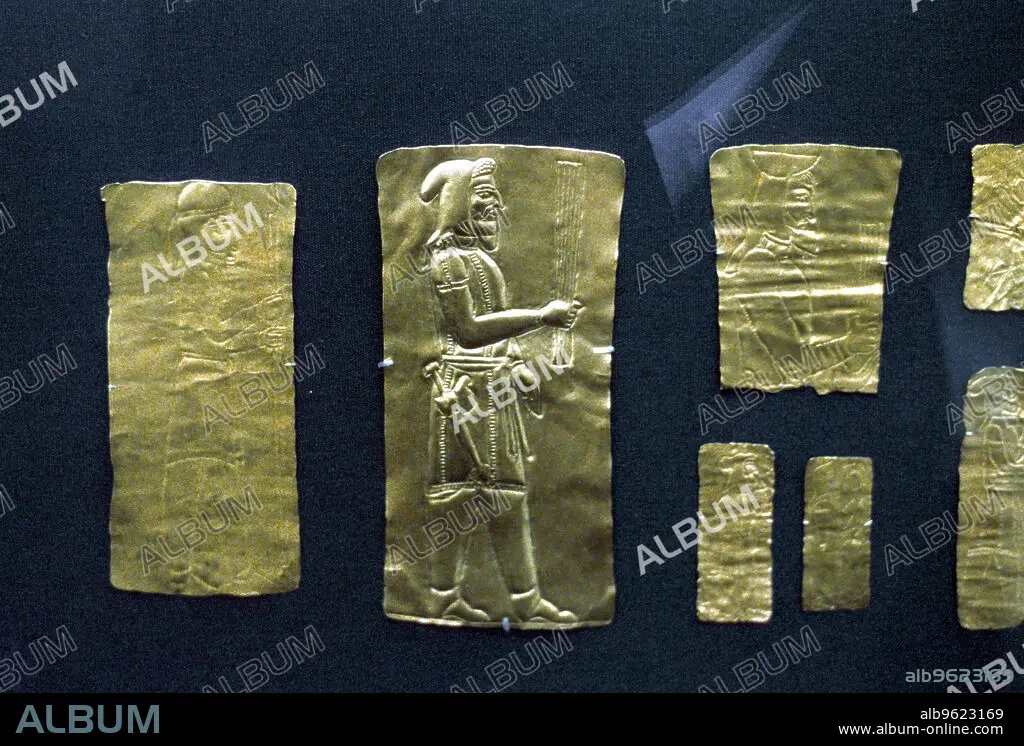
Gold plaques from the Oxus treasure, Achaemenid Persian, 5th-4th century BC. Artist: Unknown
| Compartir |
|---|
 Pinterest Pinterest |
 Twitter Twitter |
 Facebook Facebook |
 Copiar enlace Copiar enlace |
 Email Email |
|
Añadir a otro lightbox |
|
Añadir a otro lightbox |


¿Ya tienes cuenta? Iniciar sesión
¿No tienes cuenta? Regístrate
Compra esta imagen.
Selecciona el uso:

Título: Gold plaques from the Oxus treasure, Achaemenid Persian, 5th-4th century BC. Artist: Unknown
Descripción: Ver traducción automática
Gold plaques from the Oxus treasure, Achaemenid Persian, 5th-4th century BC. Man wearing Median costume; he has an akinakes (short sword) of a type depicted on reliefs at the Persian centre of Persepolis and represented in the Oxus treasure by a fine gold scabbard. The hooded man is sometimes identified as a priest because he carries a bundle of sticks known as a barsom. These were originally grasses that were distributed during religious ceremonies. The Oxus treasure is the most important collection of silver and gold to have survived from the Achaemenid period. This is one of the finest examples of a group of about fifty thin gold plaques which may have been votive objects left as a pious act in a temple or shrine near the Oxus River at Takht-i Kuwad, Tadjikistan.
Gold plaques from the Oxus treasure, Achaemenid Persian, 5th-4th century BC. Man wearing Median costume; he has an akinakes (short sword) of a type depicted on reliefs at the Persian centre of Persepolis and represented in the Oxus treasure by a fine gold scabbard. The hooded man is sometimes identified as a priest because he carries a bundle of sticks known as a barsom. These were originally grasses that were distributed during religious ceremonies. The Oxus treasure is the most important collection of silver and gold to have survived from the Achaemenid period. This is one of the finest examples of a group of about fifty thin gold plaques which may have been votive objects left as a pious act in a temple or shrine near the Oxus River at Takht-i Kuwad, Tadjikistan.
Técnica/material: ORO
Crédito: Album / Ann Ronan Picture Library/Heritage-Images
Autorizaciones: ? Cesión de modelo: No - ? Cesión de propiedad: No
¿Preguntas relacionadas con los derechos?
¿Preguntas relacionadas con los derechos?
Tamaño imagen: 3933 × 2661 px | 29.9 MB
Tamaño impresión: 33.3 × 22.5 cm | 1548.4 × 1047.6 in (300 dpi)
Palabras clave: AFGANISTAN • AFGANO • ARMA GRIEGA • ARMA • ARMAS • ARTEFACTO • CENTRAL DE RESERVA • CEREMONIA • CESPED • CHICO • COLOR • COLORIDO • CONCEPTO • CONFLICTO BELICO • CURA • ESPADA • ESPADAS • GENTE • GUERRA • GUERRAS • HOMBRE • HOMBRES • IRANIO • MASCULINO • MITOLOGIA: PERSA • OFRENDA VOTIVA • ORIENTAL • ORO • PAÍS • PALO • PERSA • PERSAS • PERSIA • RELIGION • RELIGIOSO • RETRATO DE HOMBRE • ROPA • SACERDOTE • SACERDOTES • VESTIDO • WAR • WEAPON
