alb5141872
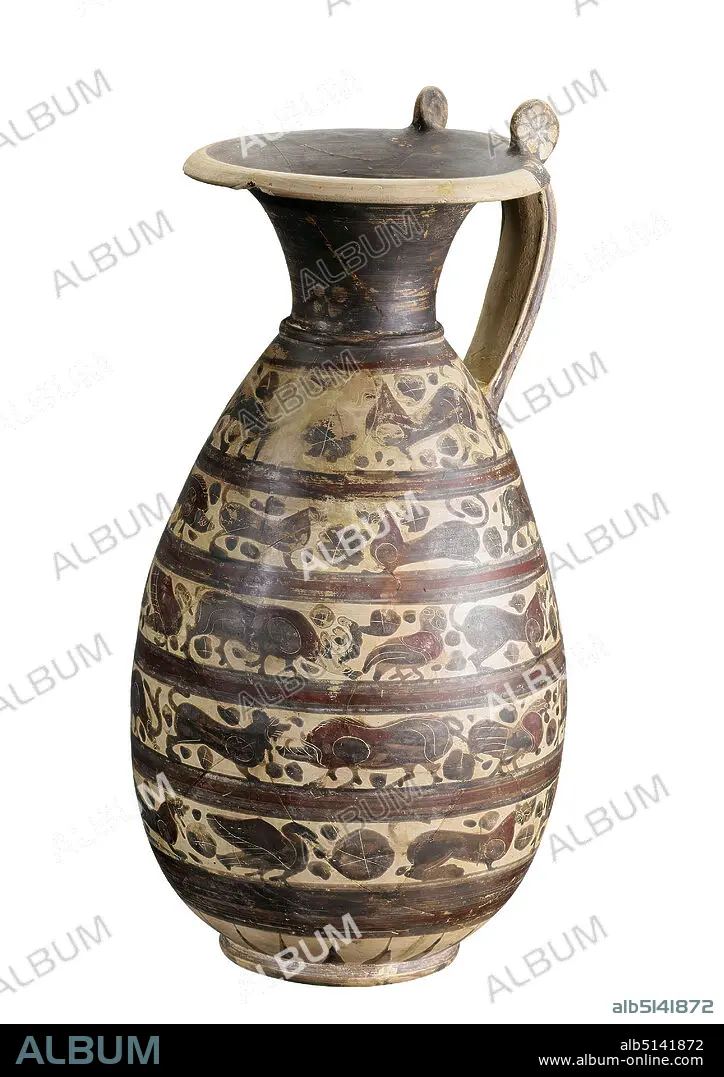
Maler von München, Olpe (animal frieze), clay, quickly turned, painted (ceramic), alternately fired, clay, Total: Height: 42 cm; Diameter: 20 cm; Muzzle diameter: 17 cm; Base diameter: 11 cm, ceramic, animals, animals as ornament, antiquity, The Olpe, composed of larger pieces, picks up a form common in Corinthian vase art The more fleeting painting as well as the clay reveal that this jug is an Etruscan work that was intended to imitate Corinthian pieces. The body of the jug is sack-shaped; a narrow beaded ring at the neck. The handle is made of three rods and ends with two vertical rotellas with star ornamentation at the mouth. Five animal friezes, which are separated by varnish bands with red, white and ochre-colored lines, decorate the vessel body over a low ray wreath. Depicted are lions, panthers, boars, deer, owls, cocks and waterfowl, most of which are directed to the right. So-called blot rosettes are inserted between the animals as filler ornaments. At the time of the production of this vase, an increased demand in the production of vessels led to a strong standardization of the decoration. The painter of Munich 640 belongs to the so-called Olpen cycle and thus to one of the two large workshops that competed with each other in Vulci in the period from 580 to 560 BC. It takes its name from the shape of the vessel that it predominantly painted.
| Compartir |
|---|
 Pinterest Pinterest |
 Twitter Twitter |
 Facebook Facebook |
 Copiar enlace Copiar enlace |
 Email Email |
|
Añadir a otro lightbox |
|
Añadir a otro lightbox |


¿Ya tienes cuenta? Iniciar sesión
¿No tienes cuenta? Regístrate
Compra esta imagen.
Selecciona el uso:

Descripción:
Ver traducción automática
Maler von München, Olpe (animal frieze), clay, quickly turned, painted (ceramic), alternately fired, clay, Total: Height: 42 cm; Diameter: 20 cm; Muzzle diameter: 17 cm; Base diameter: 11 cm, ceramic, animals, animals as ornament, antiquity, The Olpe, composed of larger pieces, picks up a form common in Corinthian vase art The more fleeting painting as well as the clay reveal that this jug is an Etruscan work that was intended to imitate Corinthian pieces. The body of the jug is sack-shaped; a narrow beaded ring at the neck. The handle is made of three rods and ends with two vertical rotellas with star ornamentation at the mouth. Five animal friezes, which are separated by varnish bands with red, white and ochre-colored lines, decorate the vessel body over a low ray wreath. Depicted are lions, panthers, boars, deer, owls, cocks and waterfowl, most of which are directed to the right. So-called blot rosettes are inserted between the animals as filler ornaments. At the time of the production of this vase, an increased demand in the production of vessels led to a strong standardization of the decoration. The painter of Munich 640 belongs to the so-called Olpen cycle and thus to one of the two large workshops that competed with each other in Vulci in the period from 580 to 560 BC. It takes its name from the shape of the vessel that it predominantly painted.
Crédito:
Album / quintlox
Autorizaciones:
Tamaño imagen:
3053 x 4320 px | 37.7 MB
Tamaño impresión:
25.8 x 36.6 cm | 10.2 x 14.4 in (300 dpi)
Palabras clave:
ADORNO • ALFARERIA • ANIMAL • ANIMALES • ANTIGÜEDAD • ANTIGÜEDADES • ANTIQUITY • ARCILLA • ASA • ASIDERO • AVE ACUATICA • AVES ACUÁTICA • BLANCO • BOCA • BODY • BUQUE • CADAVER • CERÁMICA • CERÁMICO • CERVIDO • CIERVO • COLOR ROJO • CONDECORAR • CUELLO • CUERPO • DECORACION • DECORATIVO • DEER • DIAMETRO • EN ROJO • FABRICACIÓN • FORMA • JARRA • JARRON • LEONES • MANGO • OBJETO DE ARCILLA • OBJETO DE CERAMICA • OLPE • ORNAMENTACIÓN • ORNAMENTO • PAINTER • PANTERAS • PERIODO • PINTADA • PINTADO • PINTOR • POZO • PRODUCCION • ROJA • ROJO (COLOR) • ROJO • SEPARADOS • SHAPE • TERRACOTA • TERRACOTTA • TIEMPO • VULCI • WHITE
