

alb4617031
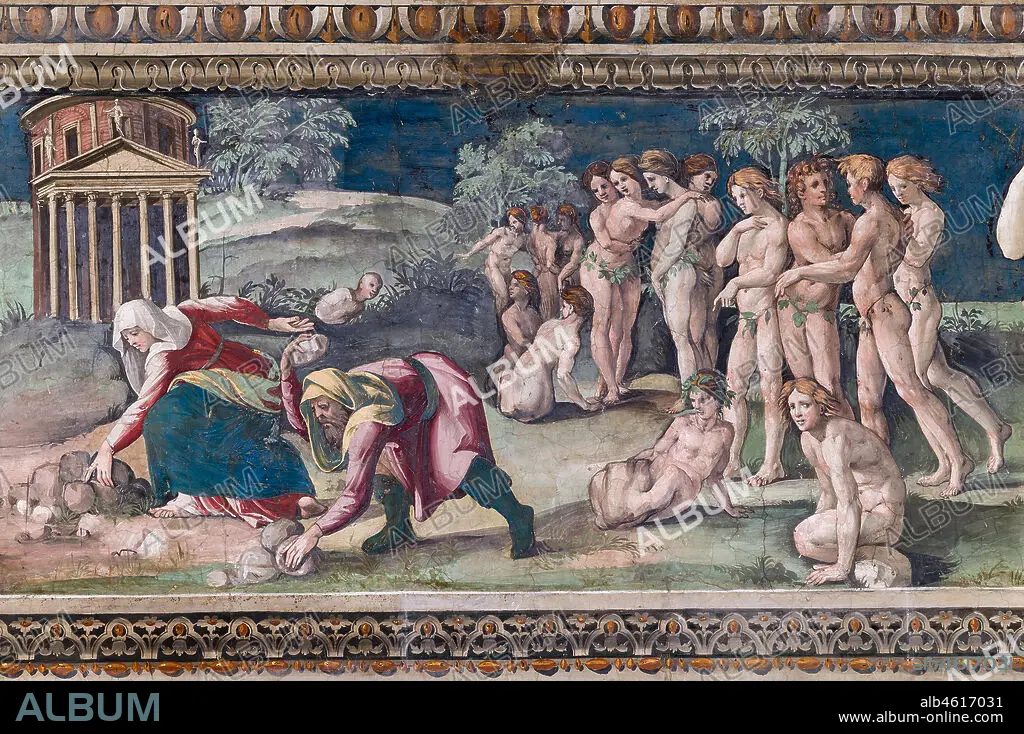
Rome, Villa Farnesina, The Hall of Perspectives: the ample frieze with mythological scenes inspired by the Ovid Metamorphoses. Detail of Deucalion and Pyrrha throwing stones.. Frescoes by Baldassarre Peruzzi (1517-8). Once the deluge was over and the couple had given thanks to Zeus, Deucalion (said in several of the sources to have been aged 82 at the time) consulted an oracle of Themis about how to repopulate the earth. He was told to cover his head and throw the bones of your mother behind your shoulder. Deucalion and Pyrrha understood that "mother" is Gaia, the mother of all living things, and the "bones" to be rocks. They threw the rocks behind their shoulders and the stones formed people. Pyrrha's became women; Deucalion's became men.
| Compartir |
|---|
 Pinterest Pinterest |
 Twitter Twitter |
 Facebook Facebook |
 Copiar enlace Copiar enlace |
 Email Email |
|
Añadir a otro lightbox |
|
Añadir a otro lightbox |


¿Ya tienes cuenta? Iniciar sesión
¿No tienes cuenta? Regístrate
Compra esta imagen.
Selecciona el uso:

Descripción:
Traducción automática: Roma, Villa Farnesina, Salón de las Perspectivas: el amplio friso con escenas mitológicas inspiradas en las Metamorfosis de Ovidio. Detalle de Deucalión y Pirra arrojando piedras. Frescos de Baldassarre Peruzzi (1517-8). Una vez finalizado el diluvio y la pareja hubo dado gracias a Zeus, Deucalión (se dice en varias fuentes que entonces tenía 82 años) consultó un oráculo de Temis sobre cómo repoblar la tierra. Le dijeron que se cubriera la cabeza y arrojara los huesos de su madre detrás de su hombro. Deucalión y Pirra entendieron que "madre" es Gaia, la madre de todos los seres vivos, y que los "huesos" eran rocas. Tiraron las piedras detrás de sus hombros y las piedras formaron personas. Las de Pirra se convirtieron en mujeres; Deucalión se hizo hombre
Rome, Villa Farnesina, The Hall of Perspectives: the ample frieze with mythological scenes inspired by the Ovid Metamorphoses. Detail of Deucalion and Pyrrha throwing stones.. Frescoes by Baldassarre Peruzzi (1517-8). Once the deluge was over and the couple had given thanks to Zeus, Deucalion (said in several of the sources to have been aged 82 at the time) consulted an oracle of Themis about how to repopulate the earth. He was told to cover his head and throw the bones of your mother behind your shoulder. Deucalion and Pyrrha understood that "mother" is Gaia, the mother of all living things, and the "bones" to be rocks. They threw the rocks behind their shoulders and the stones formed people. Pyrrha's became women; Deucalion's became men.
Crédito: Album / Ghigo Roli
Autorizaciones: ? Cesión de modelo: No - ? Cesión de propiedad: No
¿Preguntas relacionadas con los derechos?
¿Preguntas relacionadas con los derechos?
Tamaño imagen: 8128 × 5408 px | 125.8 MB
Tamaño impresión: 68.8 × 45.8 cm | 3200.0 × 2129.1 in (300 dpi)
Palabras clave: DEIDAD • DIOSA • DIVINIDAD • ESTILO RENACENTISTA • FRESCO • FRISO • ITALIA • ITALY • LIRICA • LIRICO • LIRISMO • MANIERISMO • MITOLOGIA GRIEGA • MURAL • PIEDRA • PIEDRAS • PINTURA AL FRESCO • PINTURA EN PARED • PINTURA MURAL • PINTURA • PIRRA • POEMA • POESIA • RENACENTISTA • RENACENTISTAS • RENACIMIENTO • ROCA • ROCAS • ROMA • ROME • S. XVI • SALA • SIGLO XVI • TEMPERA • TEMPLE • TEMPLO • TIERRA
