

alb4354928
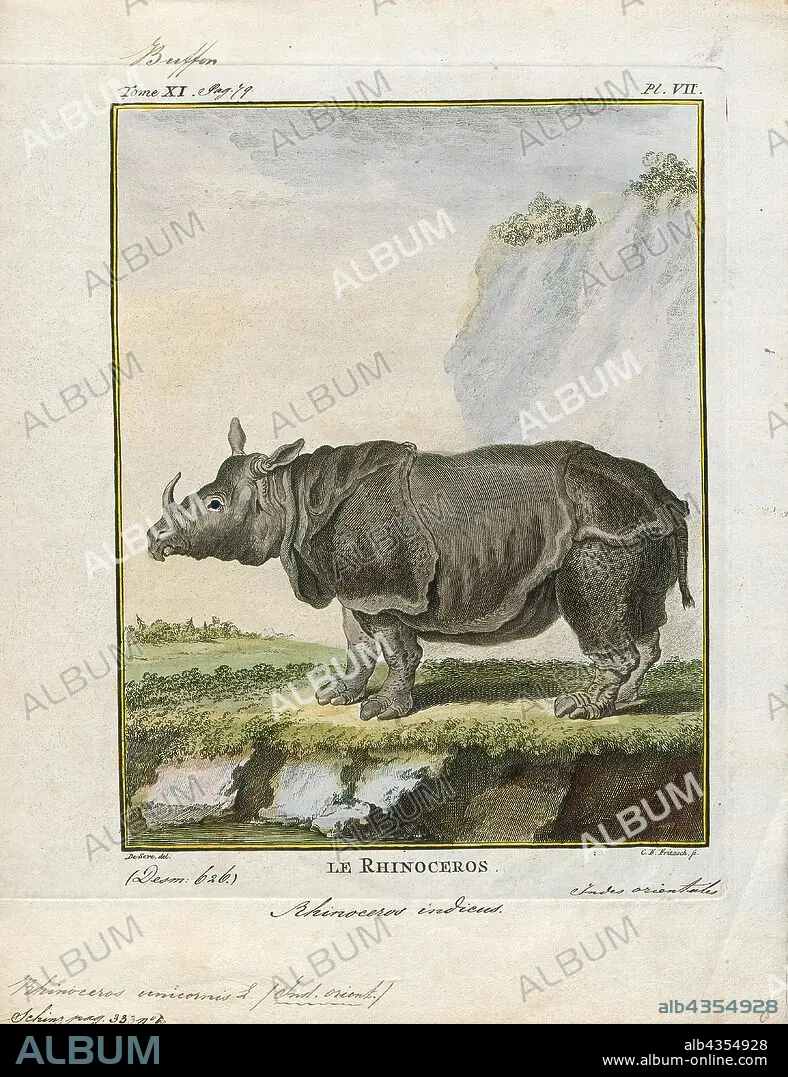
Rhinoceros unicornis, Print, The Indian rhinoceros (Rhinoceros unicornis), also called the greater one-horned rhinoceros and great Indian rhinoceros, is a rhinoceros native to the Indian subcontinent. It is listed as Vulnerable on the IUCN Red List, as populations are fragmented and restricted to less than 20, 000 sq km (7, 700 sq mi). Moreover, the extent and quality of the rhino's most important habitat, alluvial grassland and riverine forest, is considered to be in decline due to human and livestock encroachment. As of 2008, a total of 2, 575 mature individuals were estimated to live in the wild., 1700-1880.
| Compartir |
|---|
 Pinterest Pinterest |
 Twitter Twitter |
 Facebook Facebook |
 Copiar enlace Copiar enlace |
 Email Email |
|
Añadir a otro lightbox |
|
Añadir a otro lightbox |


¿Ya tienes cuenta? Iniciar sesión
¿No tienes cuenta? Regístrate
Compra esta imagen.
Selecciona el uso:

Descripción: Ver traducción automática
Rhinoceros unicornis, Print, The Indian rhinoceros (Rhinoceros unicornis), also called the greater one-horned rhinoceros and great Indian rhinoceros, is a rhinoceros native to the Indian subcontinent. It is listed as Vulnerable on the IUCN Red List, as populations are fragmented and restricted to less than 20, 000 sq km (7, 700 sq mi). Moreover, the extent and quality of the rhino's most important habitat, alluvial grassland and riverine forest, is considered to be in decline due to human and livestock encroachment. As of 2008, a total of 2, 575 mature individuals were estimated to live in the wild., 1700-1880
Rhinoceros unicornis, Print, The Indian rhinoceros (Rhinoceros unicornis), also called the greater one-horned rhinoceros and great Indian rhinoceros, is a rhinoceros native to the Indian subcontinent. It is listed as Vulnerable on the IUCN Red List, as populations are fragmented and restricted to less than 20, 000 sq km (7, 700 sq mi). Moreover, the extent and quality of the rhino's most important habitat, alluvial grassland and riverine forest, is considered to be in decline due to human and livestock encroachment. As of 2008, a total of 2, 575 mature individuals were estimated to live in the wild., 1700-1880
Crédito: Album / quintlox
Autorizaciones: ? Cesión de modelo: No - ? Cesión de propiedad: No
¿Preguntas relacionadas con los derechos?
¿Preguntas relacionadas con los derechos?
Tamaño imagen: 3518 × 4572 px | 46.0 MB
Tamaño impresión: 29.8 × 38.7 cm | 1385.0 × 1800.0 in (300 dpi)
Palabras clave: 2 • 20 • 7 • CALIDAD • CONSIDERA • FRAGMENTADA • HUMANO • HUMANOS • IMPRESION • PERSONA • RINOCERONTE INDIO • SALVAJE • TOTAL • VULNERABLES
