

alb3815129
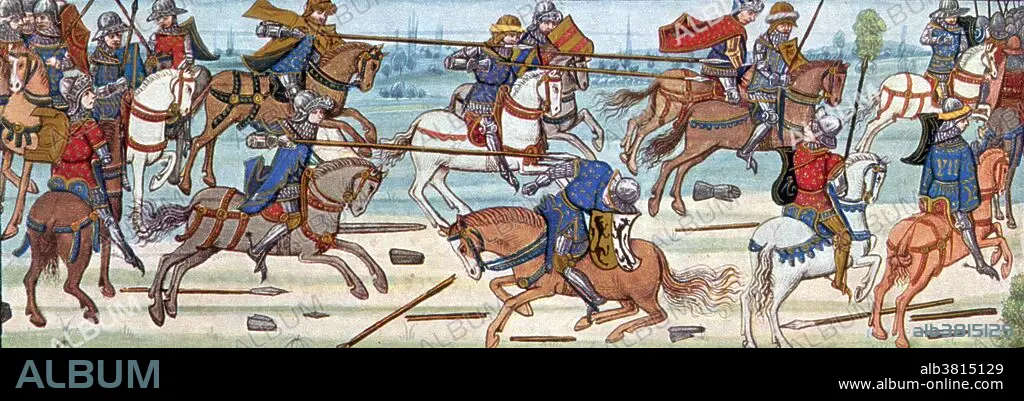
Alexander the Great, Siege of Gaza, 332 BC
| Compartir |
|---|
 Pinterest Pinterest |
 Twitter Twitter |
 Facebook Facebook |
 Copiar enlace Copiar enlace |
 Email Email |
|
Añadir a otro lightbox |
|
Añadir a otro lightbox |


¿Ya tienes cuenta? Iniciar sesión
¿No tienes cuenta? Regístrate
Compra esta imagen.
Selecciona el uso:

Título: Alexander the Great, Siege of Gaza, 332 BC
Descripción:
Traducción automática: El asedio de Gaza se produjo durante la campaña egipcia de Alejandro Magno en el año 332 a. C. La fortaleza de Gaza, comandada por Batis, estaba situada en una eminencia, al borde de un desierto desde el que se podía controlar fácilmente la zona circundante. Controlaba la carretera principal que iba desde la provincia persa de Siria a Egipto. La ciudad, de más de 60 pies de altura, se utilizaba tradicionalmente para controlar la zona circundante, que incluso entonces era un foco de disidencia. Alejandro logró llegar a las murallas utilizando las máquinas que había empleado contra Tiro. Después de tres asaltos infructuosos, la fortaleza fue tomada por asalto. Batis se negó a rendirse a Alejandro. Cuando Gaza fue tomada, la población masculina fue pasada a espada y las mujeres y los niños fueron vendidos como esclavos. Batis fue asesinado por Alejandro imitando el trato que Aquiles dio al caído Héctor. Batis fue forzado a pasar una cuerda por los tobillos, probablemente entre el hueso del tobillo y el tendón de Aquiles, y Batis fue arrastrado vivo en un carro bajo las murallas de la ciudad. Titulado: “Huida de Gadifer y Batis ante el ejército de Alejandro” Siglo XV
The Siege of Gaza occurred during the Egyptian campaign of Alexander the Great in 332 BC. The fortress of Gaza, commanded by Batis, was located on an eminence, on the edge of a desert from which the surrounding area could be easily controlled. It controlled the main road that went from the Persian province of Syria to Egypt. The city, over 60 feet high, was traditionally employed to control the surrounding area, which even then was a hotbed of dissent. Alexander succeeded in reaching the walls by utilizing the engines he had employed against Tyre. After three unsuccessful assaults, the stronghold was taken by storm. Batis refused to surrender to Alexander. When Gaza was taken, the male population was put to the sword and the women and children were sold into slavery. Batis was killed by Alexander in imitation of Achilles' treatment of the fallen Hector. A rope was forced through Batis's ankles, probably between the ankle bone and the Achilles tendon, and Batis was dragged alive by chariot beneath the walls of the city. Entitled: "Flight of Gadifer and Batis before the army of Alexander" 15th century.
Personas: MACEDONIAN
Crédito: Album / NYPL/Science Source
Autorizaciones: ? Cesión de modelo: No - ? Cesión de propiedad: No
¿Preguntas relacionadas con los derechos?
¿Preguntas relacionadas con los derechos?
Tamaño imagen: 6300 × 2142 px | 38.6 MB
Tamaño impresión: 53.3 × 18.1 cm | 2480.3 × 843.3 in (300 dpi)
Palabras clave: A CABALLO • ACONTECIMIENTO • ALEJANDRO MAGNO • ANCIENT GREEK • ANTIGUO • ANTIGÜEDAD • ARTE • BATALLA • CABALLERIA • CAMPO DE BATALLA • CIVILIZACION ANTIGUA • COMANDANTE EN JEFE • COMBATE • CONFLICTO BELICO • CONQUISTADOR • CULTURA ANTIGUA • DIBUJO • EJERCITO • EMPERADOR • EXPEDICION A EGIPTO • EXPEDICION EGIPCIA • FAMOSA • FAMOSO • FAMOSOS • FIGURA • GENTE • GRIEGO ANTIGUO • GUERRA • GUERRAS • HISTORIA • HISTORICO • HOMBRE • HOMBRES • ILUSTRACION • ILUSTRACIONES • IMPORTANTE • LUCHA • LUCHANDO • MACEDONIAN • MASCULINO • MILITAR • OBRA DE ARTE • PERSONA • PERSONALIDAD • PERSONALIDADES • RETRATO DE HOMBRE • S. IV AC • SIGLO IV A. C. • SIGLO IV AC • SIGLO IV AC. • WAR
