

alb5538060
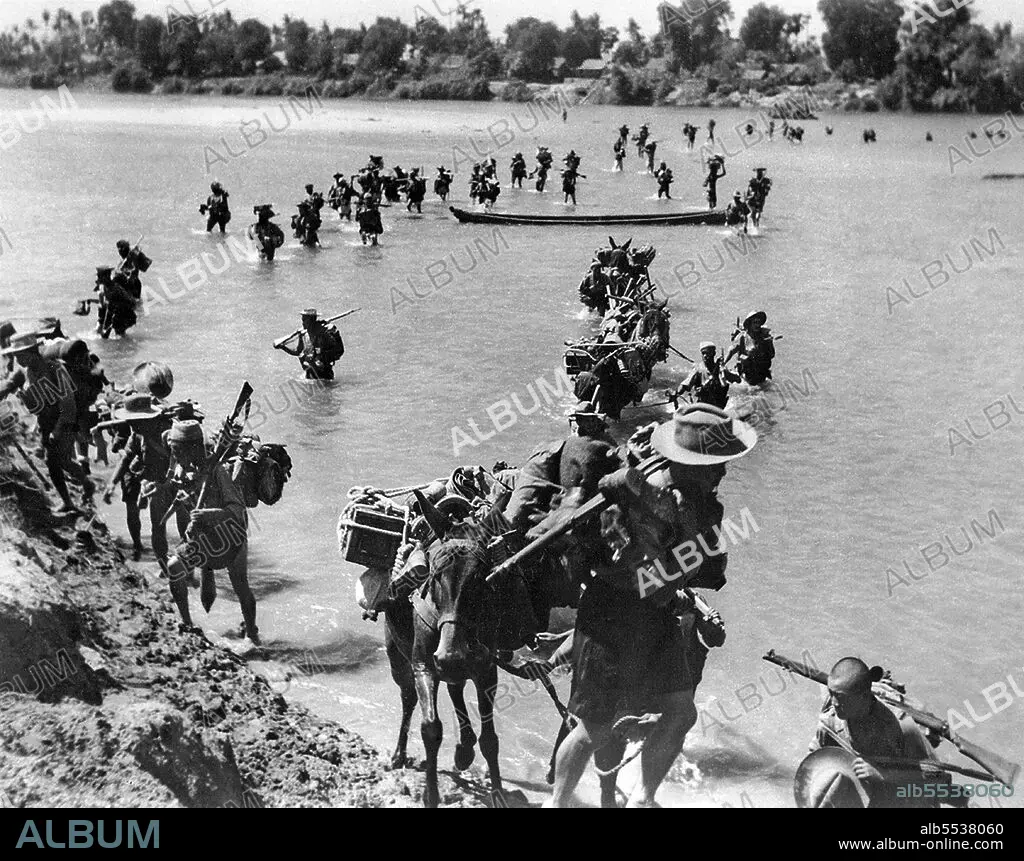
Burma / Myanmar: Gurkha Rifles of the British Indian Army crossing the Irrawaddy River on 27 January 1945.
| Compartir |
|---|
 Pinterest Pinterest |
 Twitter Twitter |
 Facebook Facebook |
 Copiar enlace Copiar enlace |
 Email Email |
|
Añadir a otro lightbox |
|
Añadir a otro lightbox |


¿Ya tienes cuenta? Iniciar sesión
¿No tienes cuenta? Regístrate
Compra esta imagen.
Selecciona el uso:

Título: Burma / Myanmar: Gurkha Rifles of the British Indian Army crossing the Irrawaddy River on 27 January 1945.
Descripción:
Traducción automática: La Campaña de Birmania en el Teatro de la Segunda Guerra Mundial del Sudeste Asiático se libró principalmente entre las fuerzas de la Commonwealth británica, China y Estados Unidos contra las fuerzas del Imperio del Japón, que contaban con la ayuda de Tailandia, el Ejército de Independencia de Birmania y el Reino Unido. Ejército Nacional Indio. Las fuerzas terrestres de la Commonwealth británica procedían principalmente del Reino Unido, la India británica y África. En parte porque las lluvias monzónicas hicieron posible una campaña eficaz sólo durante aproximadamente la mitad del año, la campaña de Birmania fue casi la campaña más larga de la guerra. Durante la temporada de campaña de 1942, los japoneses conquistaron Birmania, expulsando a las fuerzas británicas, indias y chinas de la mayor parte del país y obligando a la administración británica a huir a la India. Después de conseguir algunos éxitos defensivos durante 1943, intentaron prevenir las ofensivas aliadas en 1944 lanzando una invasión de la India (Operación U-Go). Esto fracasó con pérdidas desastrosas. Durante la siguiente temporada de campaña, que comenzó en diciembre de 1944, los aliados lanzaron ofensivas en Birmania, capturando Rangún, la capital y puerto principal, de manos de los debilitados japoneses justo antes de que llegara el monzón, para asegurar su control sobre el país.
The Burma Campaign in the South-East Asian Theatre of World War II was fought primarily between British Commonwealth, Chinese and United States forces against the forces of the Empire of Japan, who were assisted to some degree by Thailand, the Burmese Independence Army and the Indian National Army. The British Commonwealth land forces were drawn primarily from the United Kingdom, British India and Africa. Partly because monsoon rains made effective campaigning possible only for about half of the year, the Burma campaign was almost the longest campaign of the war. During the campaigning season of 1942, the Japanese had conquered Burma, driving British, Indian and Chinese forces from most of the country and forcing the British administration to flee into India. After scoring some defensive successes during 1943, they then attempted to forestall Allied offensives in 1944 by launching an invasion of India (Operation U-Go). This failed with disastrous losses. During the next campaigning season beginning in December 1944, the Allies launched offensives into Burma, capturing Rangoon, the capital and principal port, from the weakened Japanese just before the monsoon struck, to ensure their hold on the country.
Crédito: Album / Pictures from History/Universal Images Group
Autorizaciones: ? Cesión de modelo: No - ? Cesión de propiedad: No
¿Preguntas relacionadas con los derechos?
¿Preguntas relacionadas con los derechos?
Tamaño imagen: 4700 × 3708 px | 49.9 MB
Tamaño impresión: 39.8 × 31.4 cm | 1850.4 × 1459.8 in (300 dpi)
Palabras clave: 2ª GUERRA MUNDIAL • ASIA • ASIATICO • BIRMANIA • BIRMANO • EE. UU • EE. UU. • EEUU / ESTADOS UNIDOS • EEUU • ESTADOS UNIDOS DE AMERICA • ESTADOS UNIDOS • GUERRA (2ª GUERRA MUNDIAL) • GUERRA MUNDIAL II 1939/45 • GUERRERO • GUERRILLA • GUERRILLERO • HISTORIA • HISTORICO • II GUERRA MUNDIAL • JAPON • JAPONES • MERRILL, FRANK • MILITAR • MYANMAR • SEGUNDA GUERRA MUNDIAL 1939/45 • SEGUNDA GUERRA MUNDIAL • SOLDADO • SOLDADOS • U. S. A. • USA
