

alb5535649
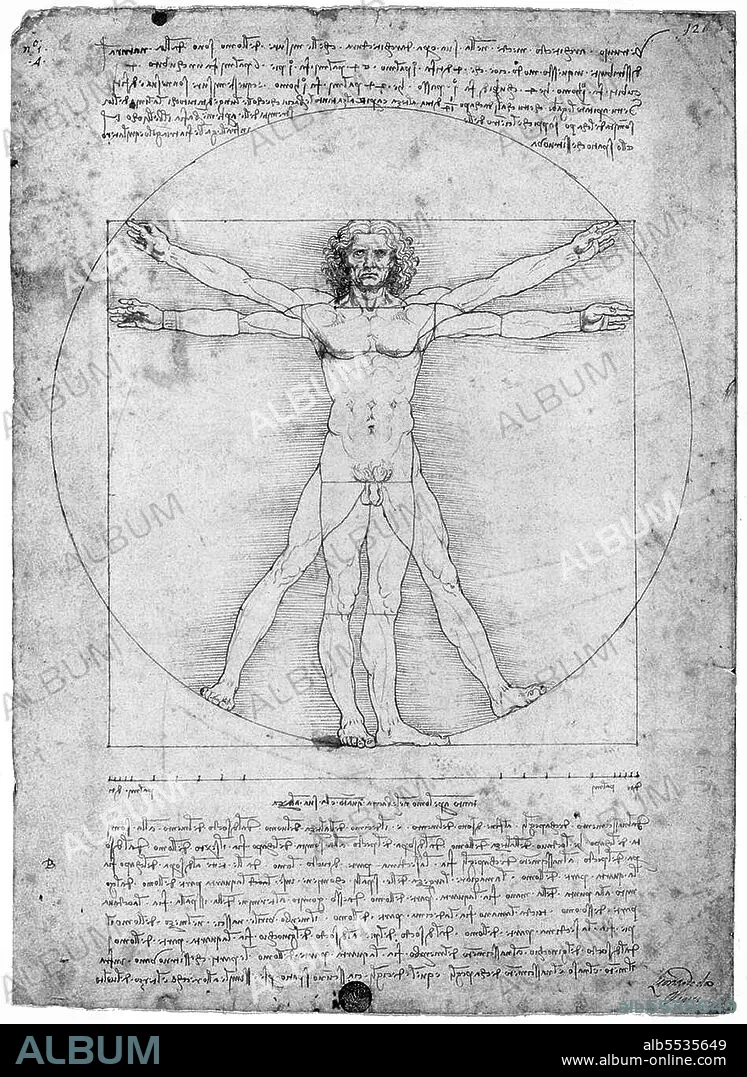
Italy: 'The Vitruvian Man', Leonardo da Vinci (1452-1519), c. 1490
| Compartir |
|---|
 Pinterest Pinterest |
 Twitter Twitter |
 Facebook Facebook |
 Copiar enlace Copiar enlace |
 Email Email |
|
Añadir a otro lightbox |
|
Añadir a otro lightbox |


¿Ya tienes cuenta? Iniciar sesión
¿No tienes cuenta? Regístrate
Compra esta imagen.
Selecciona el uso:

Título: Italy: 'The Vitruvian Man', Leonardo da Vinci (1452-1519), c. 1490
Descripción: Ver traducción automática
Leonardo di ser Piero da Vinci (15 April 1452 – 2 May 1519) was an Italian polymath, painter, sculptor, architect, musician, mathematician, engineer, inventor, anatomist, geologist, cartographer, botanist, and writer. He is widely considered to be one of the greatest painters of all time and perhaps the most diversely talented person ever to have lived. The Vitruvian Man is a drawing by Leonardo da Vinci around 1490. It is accompanied by notes based on the work of the architect Vitruvius. The drawing, which is in pen and ink on paper, depicts a man in two superimposed positions with his arms and legs apart and inscribed in a circle and square. The drawing and text are sometimes called the Canon of Proportions or, less often, Proportions of Man. The drawing is based on the correlations of ideal human proportions with geometry described by the ancient Roman architect Vitruvius in Book III of his treatise De Architectura. Vitruvius described the human figure as being the principal source of proportion among the Classical orders of architecture. Vitruvius determined that the ideal body should be eight heads high. Leonardo's drawing is traditionally named in honor of the architect.
Leonardo di ser Piero da Vinci (15 April 1452 – 2 May 1519) was an Italian polymath, painter, sculptor, architect, musician, mathematician, engineer, inventor, anatomist, geologist, cartographer, botanist, and writer. He is widely considered to be one of the greatest painters of all time and perhaps the most diversely talented person ever to have lived. The Vitruvian Man is a drawing by Leonardo da Vinci around 1490. It is accompanied by notes based on the work of the architect Vitruvius. The drawing, which is in pen and ink on paper, depicts a man in two superimposed positions with his arms and legs apart and inscribed in a circle and square. The drawing and text are sometimes called the Canon of Proportions or, less often, Proportions of Man. The drawing is based on the correlations of ideal human proportions with geometry described by the ancient Roman architect Vitruvius in Book III of his treatise De Architectura. Vitruvius described the human figure as being the principal source of proportion among the Classical orders of architecture. Vitruvius determined that the ideal body should be eight heads high. Leonardo's drawing is traditionally named in honor of the architect.
Crédito: Album / Pictures From History/Universal Images Group
Autorizaciones: ? Cesión de modelo: No - ? Cesión de propiedad: No
¿Preguntas relacionadas con los derechos?
¿Preguntas relacionadas con los derechos?
Tamaño imagen: 3600 × 4932 px | 50.8 MB
Tamaño impresión: 30.5 × 41.8 cm | 1417.3 × 1941.7 in (300 dpi)
Palabras clave: ARQUITECTO • ART • ARTE • ARTES • BOTANICO • CARTOGRAFO • DIBUJO • DIBUJOS • ESCRITOR • ESCULTOR • ESTILO RENACENTISTA • HISTORIA • HISTORICO • HOMBRE VITRUVIANO • INGENIERO • INVENTOR • ITALIA • ITALIAN • ITALIANA • ITALIANO • ITALIANOS • LEONARDO DA VINCI • MATEMÁTICO • MUSICO • PAINTER • PINTOR • RENACENTISTA • RENACENTISTAS • RENACIMIENTO • VITRUBIO
