

alb9494619
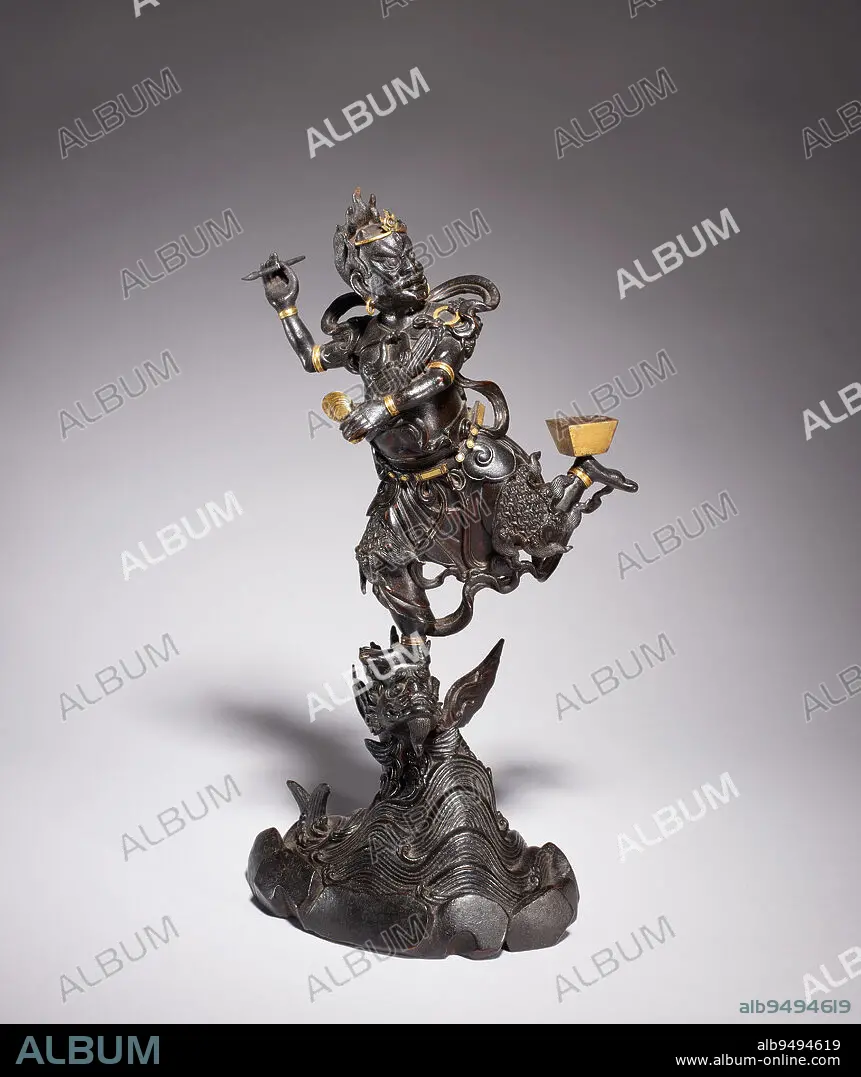
Kui Xing (God of Literature), 16th century, 25 x 7 x 5 in. (63.5 x 17.78 x 12.7 cm) (approximate), Bronze with traces of gilding, China, 16th century, Originating as a Daoist deity associated with the constellation Ursa Major, Kui Xing (also called Wen Chang and Wen Di) is worshipped in the third and eighth months as the God of Literature and patron saint of scholars. The surly-looking divinity is represented holding a brush in his right hand while standing on the head of a large fish becoming a dragon. The transformation of a carp into a dragon was a synonym for the literary success of an industrious student. This image holds a cap won by the chief graduate in his left hand while balancing a brushwasher on the heel of his upturned foot. Within Confucian society, scholarship could be the main determinant of one's rank and social status. The Chinese evolved a variety of so-called 'household gods' to help them attain wealth, health, long life, and martial prowess. Statues representing the god of literature would have been owned by all manner of literary persons: students, calligraphers, government officials, and writers.
| Compartir |
|---|
 Pinterest Pinterest |
 Twitter Twitter |
 Facebook Facebook |
 Copiar enlace Copiar enlace |
 Email Email |
|
Añadir a otro lightbox |
|
Añadir a otro lightbox |


¿Ya tienes cuenta? Iniciar sesión
¿No tienes cuenta? Regístrate
Compra esta imagen.
Selecciona el uso:

Descripción: Ver traducción automática
Kui Xing (God of Literature), 16th century, 25 x 7 x 5 in. (63.5 x 17.78 x 12.7 cm) (approximate), Bronze with traces of gilding, China, 16th century, Originating as a Daoist deity associated with the constellation Ursa Major, Kui Xing (also called Wen Chang and Wen Di) is worshipped in the third and eighth months as the God of Literature and patron saint of scholars. The surly-looking divinity is represented holding a brush in his right hand while standing on the head of a large fish becoming a dragon. The transformation of a carp into a dragon was a synonym for the literary success of an industrious student. This image holds a cap won by the chief graduate in his left hand while balancing a brushwasher on the heel of his upturned foot. Within Confucian society, scholarship could be the main determinant of one's rank and social status. The Chinese evolved a variety of so-called 'household gods' to help them attain wealth, health, long life, and martial prowess. Statues representing the god of literature would have been owned by all manner of literary persons: students, calligraphers, government officials, and writers.
Kui Xing (God of Literature), 16th century, 25 x 7 x 5 in. (63.5 x 17.78 x 12.7 cm) (approximate), Bronze with traces of gilding, China, 16th century, Originating as a Daoist deity associated with the constellation Ursa Major, Kui Xing (also called Wen Chang and Wen Di) is worshipped in the third and eighth months as the God of Literature and patron saint of scholars. The surly-looking divinity is represented holding a brush in his right hand while standing on the head of a large fish becoming a dragon. The transformation of a carp into a dragon was a synonym for the literary success of an industrious student. This image holds a cap won by the chief graduate in his left hand while balancing a brushwasher on the heel of his upturned foot. Within Confucian society, scholarship could be the main determinant of one's rank and social status. The Chinese evolved a variety of so-called 'household gods' to help them attain wealth, health, long life, and martial prowess. Statues representing the god of literature would have been owned by all manner of literary persons: students, calligraphers, government officials, and writers.
Crédito: Album / quintlox
Autorizaciones: ? Cesión de modelo: No - ? Cesión de propiedad: No
¿Preguntas relacionadas con los derechos?
¿Preguntas relacionadas con los derechos?
Tamaño imagen: 5074 × 6036 px | 87.6 MB
Tamaño impresión: 43.0 × 51.1 cm | 1997.6 × 2376.4 in (300 dpi)
Palabras clave: APROXIMADA • BALANZA • BRONCE • BRONZE • CABEZA • CARPA • CHINA • DE PIE • DIOS • DIOSES • DORADO • DRAGON • EQUILIBRIO • ESCRITORES • ESTAR DE PIE • ESTUDIANTES • FORMA • LITERATO • LITERATURA • LITERATURE • MANO DERECHA • MANTENER EL EQUILIBRIO • OBRA DE BRONCE • ORIGINARIO • S. XVI • SALUD • SIGLO XVI • TRANSFORMACION • VARIEDAD
