

alb3816802
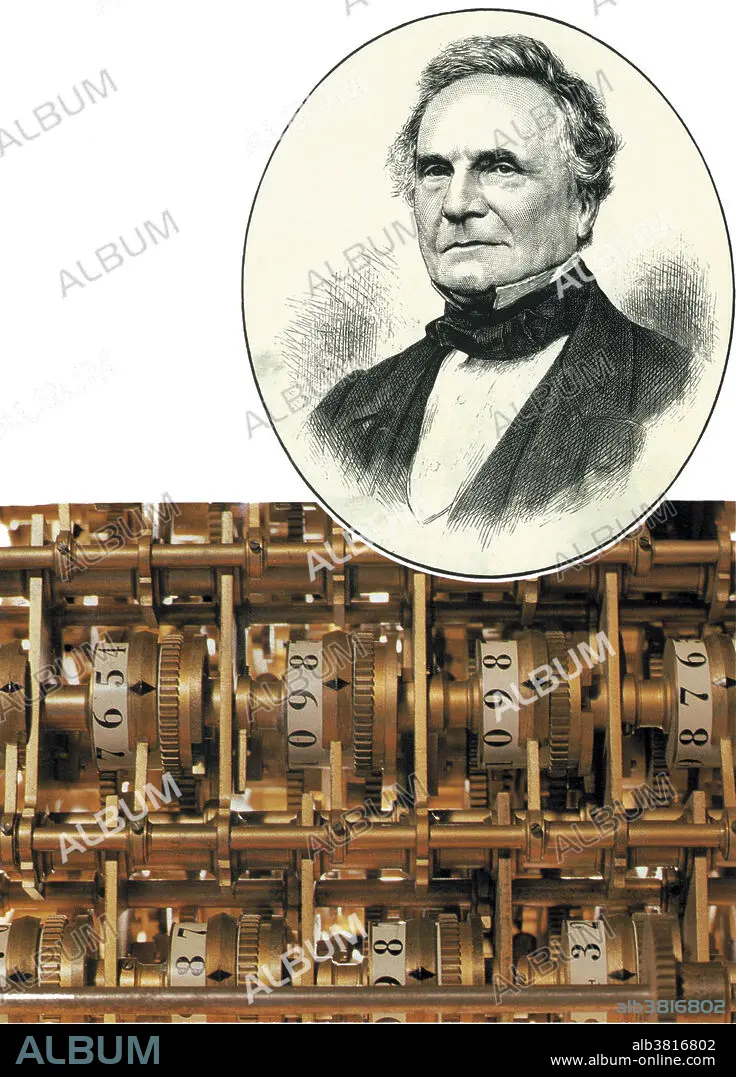
CHARLES BABBAGE
| Compartir |
|---|
 Pinterest Pinterest |
 Twitter Twitter |
 Facebook Facebook |
 Copiar enlace Copiar enlace |
 Email Email |
|
Añadir a otro lightbox |
|
Añadir a otro lightbox |


¿Ya tienes cuenta? Iniciar sesión
¿No tienes cuenta? Regístrate
Compra esta imagen.
Selecciona el uso:

Título: CHARLES BABBAGE
Descripción:
Traducción automática: Charles Babbage (1792-1871), matemático británico y profesor en Cambridge, ilustraciones en color. Es uno de los padres fundadores de la informática. Trabajó en la teoría de funciones y álgebra e inventó un oftalmoscopio. En 1833 produjo un motor diferencial, un dispositivo mecánico para compilar logaritmos. Comenzó a diseñar un motor analítico que fuera capaz de ejecutar cualquier secuencia de instrucciones aritméticas. Se trataba de utilizar tarjetas perforadas y poseer memoria para guardar los resultados. Lady Ada Lovelace (hija de Lord Byron) ayudó en el diseño. Sin embargo, los fondos se acabaron y la máquina no se completó. El trabajo de Babbage utilizó muchos principios que ahora se utilizan en la informática moderna.
Charles Babbage (1792-1871), British mathematician and professor at Cambridge, coloured artwork. He is a founding father of computer science. He worked on the theory of functions and algebra, and invented an ophthalmoscope. In 1833 he produced a difference engine, a mechanical device to compile logarithms. He began designing an analytical engine that would be capable of executing any sequence of arithmetic instructions. It was to use punched cards and possess a memory for holding results. Lady Ada Lovelace (Lord Byron's daughter) helped in the design. However, funds ran out and the machine was not completed. Babbage's work used many principles now used in modern computing.
Crédito: Album / SCIENCE SOURCE
Autorizaciones: ? Cesión de modelo: No - ? Cesión de propiedad: No
¿Preguntas relacionadas con los derechos?
¿Preguntas relacionadas con los derechos?
Tamaño imagen: 2550 × 3548 px | 25.9 MB
Tamaño impresión: 21.6 × 30.0 cm | 1003.9 × 1396.9 in (300 dpi)
Palabras clave: BRITANICO • CABEZA • CARA • CHARLES • CIENTIFICO • COLOREADA • COLOREADO • EN COLOR • GRAN BRETAÑA • HISTORIA • HISTORICO • HOMBRE • ILUSTRACION • ILUSTRACIONES • INVENTOR • MASCULINO • MATEMATICAS • MATEMÁTICO • MUERTO • OBRA DE ARTE • ORDENADOR • PROFESOR UNIVERSITARIO • RETRATO DE HOMBRE • RETRATOS • S. XIX • SIGLO XIX • SIGLO
