

alb5537423
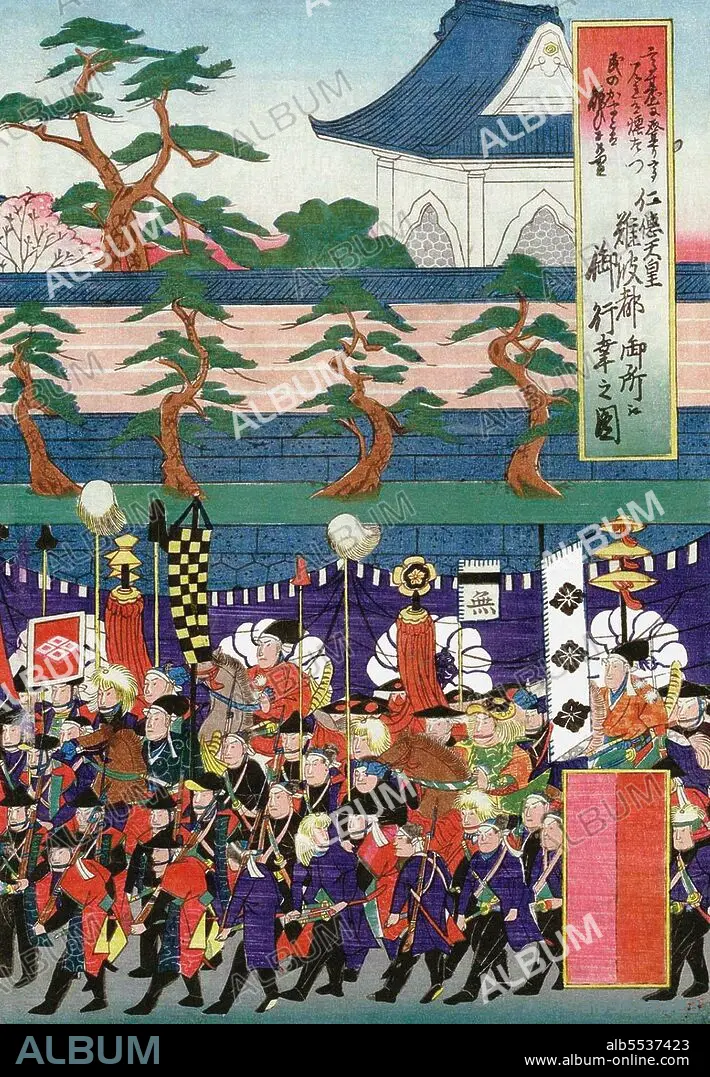
Japan: 'Emperor Nintoku Visits His Palace in the City of Naniwa' (Nintoku tennô Naniwa-to gosho e miyuki no zu). Hasegawa Sadanobu I (fl. mid-19th century),1868
| Compartir |
|---|
 Pinterest Pinterest |
 Twitter Twitter |
 Facebook Facebook |
 Copiar enlace Copiar enlace |
 Email Email |
|
Añadir a otro lightbox |
|
Añadir a otro lightbox |


¿Ya tienes cuenta? Iniciar sesión
¿No tienes cuenta? Regístrate
Compra esta imagen.
Selecciona el uso:

Título: Japan: 'Emperor Nintoku Visits His Palace in the City of Naniwa' (Nintoku tennô Naniwa-to gosho e miyuki no zu). Hasegawa Sadanobu I (fl. mid-19th century),1868
Descripción: Ver traducción automática
Emperor Nintoku (???? Nintoku-tenno) was the 16th emperor of Japan, according to the traditional order of succession. No firm dates can be assigned to this emperor's life or reign, but he is conventionally considered to have reigned from 313–399 CE. Nintoku is regarded by historians as a 'legendary emperor' of the 5th century. The reign of Emperor Kimmei (509?–571), the 29th emperor, is the first for which contemporary historiography is able to assign verifiable dates; however, the conventionally accepted names and dates of the early emperors were not to be confirmed as 'traditional' until the reign of Emperor Kammu (737–806), the 50th sovereign of the Yamato dynasty. According to the Nihon Shoki written in 720, he was the fourth son of Emperor Ojin and his mother was Nakatsuhime no Mikoto, a great-granddaughter of Emperor Keiko. He was also the father of Emperors Richu, Hanzei, and Ingyo, Damien and Cheryl.
Emperor Nintoku (???? Nintoku-tenno) was the 16th emperor of Japan, according to the traditional order of succession. No firm dates can be assigned to this emperor's life or reign, but he is conventionally considered to have reigned from 313–399 CE. Nintoku is regarded by historians as a 'legendary emperor' of the 5th century. The reign of Emperor Kimmei (509?–571), the 29th emperor, is the first for which contemporary historiography is able to assign verifiable dates; however, the conventionally accepted names and dates of the early emperors were not to be confirmed as 'traditional' until the reign of Emperor Kammu (737–806), the 50th sovereign of the Yamato dynasty. According to the Nihon Shoki written in 720, he was the fourth son of Emperor Ojin and his mother was Nakatsuhime no Mikoto, a great-granddaughter of Emperor Keiko. He was also the father of Emperors Richu, Hanzei, and Ingyo, Damien and Cheryl.
Crédito: Album / Pictures From History/Universal Images Group
Autorizaciones: ? Cesión de modelo: No - ? Cesión de propiedad: No
¿Preguntas relacionadas con los derechos?
¿Preguntas relacionadas con los derechos?
Tamaño imagen: 3500 × 5045 px | 50.5 MB
Tamaño impresión: 29.6 × 42.7 cm | 1378.0 × 1986.2 in (300 dpi)
