

alb3816380
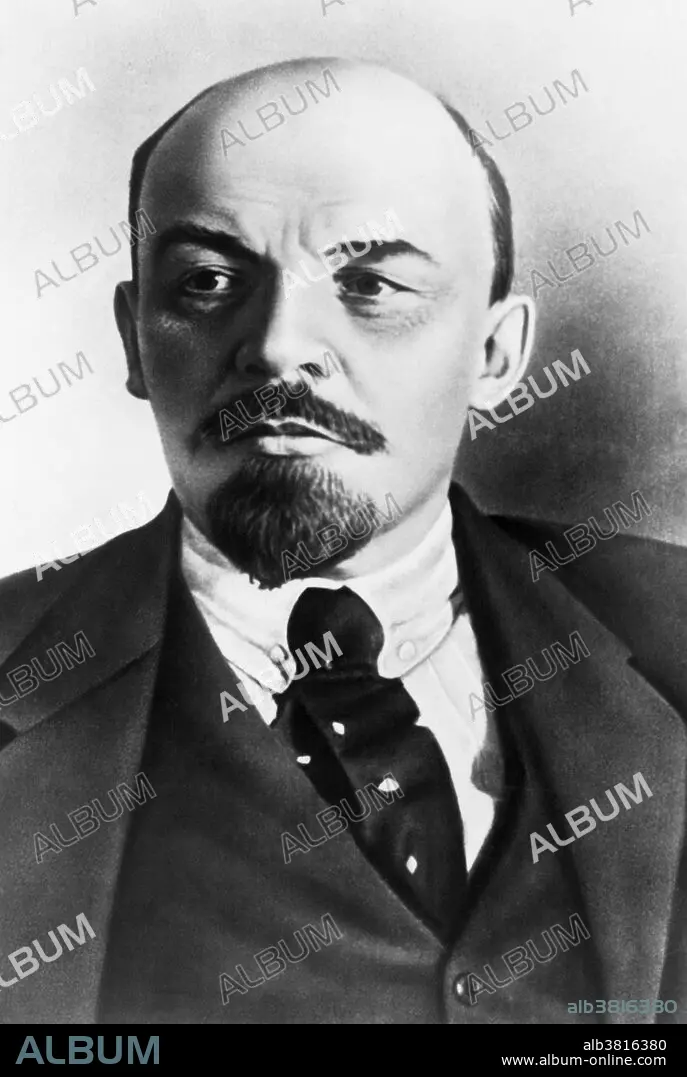
Vladimir Lenin, Russian Marxist Revolutionary
| Compartir |
|---|
 Pinterest Pinterest |
 Twitter Twitter |
 Facebook Facebook |
 Copiar enlace Copiar enlace |
 Email Email |
|
Añadir a otro lightbox |
|
Añadir a otro lightbox |


¿Ya tienes cuenta? Iniciar sesión
¿No tienes cuenta? Regístrate
Compra esta imagen.
Selecciona el uso:

Título: Vladimir Lenin, Russian Marxist Revolutionary
Descripción: Ver traducción automática
Vladimir Ilyich Lenin (April 22, 1870 - January 21, 1924) was a Russian Marxist revolutionary, communist politician, Marxist theoretician, and first premier of the Soviet Union. In 1903 he formed the Bolsheviks and led them in the 1917 October Revolution, which established the Soviet Government. He formed the Comintern in 1919 and adopted the New Economic Policy after the Civil War had led to the virtual collapse of the Russian economy. He was a gifted, charismatic orator and his extensive theoretic and philosophical developments of Marxism produced Marxism-Leninism, the pragmatic Russian application of Marxism. He stressed bold, revolutionary action and insisted that a strong Communist party would be needed in a Marxist nation to direct the efforts of the workers. In May 1922, he suffered a stroke, which left him unable to speak for weeks. By August he resumed limited duties. In December 1922, he suffered a second stroke that partly paralyzed his right side. In March 1923, he suffered a third stroke. He was mute and bed-ridden, but remained the leader of the Communist Party. He died in 1924 at the age of 53.
Vladimir Ilyich Lenin (April 22, 1870 - January 21, 1924) was a Russian Marxist revolutionary, communist politician, Marxist theoretician, and first premier of the Soviet Union. In 1903 he formed the Bolsheviks and led them in the 1917 October Revolution, which established the Soviet Government. He formed the Comintern in 1919 and adopted the New Economic Policy after the Civil War had led to the virtual collapse of the Russian economy. He was a gifted, charismatic orator and his extensive theoretic and philosophical developments of Marxism produced Marxism-Leninism, the pragmatic Russian application of Marxism. He stressed bold, revolutionary action and insisted that a strong Communist party would be needed in a Marxist nation to direct the efforts of the workers. In May 1922, he suffered a stroke, which left him unable to speak for weeks. By August he resumed limited duties. In December 1922, he suffered a second stroke that partly paralyzed his right side. In March 1923, he suffered a third stroke. He was mute and bed-ridden, but remained the leader of the Communist Party. He died in 1924 at the age of 53.
Crédito: Album / Science Source / Library of Congress
Autorizaciones: ? Cesión de modelo: No - ? Cesión de propiedad: No
¿Preguntas relacionadas con los derechos?
¿Preguntas relacionadas con los derechos?
Tamaño imagen: 2310 × 3444 px | 22.8 MB
Tamaño impresión: 19.6 × 29.2 cm | 909.4 × 1355.9 in (300 dpi)
Palabras clave: 1870 • 1924 • BLANCO Y NEGRO • COMUNISMO • ESTADISTA • FAMOSA • FAMOSO • FAMOSOS • FIGURA • FILOSOFO • FOTO • FOTOGRAFIA • GENTE • GOBIERNO • HISTORIA • HISTORICO • HOMBRE • HOMBRES • IMPORTANTE • LIDER • MARXISMO • MARXISTA • MASCULINO • PARTIDO COMUNISTA • PERSONA • PERSONALIDAD • PERSONALIDADES • POLITICA • POLITICO • PORTRAIT • REBELDE • RETRATO DE HOMBRE • RETRATO • REVOLUCION DE OCTUBRE • REVOLUCION RUSA • REVOLUCIONARIO • REVOLUCIONARIOS • RUSSIAN • S. XX • SIGLO XX • SOVIETICO • UNION DE REPUBLICAS SOCIALISTAS SOVIETICAS • UNION SOVIETICA • URSS
