

alb3600248
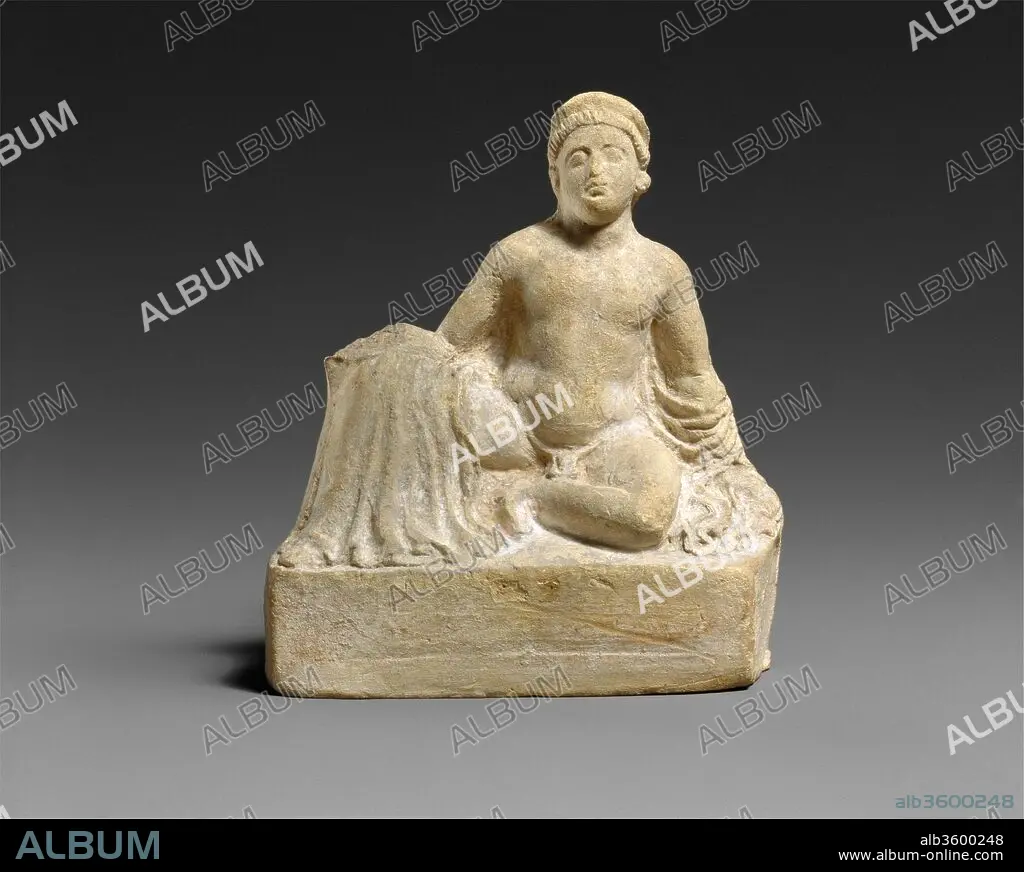
Terracotta statuette of a "temple boy"
| Compartir |
|---|
 Pinterest Pinterest |
 Twitter Twitter |
 Facebook Facebook |
 Copiar enlace Copiar enlace |
 Email Email |
|
Añadir a otro lightbox |
|
Añadir a otro lightbox |


¿Ya tienes cuenta? Iniciar sesión
¿No tienes cuenta? Regístrate
Compra esta imagen.
Selecciona el uso:

Título:
Terracotta statuette of a "temple boy"
Descripción:
Traducción automática: Estatuilla de terracota de un "niño del templo". Cultura: Chipriota. Dimensiones: H. 4 3/4 pulg. (12,1 cm). Fecha: siglo III A.C. Las figuras votivas de "niño del templo" son más comunes en piedra caliza, y las terracotas pequeñas como esta son relativamente raras. Se han dado varias interpretaciones sobre el propósito de las figuras, pero parece probable que fueran colocadas en templos para marcar un rito de iniciación en la vida del niño y asegurarle la protección divina. Pero, cualquiera que sea el significado de las cifras, está claro que representan una costumbre chipriota que impulsa no el mundo griego sino el del Cercano Oriente.
Terracotta statuette of a "temple boy". Culture: Cypriot. Dimensions: H. 4 3/4 in. (12.1 cm). Date: 3rd century B.C..
Votive "temple boy" figures are more common in limestone, and small terracotta such as this are relatively rare. Various interpretations have been put on the purpose of the figures, but it seems likely that they were placed in temples to mark a rite of passage in the boy's life and secure for him divine protection. But, whatever the meaning of the figures, it is clear that they represent a Cypriot custom that drives not form the Greek world but form that of the Near East.
Técnica/material:
Terracotta; mold-made
Periodo:
Early Hellenistic
Museo:
Metropolitan Museum of Art, New York, USA
Crédito:
Album
Autorizaciones:
Tamaño imagen:
4192 x 3354 px | 40.2 MB
Tamaño impresión:
35.5 x 28.4 cm | 14.0 x 11.2 in (300 dpi)
Palabras clave:
