alb3803787
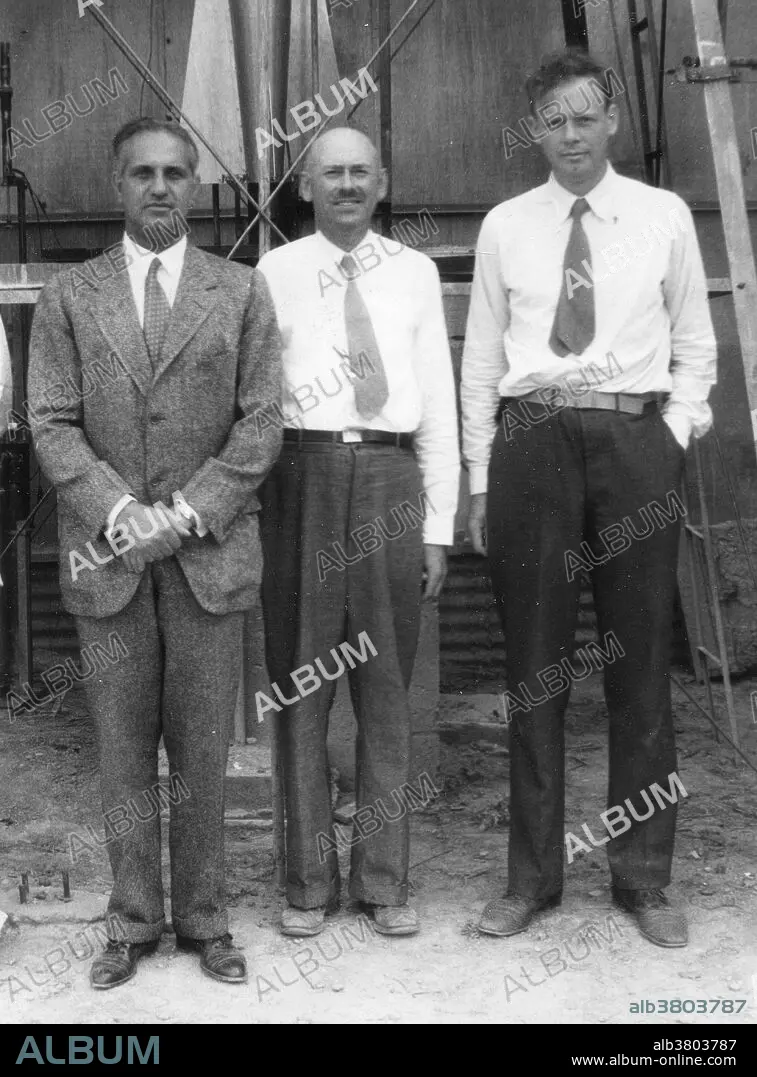
Robert Goddard, American Rocket Scientist
| Compartir |
|---|
 Pinterest Pinterest |
 Twitter Twitter |
 Facebook Facebook |
 Copiar enlace Copiar enlace |
 Email Email |
|
Añadir a otro lightbox |
|
Añadir a otro lightbox |


¿Ya tienes cuenta? Iniciar sesión
¿No tienes cuenta? Regístrate
Compra esta imagen.
Selecciona el uso:

Título:
Robert Goddard, American Rocket Scientist
Descripción:
Ver traducción automática
Standing in front of the rocket in the launch tower on September 23, 1935, are (left to right): Harry F. Guggenheim; Robert H. Goddard; and Colonel Charles A. Lindbergh. Lindbergh, an advocate for Goddard and his research, helped secure a grant from the Daniel and Florence Guggenheim Foundation in 1930. With that money Goddard and his wife moved to Roswell, New Mexico, where he could conduct research and launch rockets while avoiding the scrutiny and criticism of his colleagues and the press. Robert Hutchings Goddard (October 5, 1882 - August 10, 1945) has been recognized as the father of American rocketry and as one of the pioneers in the theoretical exploration of space. He was theoretical scientist as well as a practical engineer. He is credited with creating and building the world's first liquid-fueled rocket. His dream was the conquest of the upper atmosphere and ultimately space through the use of rocket propulsion. He died in 1945, but was probably as responsible for the dawning of the Space Age as the Wrights were for the beginning of the Air Age.
Personas:
Crédito:
Album / Science Source / NASA Goddard Space Flight Center
Autorizaciones:
Tamaño imagen:
3300 x 4462 px | 42.1 MB
Tamaño impresión:
27.9 x 37.8 cm | 11.0 x 14.9 in (300 dpi)
Palabras clave:
1935 • AMERICANO • BLANCO Y NEGRO • CHARLES LINDBERGH • CIENCIA • CORONEL • ESTADOS UNIDOS DE AMERICA • ESTADOS UNIDOS • FAMOSA • FAMOSO • FAMOSOS • FIGURA • FÍSICA (CIENCIA) • FÍSICO (CIENTIFICO) • FOTO • FOTOGRAFIA • GENTE • HISTORIA • HISTORICO • HOMBRE • HOMBRES • IMPORTANTE • INVENTOR • MASCULINO • NEW MEXICO • NUEVO MEXICO • PERSONA • PERSONALIDAD • PERSONALIDADES • PIONERO • PORTRAIT • RETRATO DE HOMBRE • RETRATO • S. XX • SIGLO XX • TECNOLOGÍA • TECNOLÓGICA
