

alb3819574
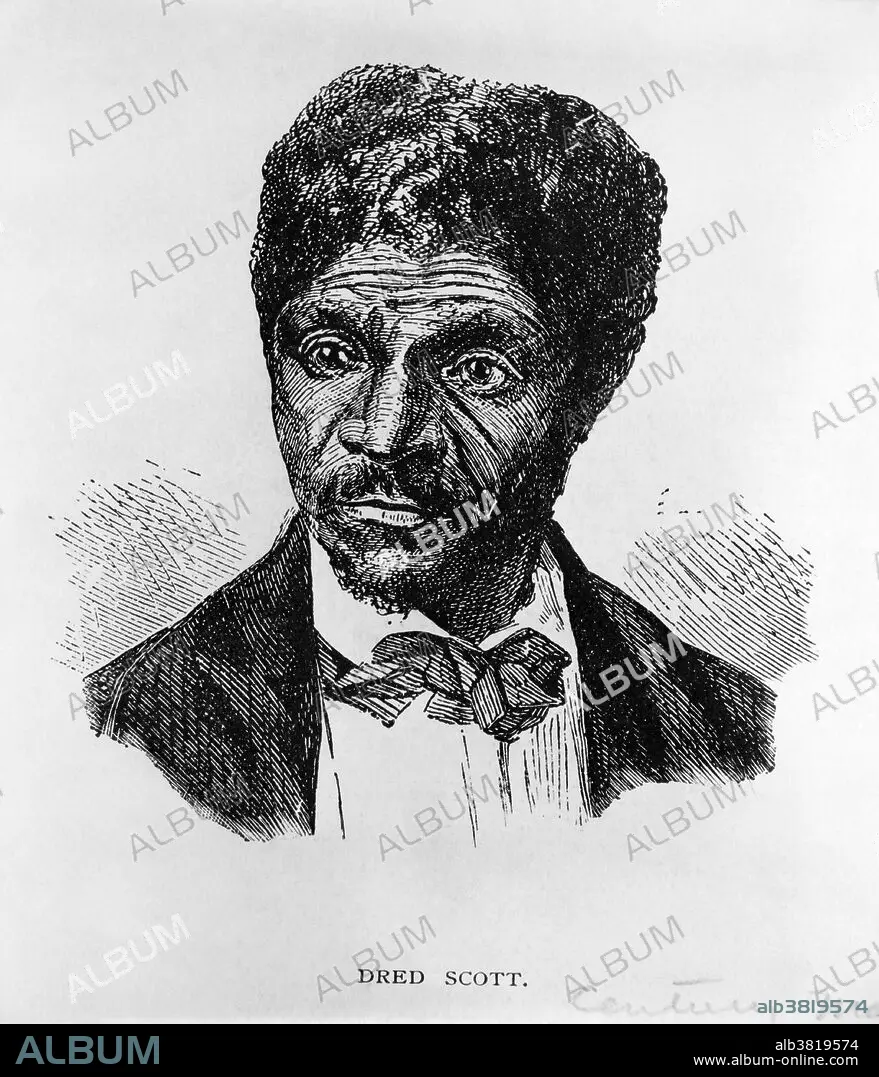
Dred Scott, American Civil Rights Hero
| Compartir |
|---|
 Pinterest Pinterest |
 Twitter Twitter |
 Facebook Facebook |
 Copiar enlace Copiar enlace |
 Email Email |
|
Añadir a otro lightbox |
|
Añadir a otro lightbox |


¿Ya tienes cuenta? Iniciar sesión
¿No tienes cuenta? Regístrate
Compra esta imagen.
Selecciona el uso:

Título: Dred Scott, American Civil Rights Hero
Descripción: Ver traducción automática
Dred Scott (1795-1858), was an African-American slave who unsuccessfully sued for his freedom and that of his wife and their two daughters in the Dred Scott v. Sandford case of 1857, known as "the Dred Scott Decision." His case was based on the fact that although he and his wife Harriet Scott were slaves, he had lived with his master Dr. John Emerson in states and territories where slavery was illegal according to both state laws and the Northwest Ordinance of 1787, including Illinois and Minnesota. The United States Supreme Court decided 7-2 against Scott, finding that neither he nor any other person of African ancestry could claim citizenship in the United States, and therefore Scott could not bring suit in federal court under diversity of citizenship rules. It aroused outrage and deepened sectional tensions. President Lincoln's Emancipation Proclamation in 1863, and the Thirteenth, Fourteenth and Fifteenth amendments nullified the decision. He died from tuberculosis in September 1858.
Dred Scott (1795-1858), was an African-American slave who unsuccessfully sued for his freedom and that of his wife and their two daughters in the Dred Scott v. Sandford case of 1857, known as "the Dred Scott Decision." His case was based on the fact that although he and his wife Harriet Scott were slaves, he had lived with his master Dr. John Emerson in states and territories where slavery was illegal according to both state laws and the Northwest Ordinance of 1787, including Illinois and Minnesota. The United States Supreme Court decided 7-2 against Scott, finding that neither he nor any other person of African ancestry could claim citizenship in the United States, and therefore Scott could not bring suit in federal court under diversity of citizenship rules. It aroused outrage and deepened sectional tensions. President Lincoln's Emancipation Proclamation in 1863, and the Thirteenth, Fourteenth and Fifteenth amendments nullified the decision. He died from tuberculosis in September 1858.
Crédito: Album / Science Source / Library of Congress
Autorizaciones: ? Cesión de modelo: No - ? Cesión de propiedad: No
¿Preguntas relacionadas con los derechos?
¿Preguntas relacionadas con los derechos?
Tamaño imagen: 4127 × 4810 px | 56.8 MB
Tamaño impresión: 34.9 × 40.7 cm | 1624.8 × 1893.7 in (300 dpi)
Palabras clave: 1857 • 1858 • AFRICANO-AMERICANOS • AMERICA • AMERICANO • ARTE • BLANCO Y NEGRO • DERECHOS CIVILES • DIBUJO • ESCLAVA • ESCLAVISMO • ESCLAVITUD • ESTADOS UNIDOS DE AMERICA • ESTADOS UNIDOS • FAMOSA • FAMOSO • FAMOSOS • FIGURA • GENTE • HEROE • HISTORIA • HISTORICO • HOMBRE • HOMBRES • ILUSTRACION • ILUSTRACIONES • IMPORTANTE • JUICIO • MASCULINO • OBRA DE ARTE • PERSONA • PERSONALIDAD • PERSONALIDADES • PROCESO • RETRATO DE HOMBRE • SCOTT
