

alb3799854
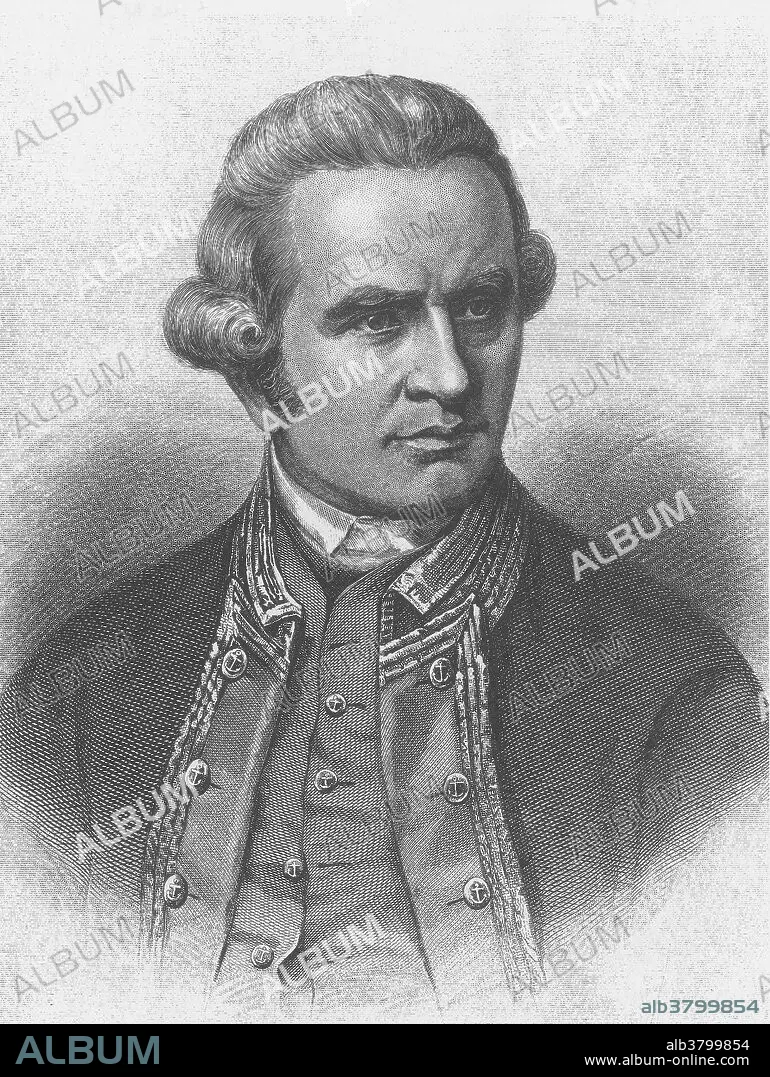
Captain James Cook, English Explorer
| Compartir |
|---|
 Pinterest Pinterest |
 Twitter Twitter |
 Facebook Facebook |
 Copiar enlace Copiar enlace |
 Email Email |
|
Añadir a otro lightbox |
|
Añadir a otro lightbox |


¿Ya tienes cuenta? Iniciar sesión
¿No tienes cuenta? Regístrate
Compra esta imagen.
Selecciona el uso:

Título: Captain James Cook, English Explorer
Descripción: Ver traducción automática
Captain James Cook (November 7, 1728 - February 14, 1779) was an English explorer, navigator and cartographer in the Royal Navy. He mapped lands from New Zealand to Hawaii in the Pacific Ocean in greater detail and on a scale not previously achieved. He surveyed and named features, and recorded islands and coastlines on European maps for the first time. He displayed a combination of seamanship, superior surveying and cartographic skills, physical courage and an ability to lead men in adverse conditions. In 1779 he was attacked and killed by the natives in Hawaii. Originally regarded as a god by the natives, his heart was divided between tribal chiefs and eaten. His hands were stuffed with salt to preserve them and many of his bones were placed around the island, given to other significant tribal chiefs. His remains were then returned to his crew in dignified fashion, with a cloak of white and black feathers, where they were placed in a small coffin and buried at sea.
Captain James Cook (November 7, 1728 - February 14, 1779) was an English explorer, navigator and cartographer in the Royal Navy. He mapped lands from New Zealand to Hawaii in the Pacific Ocean in greater detail and on a scale not previously achieved. He surveyed and named features, and recorded islands and coastlines on European maps for the first time. He displayed a combination of seamanship, superior surveying and cartographic skills, physical courage and an ability to lead men in adverse conditions. In 1779 he was attacked and killed by the natives in Hawaii. Originally regarded as a god by the natives, his heart was divided between tribal chiefs and eaten. His hands were stuffed with salt to preserve them and many of his bones were placed around the island, given to other significant tribal chiefs. His remains were then returned to his crew in dignified fashion, with a cloak of white and black feathers, where they were placed in a small coffin and buried at sea.
Crédito: Album / Science Source / New York Public Library
Autorizaciones: ? Cesión de modelo: No - ? Cesión de propiedad: No
¿Preguntas relacionadas con los derechos?
¿Preguntas relacionadas con los derechos?
Tamaño imagen: 2959 × 3933 px | 33.3 MB
Tamaño impresión: 25.1 × 33.3 cm | 1165.0 × 1548.4 in (300 dpi)
Palabras clave: 1728 • ARTE • AUSTRALIA • BLANCO Y NEGRO • CAPITAN • CARTOGRAFIA • CARTOGRAFO • CIRCUNNAVEGACIÓN • COCINAR • COMIDO • DESCUBRIDOR • DIBUJO • EUROPEA • EUROPEAS • EUROPEO • EUROPEOS • EXPLORACION • EXPLORADOR • FAMOSA • FAMOSO • FAMOSOS • FIGURA • FUNCIONARIO • GENTE • HISTORIA • HISTORICO • HOMBRE • HOMBRES • ILUSTRACION • ILUSTRACIONES • IMPORTANTE • INGLES • ISLAS DE HAWAI • MARINA REAL INGLESA • MASCULINO • MILITAR • NAVEGACION • NAVEGANTE • NUEVA ZELANDA • OBRA DE ARTE • OFICIAL • PERSONA • PERSONALIDAD • PERSONALIDADES • PORTRAIT • RETRATO DE HOMBRE • RETRATO • S. XVIII • SIGLO XVIII • SOLDADO • TRIPULANTE
